Follow Us on Google
By Okwe Obi, Abuja
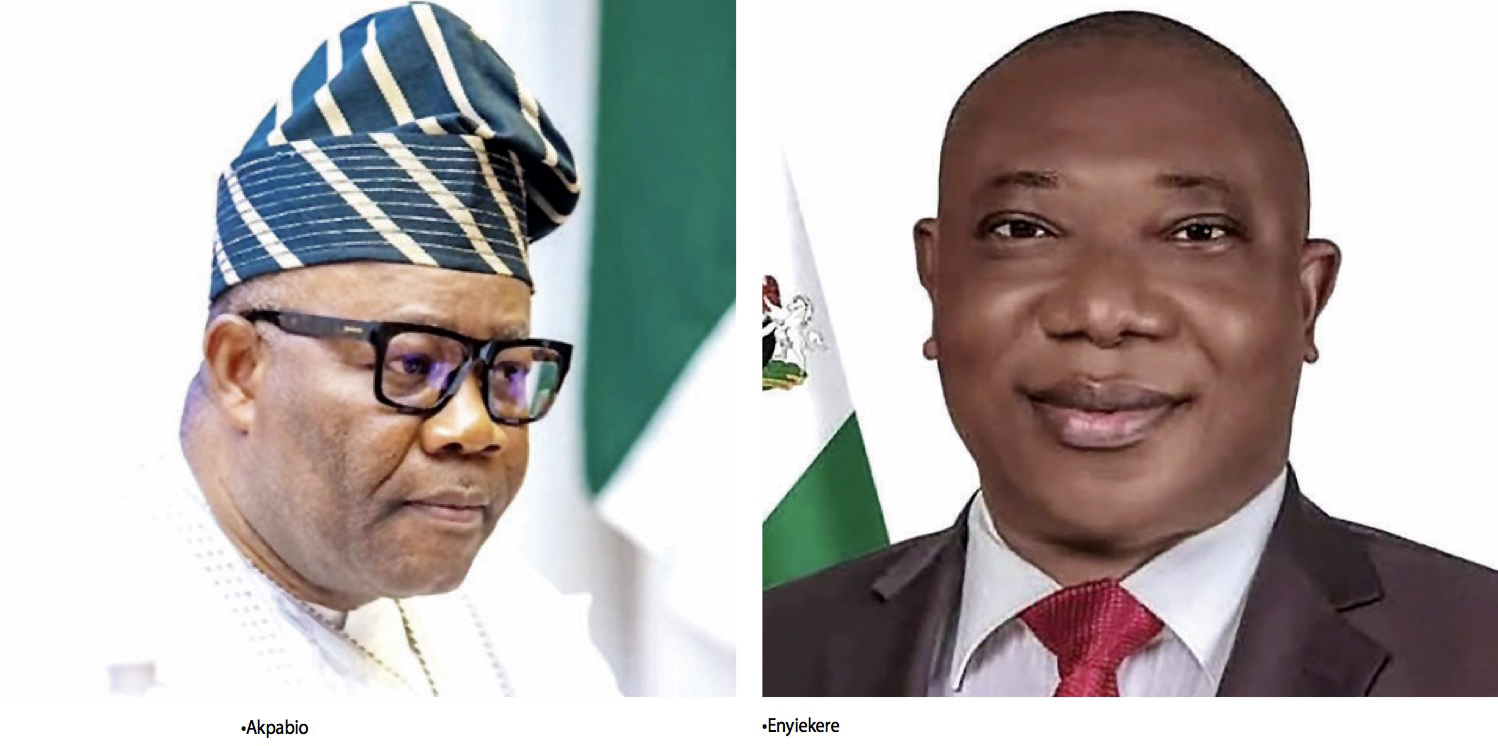
A year ago, the National Assembly Service Commission was, by most accounts, an agency struggling under the weight of its own backlog. Staff promotions had stalled for years. The payroll carried names of workers who no longer existed. Recruitment exercises were opaque, when they happened at all. Training for permanent staff and legislative aides had slowed to a crawl. It was into this environment that Dr Saviour Enyiekere was sworn in, in May 2025, as the sixth Executive Chairman of the commission, becoming the first person from the South South to hold the position since it was created in 2001.
Twelve months on, the picture he and commission officials describe looks markedly different, and it is worth setting the two side by side.
For much of the commission’s recent history, staff promotions were among its most persistent sources of grievance. Career progression stalled for hundreds of workers, some for years at a stretch, with cases piling up unresolved from one leadership to the next. The effect, according to officials who worked through that period, was a workforce that had largely stopped expecting fairness or timely advancement from the system meant to govern it.
Enyiekere said that within months of taking office, his commission approved and executed promotions for more than 800 staff members whose cases had been pending for years. Speaking to reporters in Uyo recently, he described it as the most decisive intervention on staff career progression the commission had carried out in recent memory. The commission has also said it resolved a number of disciplinary and welfare cases inherited from previous administrations, alongside newer ones that arose over the past year.
A recurring problem across many federal agencies, the National Assembly Service Commission included, has been the presence of ghost workers on staff registers, names drawing salaries without corresponding personnel actually in post. This has historically inflated wage bills and drawn the attention of anti-corruption bodies monitoring ministries, departments and agencies for exactly this kind of irregularity.
Enyiekere said his commission has since identified and removed ghost workers from its books, a cleanup he credits with repositioning the agency for greater efficiency. The commission has pointed to its current standing as evidence of this, noting that it does not currently feature on lists maintained by anti-corruption agencies tracking fictitious personnel across government bodies.
Recruitment into the commission had, in the years before Enyiekere’s appointment, drawn complaints over a lack of transparency, with vacancies filled through channels that were rarely made public and left many qualified Nigerians unaware that opportunities existed at all.
Other News
Within three months of assuming office, Enyiekere said he initiated a major recruitment exercise into the commission. He has since committed publicly to ensuring that future recruitment drives are transparent and formally announced, rather than handled quietly, a pledge his office frames as part of a broader commitment to openness in how the commission fills its ranks.
Capacity building for permanent staff and for legislative aides supporting lawmakers had, like much else at the commission, fallen behind. Programmes meant to keep staff current on legislative drafting, research and administrative practice were delayed, leaving a gap between what the job increasingly demanded and what much of the workforce had been equipped to deliver.
The commission said it has organised training programmes for both categories of staff, delivered locally and internationally, and that these are now proceeding without the delays that previously held them up. The stated aim is to bring personnel up to speed with contemporary standards in legislative support work, from drafting to committee administration.
Beyond the four areas above, Enyiekere has used engagements with the Parliamentary Staff Association of Nigeria to lay out a wider welfare agenda– improved staff transportation, an expanded housing scheme, a larger medical clinic, and the eventual inauguration of a National Assembly Pension Board. He has also raised plans to move the commission out of rented premises into a permanent site within the National Assembly Complex, and to digitise personnel records so they meet more current standards of accuracy and security.
Unlike the promotions, payroll and recruitment claims, these remain proposals rather than completed reforms, and their delivery will depend on budgetary allocation and legislative cooperation that extends well beyond what any chairman can guarantee alone.
The National Assembly’s ability to do its core work, scrutinising budgets, drafting legislation, conducting oversight of the executive, depends heavily on the quality and stability of the permanent staff who support lawmakers day to day. A workforce dealing with stalled promotions, an unreliable payroll and patchy training is, by any reasonable measure, less able to produce the kind of committee reports, research and legislative drafting that a functioning parliament requires. If the reforms Enyiekere described hold up, the commission’s support apparatus should be somewhat better placed to serve the legislature than it was before May 2025.
Enyiekere has himself acknowledged that funding constraints and the lack of permanent infrastructure are still unresolved. The bigger proposals on his agenda, the pension board, dedicated legislative quarters, a council of former presiding officers to preserve institutional memory, will need budgetary commitment and, in places, legislative backing that outlasts his own tenure.
What can be said with more confidence is that the specific problems commonly raised about the commission before May 2025, frozen promotions, a padded payroll, closed door recruitment and stalled training, are the same four areas where Enyiekere and his officials now report concrete movement.