Follow Us on Google
Nigeria and Ghana have been urged to dismantle trade barriers, improve cross-border investment and build joint industries to unlock the full potential of their economic relationship and strengthen regional integration.
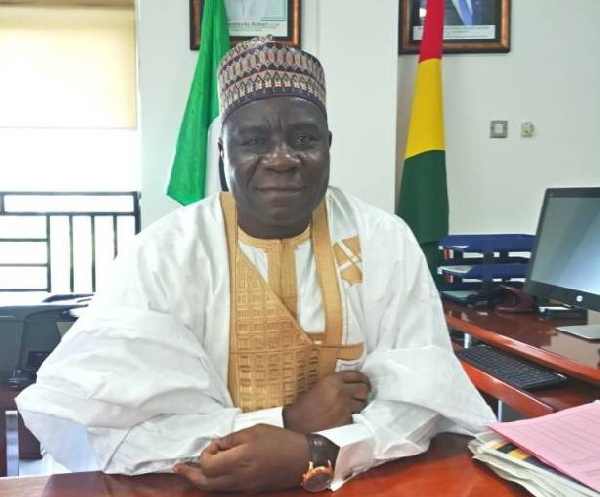
Nigeria’s High Commissioner to Ghana, Ambassador Olufemi Abikoye, made the call while delivering a keynote address at the 2026 Nigeria Union of Traders Association, Ghana (NUTAG) Award Night on Saturday, October 10.
Abikoye said the two West African countries must move beyond historical friendship and ordinary trade towards a deliberate economic partnership built on shared production, stronger value chains and measurable business outcomes.
He argued that although Nigeria and Ghana had maintained longstanding economic, political and cultural ties, history alone could not guarantee prosperity without practical policies to facilitate trade and investment.
According to him, the two countries should shift from viewing each other primarily as competing markets to recognising the opportunities for cooperation in manufacturing, agriculture, finance, infrastructure and technology.
“Nigeria and Ghana are not simply two countries that happen to occupy the same region. We are two principal economic, political and cultural anchors of West Africa,” he said.
He noted that their peoples had traded, studied, worked and lived across borders for generations, adding that the existing relationship needed to be formalised, expanded and modernised to deliver greater economic benefits.
The envoy identified the African Continental Free Trade Area (AfCFTA) as a major opportunity for the countries to deepen economic cooperation and expand their reach across the continent.
He noted that Nigeria assumed the chairmanship of the AfCFTA Council of Ministers Bureau in July 2026, creating an opportunity to advance implementation and secure tangible benefits for African businesses.
According to him, Nigeria’s large market and economic scale, combined with Ghana’s strategic location, commercial infrastructure and role as host of the AfCFTA Secretariat, could help both countries develop products for the wider African market.
“Together, our economies can do much more than simply sell finished products to one another. We can produce together for Africa,” he said.
Abikoye also cautioned against protectionism, saying investments by companies from either country should be assessed by the value they create rather than perceived as threats to local businesses.
He said cross-border investments could generate employment, transfer technology, strengthen local supply chains, increase tax revenue and improve foreign exchange earnings.
He urged both governments to create a predictable and transparent business environment that would give investors confidence to operate across borders.
The envoy further called for a shift from exporting raw commodities to processing them locally, manufacturing finished products and developing African brands capable of competing in international markets.
He identified agriculture, cocoa, cashew, oil and minerals as areas where Nigerian and Ghanaian businesses could collaborate to retain more economic value within the continent.
Rather than exporting commodities and allowing other countries to capture much of the value through processing and manufacturing, he said, businesses should work together to develop production networks, logistics systems and higher-value products.
Abikoye cited the recent onion trade dispute between Nigeria and Ghana as an example of how commercial disagreements could strain relations and disrupt supplies.
He said the experience underscored the need for effective mechanisms to resolve trade disputes before they escalated into diplomatic tensions.
To address the challenges, he proposed a practical Nigeria-Ghana Business Compact built around five commitments: predictable market access, faster dispute resolution, easier movement of people and services, increased cross-border investment, and the development of regional value chains.
Under the proposal, both governments would identify and remove unnecessary non-tariff barriers, overlapping regulations, arbitrary restrictions and avoidable delays at border crossings.
He also advocated reliable channels for commercial mediation, arbitration and regulatory engagement to ensure that disagreements between businesses did not become disputes between the two countries.
On the movement of people, he said regional integration should cover not only goods but also professionals, including engineers, bankers, consultants, lawyers and entrepreneurs whose expertise could support business growth.
He urged pension funds, banks, private equity firms, development-finance institutions and corporate investors in both countries to explore investment opportunities in each other’s markets.
Abikoye said the ultimate objective should be to enable Nigerian and Ghanaian businesses to jointly produce goods and services for Africa and the global market, without being hindered by unnecessary bureaucratic obstacles.
He concluded that the two countries had the history, business relationships and continental framework needed to build a stronger economic partnership, but stressed that implementation was now critical.
He called on governments and the private sector to translate declarations of friendship into practical commercial results, including making it easier for goods produced in Nigerian cities such as Aba to reach Ghanaian markets and for products from Ghana’s Tema to be sold in Nigerian cities such as Kano.
“Now is the time to go far together,” he said, urging both countries to make the celebration a starting point for a new era of business cooperation.