Follow Us on Google
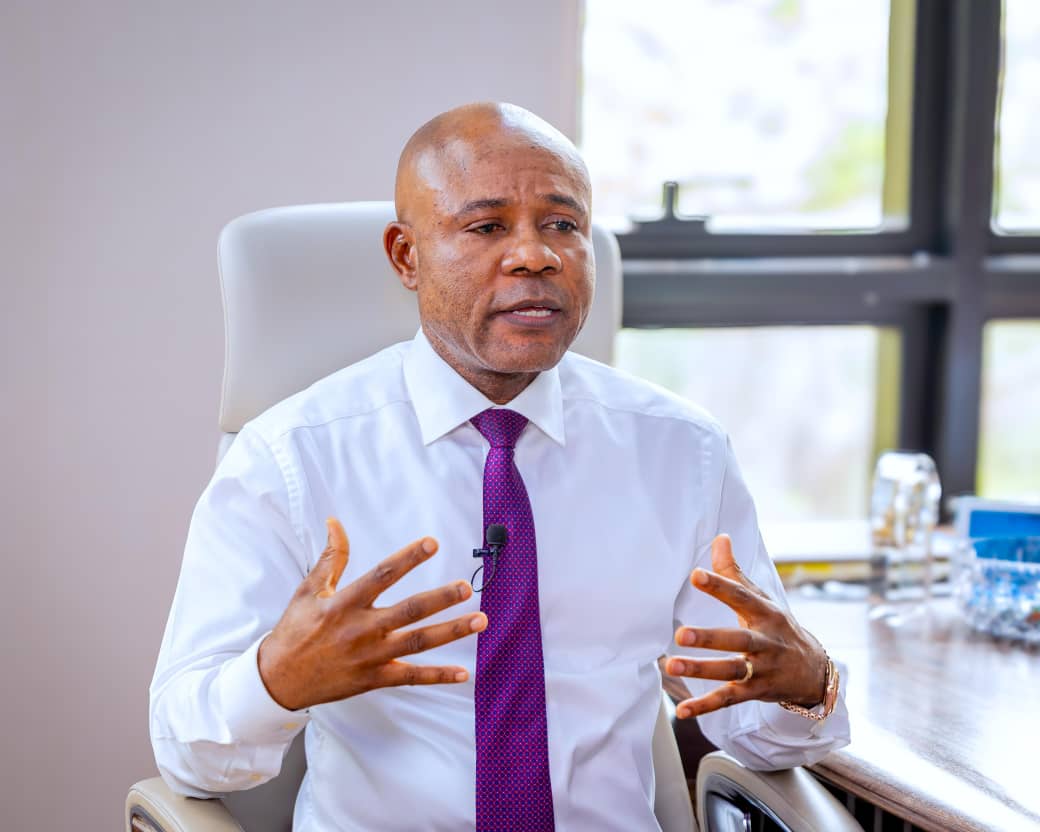
Enugu State Government is developing a 25-year development plan designed to ensure continuity of its transformation programme beyond the tenure of individual administrations.
Peter Mbah said the long-term blueprint would provide a framework within which successive administrations could sustain and improve investments in the economy, education, healthcare, infrastructure, agriculture, environment, technology and human capital development.
Mbah spoke at the 2026 Enugu State Global Goals Week Symposium at the International Conference Centre (ICC), Enugu, with the theme, “From Projects to Lasting Impact: Sustaining Enugu State’s Development Transformation.”
Represented by the Secretary to the State Government, Chidiebere Onyia, Mbah said the objective was to move the state away from a development model built around individual projects and administrations to one anchored on strong institutions, policies, systems and long-term planning.
He said development should not start afresh whenever there was a change of government, stressing that the 25-year plan was intended to provide continuity and ensure that investments made today continued to deliver value to future generations.
“The 25-year plan is intended to provide clear direction within which successive administrations can sit within a much broader vision for the state. This is how we create continuity,” he said.
Mbah said the administration was therefore moving beyond simply constructing infrastructure to ensuring that the institutions and systems required to sustain them were also put in place.
“Our objective is not merely to execute projects, but to build systems and institutions capable of delivering enduring development and ensuring that the transformation we are driving today is sustained beyond the tenure of any single administration,” he said.
According to him, the plan would guide long-term investments, strengthen institutions, expand economic opportunities, improve human capital and promote inclusive development across the state.
He said the state’s development agenda was being aligned with the Sustainable Development Goals (SDGs), with greater emphasis on measurable outcomes rather than merely the number of projects executed or the amount of money spent.
Mbah said investments in education, healthcare, roads, agriculture, water, technology and security were not ends in themselves, but components of a broader strategy to improve the lives of residents on a sustainable basis.
He cited the Smart Green Schools and Primary Healthcare Centres being developed across the state’s 260 electoral wards as examples of projects that would require adequate staffing, maintenance, financing, technology and management systems to remain functional beyond their construction.
The administration, he said, would continue to strengthen institutions, improve service delivery and establish mechanisms for monitoring the long-term impact of public investments.
In a welcome address, Senior Special Assistant to the Governor on Sustainable Development Goals and Enugu State SDGs Focal Person, Onyinye Akubuilo-Okpalanma, said sustainability must be built into government programmes from the outset.
Other News
She said the success of government interventions should not be determined merely by the number of projects completed or money spent, but by the difference they made in people’s lives.
“The success of government programmes should not be measured only by the number of projects completed or the amount of money spent, but by the extent to which those interventions improve the daily lives of our people, expand opportunities and strengthen communities,” she said.
Akubuilo-Okpalanma called for stronger community participation, continuous monitoring, reliable data and greater transparency in public finance and project implementation.
She also called for sustained investment in education, primary healthcare and environmental protection as well as greater attention to vulnerable groups.
According to her, development partners, civil society organisations, traditional institutions, the private sector and community leaders must work with government to safeguard development gains.
“Enugu’s transformation will be judged not only by the projects visible today, but also by the quality of institutions, opportunities and services available to future generations,” she said.
Former Minister of Information Frank Nweke Jnr., in a keynote address titled, “From Projects to Lasting Impact: Sustaining Enugu State’s Development Transformation,” said the challenge before the state was how to convert its current scale of public investment into enduring outcomes.
Nweke said the Mbah administration had reported more than 1,500 kilometres of roads constructed or reconstructed, over 7,000 classrooms and 260 Type-2 Primary Healthcare Centres.
He also cited the 2025 budget, in which ₦837.9 billion, representing 86 per cent, was allocated to capital expenditure, while ₦320.6 billion, representing more than one-third of the budget, went to education.
Nweke said improved domestic revenue mobilisation would be critical to sustaining such investments, arguing that government must have the financial capacity not only to build infrastructure but also to maintain public assets and sustain the institutions around them.
“Projects can transform places, but strong institutions are necessary to ensure that the transformation endures,” he said.
He identified five priorities for sustaining the state’s development: linking investments to clearly defined problems and measurable outcomes; embedding the SDGs in planning and budgeting; measuring outcomes rather than expenditure alone; providing for the maintenance of public assets from the outset; and strengthening institutions, professional capacity and accountability mechanisms.
In separate goodwill messages, Juliet Chiluwe of the UNICEF Enugu Field Office; Special Adviser on Legislative Matters Paul Nnajiofor; and Amaka Nweke stressed the need for inclusive, accountable and sustainable development capable of benefiting present and future generations.
The symposium brought together government officials, development partners, traditional and community stakeholders, civil society representatives and members of the National Youth Service Corps, among others.