Follow Us on Google
By Chinyere Anyanwu
Entrepreneurial training has been identified as key to the continued relevance and sustainability of the journalism profession in Nigeria, especially the print media.
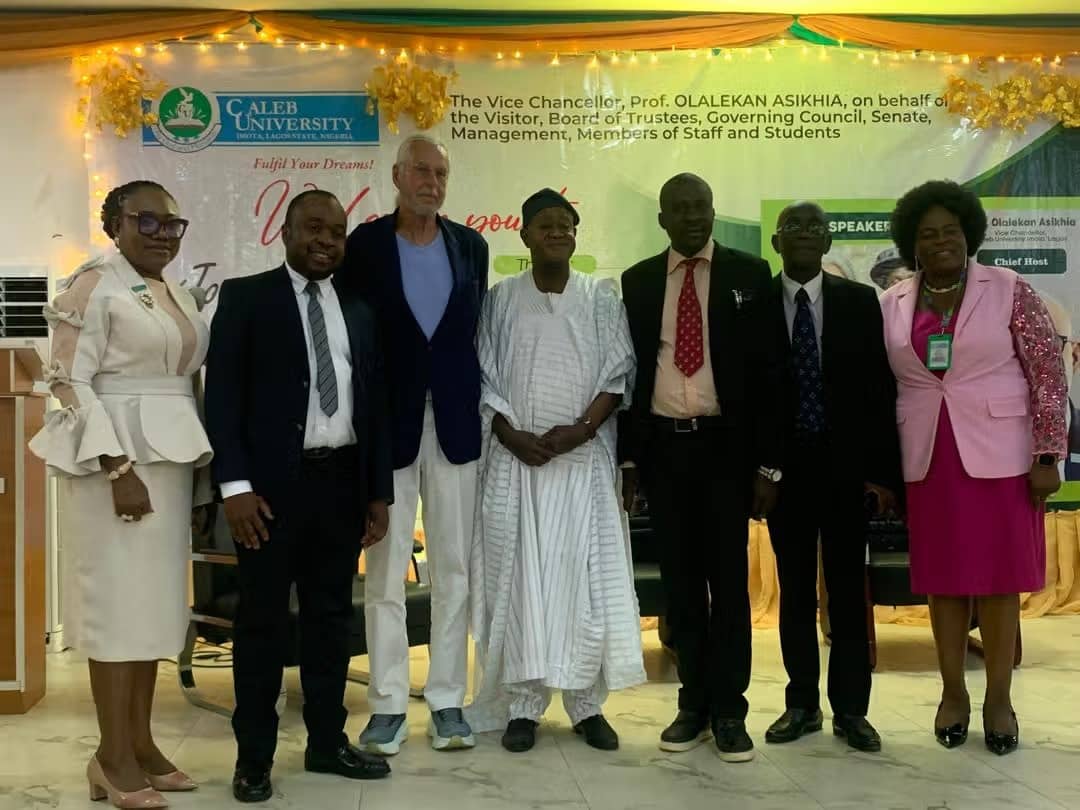
This was revealed by stakeholders at the Journalism Outlook Conference 2026 held on Monday at the Imota campus of Caleb University, Ikorodu, Lagos.
The event, which brought together major players in the industry, was themed, “Reinventing Local Newspapers in the Digital Age: Innovation, Sustainability, and Global Community Impact”.
Speaking on the topic, “Training the Next Generation of Journalists for Digital Innovation and Global Impact,” the Provost of the Nigerian Institute of Journalism (NIJ), Gbenga Adefaye, acknowledged that, “life has changed for the newspaper business. And it has changed permanently. It has changed forever.”
For him, the issue of how to train the next generation of journalists, who will dominate the space for digital innovation and dramatic impact is of major importance.
According to Adefaye, “There are now millions of publishers whose only factory is a laptop and data subscription. There are countless content creators, too. And many of them are passing on as journalists.
“They are the new champions in the field now who run the factory. They go by the name of influencers and they are not necessarily conventionally trained journalists.”
He noted, “For now, and the immediate future, AI is the next game in journalism training, as it teaches almost every field of endeavour. But it would be a mistake to see AI merely, as an item to be added to an existing curriculum like one more subject squeezed into an already crowded timetable.
“The real task is to train journalists entrepreneurially – as total content producers capable across every category of journalism practice because the former salaried jobs that once absorbed thousands of graduates, are no longer there.”
The NIJ Provost counselled that to ensure the profession and its practioners keep thriving in the digital age, “journalism training institutions need to invest substantially in digital newsrooms, television studios, radio studios, and stations, multimedia laboratories, and a dedicated, communication research capacity.”
He stated, “A journalism graduate cannot be expected to work in a compact, digital-first newsroom, when he has only handled a notebook, and a table of contents.”
Earlier in his welcome address, the Vice Chancellor of Caleb University, Prof. Olalekan Asikhia, said, “The digital revolution did not kill newspapers. It killed obsolete business models. People have not stopped consuming news. They have simply changed how they consume it.”
He, therefore, stated, “What newspapers must now reinvent is not journalism itself but content delivery, audience engagement, revenue generation, newsroom culture, and technological capability.”
The publisher of Oriwu Sun, a community newspaper in Lagos, Monzor Olowosago, in his presentation, noted that the sustainability of local newspapers depends largely on advertisement opportunities as well as objective reporting.
Other dignitaries who graced the well attended conference include the President of the Nigeria Guild of Editors (NGE), Eze Anaba, represented by Alabi Garba; Sunday Adewale, deputy vice chancellor (Academics) at Caleb University; and Adesola Ajayi, deputy vice chancellor (Research and Innovation).