Follow Us on Google

• Dismiss demonic narrative, blame human error, government negligence
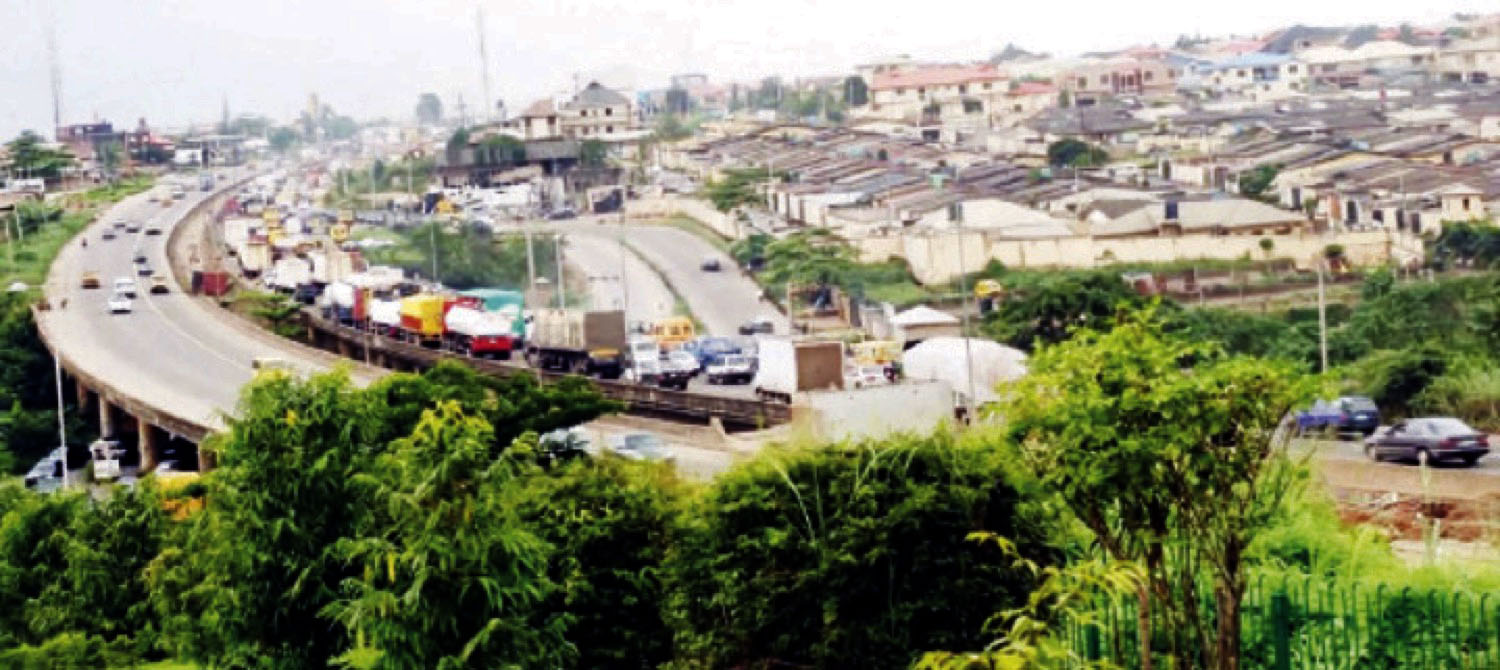
For motorists travelling along the Lagos-Ibadan Expressway, the stretch around Otedola Bridge has become a corridor of anxiety, where a routine journey can suddenly turn into a desperate struggle for survival.
The fear is particularly pronounced among motorists approaching Lagos from the direction of Ibadan, where heavy-duty trucks, often carrying enormous loads, share the highway with buses, cars and other vehicles.

When a truck loses control, the consequences can be devastating, with multiple vehicles caught in the resulting collision and traffic brought to a standstill.
But while the recurring crashes have continued to raise questions about the safety of Otedola Bridge, leading civil engineers have offered a different perspective: the bridge’s design may not be the principal problem.
Rather, they blame a combination of human error, reckless driving, overloaded trucks and the failure of regulatory authorities to enforce axle-load limits.
The Nigerian Institution of Civil Engineers (NICE) has consequently called for a more rigorous examination of the circumstances surrounding the accidents, warning that blaming the bridge without addressing the human and regulatory factors would leave the underlying causes unresolved.
NICE’s National Chairman, Mr Tokunbo Ajanaku, maintained that the gradients of the bridge were within the applicable design limits when it was constructed.
According to him, the gradient on the Ibadan-bound carriageway is approximately 3.68 per cent, while that of the Lagos-bound carriageway is 3.9 per cent. Both, he said, fall below the maximum allowable gradient of 4.5 per cent at the time of the bridge’s design.
Ajanaku argued that the figures do not support the assumption that the bridge’s gradient is inherently responsible for the recurring accidents.
“I’m being very specific. Lagos-Ibadan bound, gradient 3.68; Lagos-bound, 3.9. At the time that bridge was designed, the maximum allowable gradient was 4.5 per cent. That means the bridge was adequately designed in terms of gradients,” he said.
He added: “What you have today is not a problem with the structure but a problem with the people.”
For the NICE chairman, the critical question is not simply whether accidents occur on the bridge but where they occur, the types of vehicles involved and the conditions under which they lose control.
He drew attention to the pattern of crashes along the expressway, arguing that the concentration of accidents involving heavy-duty vehicles on the approach outside Lagos points to overloading and inadequate enforcement as major contributing factors.
“When you look at the Lagos-bound traffic, I can promise you that, without recklessness, you will not have incidents recorded into Lagos. Where you have the problem is the traffic outside Lagos. And what does that tell you? It tells you clearly that our trucks are overloaded. Because they are overloaded, they become easily out of control,” he said.
Ajanaku further claimed that about 70 per cent of the accidents recorded along the axis occurred outside Lagos, attributing many of them to overloaded trucks whose braking systems struggle to control their weight.
“Trucks are so overloaded that the brakes don’t have the capacity to control the vehicles anymore,” he said.
His position shifts attention from the physical condition of the bridge to the operational and regulatory environment in which it functions. It also raises questions about the enforcement of vehicle-weight regulations, the roadworthiness of heavy-duty trucks and the effectiveness of agencies responsible for highway safety.
At the centre of the engineers’ concerns is the reported prolonged non-operation of weighbridges, which are intended to help authorities determine whether trucks comply with prescribed weight limits.
Ajanaku said weighbridges were operational when Otedola Bridge was designed but alleged that the facilities had not functioned effectively for about 25 years.
He said NICE had repeatedly written to the government, urging the restoration of effective and sustained weighbridge operations.
“Don’t forget that when the bridge was designed, there were operational weighbridges. In the last 25 years, these weighbridges have not functioned. This institution has written several times to the government to bring back the effective and sustained use of weighbridges,” he said.
The allegation raises a fundamental question about road safety management: what purpose do weight restrictions serve if vehicles can continue to carry excessive loads without effective checks?
Overloading increases the demands placed on a truck’s braking system and tyres, affects vehicle handling and can make emergency manoeuvres more difficult. On a highway where vehicles travel at considerable speeds and traffic volumes are high, the consequences of a loss of control can extend far beyond the truck itself.
However, effective enforcement requires more than the installation of weighing equipment. It demands functional facilities, regular inspections, credible sanctions and coordinated action by the relevant authorities to ensure that trucks comply with established safety standards.
For the engineers, restoring weighbridge operations should therefore be part of a broader strategy to address the recurring accidents, rather than treating each crash as an isolated incident.
Ajanaku said the institution had raised concerns about the causes of road accidents several years ago, insisting that the challenge extended beyond infrastructure to the behaviour of road users and the enforcement of safety regulations.
He recalled that NICE and other groups of engineers had produced reports on the issue in 2016, 2017 and 2018.
“I must say this: in 2016, 2017 and 2018, we wrote clear reports in concert with other sets of engineers initiated by us. And it wasn’t an infrastructure problem. It was an attitudinal problem,” he said.
He warned that Nigeria would struggle to derive maximum value from its road infrastructure if reckless driving and disregard for safety regulations remained widespread.
Other News
“Until we deal with the wrong attitude, it may be difficult to enjoy optimal use of our infrastructure, not just on Otedola Bridge, but on every infrastructure that we have in this country,” he added.
His argument places responsibility on multiple stakeholders, including truck operators, drivers, vehicle owners and government agencies. While the conduct of individual drivers matters, the scale of the problem also raises questions about whether operators are held accountable for excessive loading and whether enforcement agencies have the resources and institutional commitment required to prevent unsafe vehicles from entering the highways.
The recurring crashes, therefore, cannot be adequately addressed through public warnings alone. They require a system in which safety standards are consistently enforced and violations attract consequences.
Otedola Bridge was constructed between 1974 and 1978 and opened in August 1978 as part of the initial development of the Lagos-Ibadan Expressway.
At approximately 800 metres long, the bridge has two lanes on each side and forms part of a major transport corridor linking Lagos with other parts of the country.
The expressway is a vital route for the movement of passengers and goods, including cargo transported from Apapa Port to destinations in the northern and other inland parts of Nigeria.
However, the transport environment in which the bridge now operates is significantly different from that of the 1970s.
Lagos has experienced substantial population growth, urban expansion and an increase in motorisation. The bridge and the surrounding expressway now serve commuters, commercial vehicles, interstate buses and heavy-duty trucks moving through one of the country’s busiest economic corridors.
Figures supplied for this report estimate Lagos’s population at more than 22 million and put daily traffic on the link at over 250,000 vehicles. These estimates require confirmation from the relevant population and traffic authorities, but they illustrate the scale of the pressure on the corridor.
The combination of high traffic volumes, heavy vehicles and the movement of goods across long distances makes safety enforcement particularly important.
Yet the fact that the bridge was designed within the applicable gradient limits does not, by itself, establish that every aspect of its present condition is satisfactory.
Engineering safety also depends on maintenance, pavement conditions, drainage, road markings, barriers, signage, traffic management and the performance of the entire approach to the bridge.
The engineers’ position, therefore, should not be interpreted as a reason for government to abandon structural inspections.
Rather, it highlights the need to investigate the bridge’s condition alongside the human and regulatory factors that may be contributing to the crashes.
Over the past decade, Otedola Bridge and its surrounding approaches have become associated with serious road crashes, fatalities, injuries and prolonged traffic disruptions.
Information made available for this report indicates that more than 18 major accidents have occurred around the bridge in the last 10 years, excluding less severe incidents.
The reported frequency of these accidents underscores the need for a comprehensive, evidence-based investigation into their causes.
Such an investigation would need to establish the exact locations of the crashes, the types and conditions of vehicles involved, whether excessive loading was a factor, the role of speed and driver behaviour, and whether road design or maintenance deficiencies contributed to individual incidents.
A properly documented crash database would also help authorities determine whether the accidents are concentrated on particular approaches, at specific times or under identifiable traffic conditions.
Without such evidence, debates over whether the bridge itself or the behaviour of road users is primarily responsible risk remaining inconclusive.
The 70 per cent accident figure cited by Ajanaku, for instance, points to a potentially important pattern but its implications would be clearer if supported by official accident records showing the period covered, the geographical limits used and the categories of crashes included.
Such data would help government agencies and engineers identify the most effective interventions and assess whether they are reducing the number and severity of accidents.
Other leaders of NICE, including its Board of Trustees Chairman, Senator Adefemi Kila; a former National Chairman, Mrs Aishatu Umar; and Deputy National Chairman, Professor Sonny Ali, also shared and aligned with Ajanaku’s position on the factors contributing to accidents along the axis.
Their position reinforces the institution’s call for greater attention to driver conduct, vehicle overloading and regulatory enforcement.
The broader implication is that road safety cannot be achieved through infrastructure development alone. Even a road built to acceptable engineering standards can become dangerous when vehicles are overloaded, drivers disregard safety rules and enforcement systems fail to function effectively.
For government, the immediate challenge is to translate the engineers’ concerns into measurable action.
This includes restoring and maintaining functional weighbridges, enforcing axle-load limits, strengthening checks on the roadworthiness of heavy-duty vehicles, ensuring that drivers comply with speed and traffic regulations, and investigating the circumstances of serious crashes.
Authorities must also conduct independent structural and road-safety assessments of Otedola Bridge and its approaches, publish the findings and implement any recommended repairs or operational changes.
The Federal Government and relevant highway agencies would need to establish which agencies are responsible for each intervention, provide the necessary resources and publish timelines for implementation. Transport operators and truck owners, on their part, must ensure that their vehicles meet prescribed weight and safety requirements.
Ultimately, the recurring accidents at Otedola Bridge demand a response that goes beyond the familiar cycle of crashes, public outrage and official assurances.