Follow Us on Google

By Rita Okoye
Earlier this year, the Department of Petroleum Resources released a fatality report that caught everyone’s attention. So far, eighty-six workers have died in Nigeria’s energy sector, highlighting big problems with how the industry handles risk. While regulators discussed new policies and companies kept following their usual routines, one engineer at the Nigerian National Petroleum Corporation had already found a practical solution with Oghenepawon David Obriki preventative tracking system.
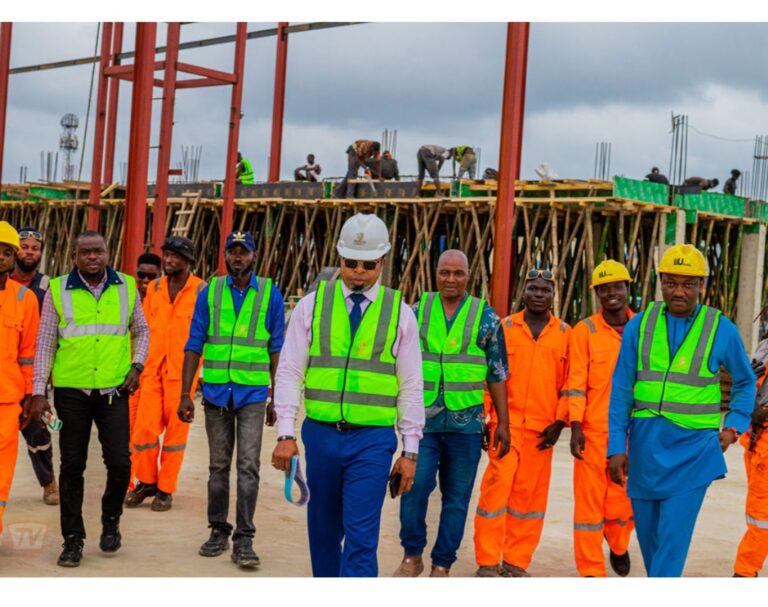
Oghenepawon David Obriki sees safety as more than paperwork. As a petroleum geoscientist and occupational health and safety specialist, he has spent years building systems to spot hazards before they turn into bigger problems. His approach, now used at NNPC construction and processing sites, has caught the eye of safety auditors and engineering groups who view it as a real change from the industry usual reactive methods.
In Nigeria’s petroleum industry, safety is usually measured by what experts call lagging indicators, such as incident rates, investigation reports, and compliance paperwork that only come after something goes wrong. Obriki saw the main problem with this approach early in his career. By the time an incident is reported, the issues behind it have often become normal for workers. Small equipment problems, skipped steps, and unreported close calls build up over time and can lead to serious consequences that reports can’t fix.
Obriki did not just change procedures; he built a new system to track incidents. He set up a clear way to handle more than one hundred minor anomaly reports at active worksites, treating each report as a reason to investigate, not just paperwork. While most safety managers only log and file reports, Obriki’s system triggers an immediate response. Within twenty-four hours of any reported issue, frontline crews receive a safety briefing from their supervisor. The process is recorded, time-stamped, and reviewed by the asset management team. No issue is too small to address.
This model is based on occupational psychology, an area that traditional petroleum engineering management has often ignored. Obriki uses feedback methods that reward workers for reporting hazards accurately instead of punishing them. Workers who point out small problems get helpful feedback and clear explanations, not discipline. This change is important. In the past, reporting a problem could put someone’s job at risk, but Obriki’s system makes it safe and encouraged. Independent safety auditors who reviewed the system saw a clear shift in how workers viewed risk at these sites.
These results are real, not just ideas. In the areas managed with Obriki’s system during this time, project teams had zero lost-time injuries. Technical staff followed safety protocols most of the time, which independent auditors confirmed by visiting the worksites. Recurring hazards, which usually get worse during construction, dropped a lot. The project also stayed on budget and avoided the unexpected shutdowns that often happen when hazards pile up on large energy sites.
Other News
Obriki’s approach faced its sternest test on Chevron’s Escravos Gas-to-Liquids project, where he served as HSE Supervisor for the contractor Techint Cimi Motubi. A project of that scale brings together many companies, crews and trades, each with its own habits and its own sense of urgency. Where their work overlaps, risk multiplies: a heavy lift above a crew working below, hot work beside a live line, two teams claiming the same space at the same hour. On paper, such clashes look like scheduling problems. On the ground, they are how people get hurt.
Obriki treated those overlaps as the first hazard to manage through coordination meeting with all concerned parties. He mapped where simultaneous operations would collide and planned the work so they did not, before the work began. Every new worker went through induction, every shift opened with a toolbox meeting, and every reported anomaly was followed until it was closed. His grounding in geology and mining, combined with his safety training, let him read both the technical demands of a task and the danger it posed to the people doing it. Planning for safety and planning for progress became the same exercise, and downtime fell along with the risk.
At Adano Engineering, as Safety Officer and HSE Coordinator on projects run to Shell standards, he met another side of the same problem: keeping a contractor workforce faithful to a client demanding rules. He turned Shell HSE policies and Life-Saving Rules into daily habit through inductions, internal audits, site walkthroughs and an observation and intervention program that invited every worker to stop an unsafe act. His monthly HSE KPI statistics gave management an honest picture of performance and helped the company keep up the standards behind its ISO certification.
He kept building his professional standing too. He earned NEBOSH and IOSH qualifications and certification from the World Safety Organization, and completed a master’s degree in petroleum geology. What set him apart was less any single credential than a conviction he carried from site to site: a hazard is cheapest to fix at the moment someone first notices it.
Obriki has done more than write a safety manual. He has built an operating system for human behavior in high-risk environments, combining data engineering, behavioral science, and procurement rules into one ongoing framework. The eighty-six deaths in this year’s sector report show the cost of waiting for failure before acting. The zero lost-time injuries in Obriki areas during the same period show what a better approach can achieve.
As Nigeria’s energy sector faces more complex operations and stricter regulations, project leaders no longer need to wonder if preventive safety engineering works. Obriki has already shown that it does. Now, the key question is how quickly the organizations with the greatest stake in the outcome will adopt and implement his methods.