Follow Us on Google
From Kenneth Udeh, Abuja
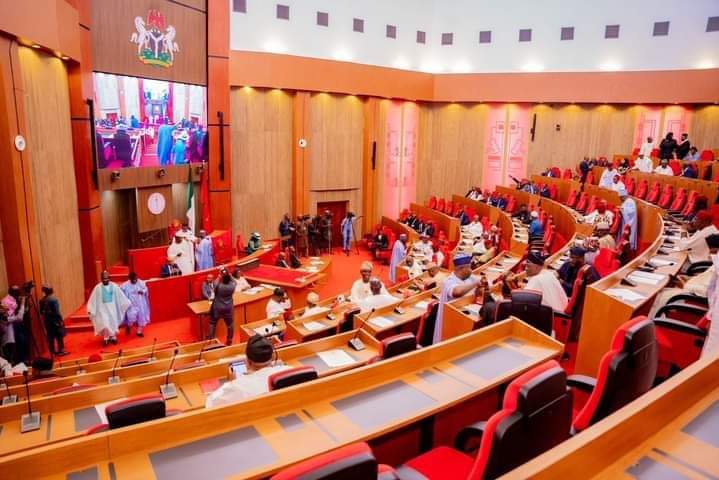
A dramatic legislative action is unfolding at the Nigerian Senate as lawmakers, sitting in the Committee of the Whole, have repealed the entire Electoral Act 2022 through voice votes and commenced clause-by-clause reconsideration for fresh re-enactment ahead of the 2027 general elections.
The move follows a substantive motion for rescission and recommittal sponsored by Senator Opeyemi Bamidele, who invoked Order 52(6) of the Senate Standing Rules to justify reopening a matter already concluded during the current session.
Addressing the chamber at Tuesday’s ongoing Live plenary, Bamidele explained that although the Electoral Act (Repeal and Re-enactment) Bill, 2026 had been passed during an emergency sitting last week, new developments necessitated urgent legislative intervention.
“Order 52 sub 6 of our rules says it shall be out of order to attempt to reconsider any specific question upon which the Senate has come to a conclusion during the current session except upon a substantive motion for rescission,” he stated.
He clarified that following the Bill’s passage, the Independent National Electoral Commission (INEC) announced its election notice and fixed the Presidential and National Assembly elections for February 2027.
According to him, INEC subsequently informed the leadership of the National Assembly that stakeholders within Muslim communities raised concerns that the proposed date would conflict with the Ramadan fasting period in 2027.
“The leadership of the National Assembly agreed with INEC that where it is possible for INEC to review its timetable… INEC should go ahead and reschedule,” Bamidele said.
However, he explained that the provision requiring INEC to issue an election notice not later than 360 days before the election created a legal constraint, meaning the Commission could not adjust its timetable without further amendment.
“The primary reason for our having to reconvene today is for us to further amend the relevant provisions of the Electoral Bill so that INEC will be in a position to review their timetable,” he added.
He stressed that the rescission process was intended to “jettison what we had earlier passed” and recommit the Bill for fresh consideration.
The motion was seconded by Senator Simon Lalong, Chairman of the Senate Committee on Electoral Matters.
Senate moves into Committee of the Whole
Following debate, the Senate dissolved into the Committee of the Whole and, in a sweeping voice vote, repealed Clauses 1–156 of the 2022 Electoral Act, paving the way for comprehensive amendments and re-enactment.
Other News
Lawmakers are currently repealing each clause of the 2022 Act for subsequent reenactment under the amended framework.
Laying the committee’s report, Senator Lalong disclosed that the Committee on Electoral Matters extensively reviewed contentious provisions, particularly the electronic transmission of results.
“The Committee has recommended a framework that prioritises the electronic transmission of results from polling units directly to the INEC Result Viewing (IReV) portal in real-time,” he announced.
He added that a safeguard has been included for areas with poor network coverage.
“We have also included a provision for a secure and transparent manual backup process to ensure that no vote is lost and the integrity of the election remains uncompromised.”
Revised election timelines
Lalong confirmed that amendments to election timelines were proposed to ensure:
Adequate preparation time for INEC
Avoidance of conflicts with significant national or religious observances, including Ramadan
“The goal of this amendment is to strengthen our democratic process, enhance transparency, and restore the confidence of the Nigerian people in our electoral system,” he stated.
With the Senate now actively repealing and reconsidering the entire Electoral Act framework, today’s proceedings mark one of the most consequential legislative interventions ahead of the 2027 general elections.
All eyes remain on the chamber as the clause-by-clause reenactment continues, with potential adjustments to election dates and the legal framework governing electronic transmission set to redefine Nigeria’s electoral process.
Proceedings are currently on hold as the Lawmakers are engaging in group discussions in the chambers.