Follow Us on Google
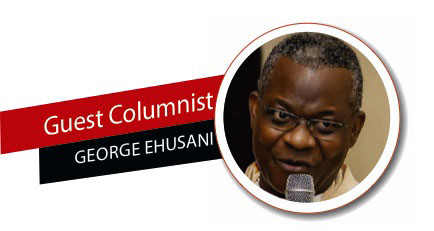
I thank the Delegation of the European Unionto Nigeria, the ECOWAS Commission, and my friends at the Abuja School of Social and Political Thought, for inviting me to participate in the reflections you have arranged on this occasion. I have been actively engaged in public discourse, in social commentary, and in advocacy for good leadership and democratic governance in Nigeria since the year 1990. In the course of these thirty-six years I have watched seven general elections come and go, each one preceded by the same anxiety, attended by the same malpractice, and followed by the same disillusionment. Two years ago I presented a paper before the Abuja School on “Leadership Debauchery and Our National Ruination.” What I am asked to address today is the other half of that question, namely, whether our elections are capable of delivering the inclusive development that has so far eluded us.
What we practise is not democracy, but anocracy
Let me begin by naming our condition accurately, for we shall not cure what we will not name. Presentday Nigeria may best be described as an anocracy, a hybrid contraption that wears the garments of democracy while retaining the instincts and the appetites of autocracy. We hold elections, we swear in legislators, we robe judges, and we quote the Constitution at one another. Yet the one principle upon which the whole edifice rests, namely the separation of powers and the discipline of checks and balances, has been quietly and deliberately dismantled. The legislature has been reduced to a department of the Presidency, and much of the judiciary has learnt to read the mind of power before it reads the law. At the state level the same subjugation is reproduced in miniature: Houses of Assembly that exist only to ratify, and judiciaries that dare not offend the Governor who signs their vouchers.
The evidence is not hidden. Since 2023 more than one hundred and forty politicians have crossed over into the ruling party, among them seven governors elected on opposition platforms, and that party now controls thirty-one of our thirty-six states. True, carpet-crossing is not new among us. Yet what we witness now is not defection but liquidation. A legislature without an opposition is not a legislature; it is a chorus. And a judiciary that determines who shall govern, but never what governance must deliver, is not a check upon power; it is an alternative ballot box.
Democracy Is and Means Much More Than the Holding of Elections Elections matter enormously, because they are the one moment at which the citizen holds the sword.
In that moment the ordinary Nigerian — the teacher whose salary is months in arrears, the farmer who cannot reach his farm for fear of bandits, the mother who has buried a child for want of a few thousand naira — renders a verdict upon those who have governed him, and the question the ballot puts is simple and merciless: are our life chances better, are our living conditions improved, are we more prosperous, more secure, and more free? That is the accountability function of elections. It is not decoration; it is the mechanism by which power is made answerable to need.
But I wrote many years ago, and I have had no reason since to revise the judgement, that democracy is and means much more than the holding of elections. Democracy is not an open licence for executive lawlessness or legislative recklessness. It is not a free ticket for deadly political brinkmanship. It is not a game of conquest, nor the crushing of opposing views, nor the unrestrained gathering of the spoils
of war by a few smart thugs. Democracy is rather the rule of law and the equality of all persons under the law; it is the sanctity of the institutions that superintend the social contract between the leaders and the rest of society; and it is the process of feedback and recall, which together guarantee accountability.
Much of democracy therefore happens in between elections — in the public hearing, the audit query, the investigative report, the court judgement, the town hall meeting and the pastoral letter. It is in that long interval that civil society organisations interrogate budgets, that a free press exposes what power would conceal, that courts restrain the overreach of the executive, and that faith communities form the moral conscience of the nation. I said in 2007 that the mere hosting of periodic elections is not an indication of any progress towards a just and democratic society, and that ad hoc Election Monitoring ends up unveiling the extent of rigging without mitigating it, whereas what we require is Democracy Monitoring as an ongoing venture. Nineteen years later, that remains my humble submission. Without genuine democratic engagement in between elections, and without elections that are truly free, peaceful, fair and credible, inclusive development will not happen. It cannot happen.
When elections repeatedly lack credibility, they cease to hold anyone accountable
Here lies the tragedy of our situation. An election that lacks credibility does not merely produce a disputed winner; it destroys the accountability function itself, for both parties to the covenant. For the citizen the logic is simple: if my vote does not determine the outcome, why should I spend a day in the sun to cast it? In 2023 only 26.7 per cent of registered voters turned out, the lowest figure in our history as a republic. That is not apathy. It is a verdict upon the process.
For the office holder the logic is equally simple and infinitely more dangerous. If he did not truly need our votes in order to arrive in office, he does not need our approval in order to remain there. He owes his position instead to the godfather who financed him, the party machinery that fielded him, the
officials who announced him, and the tribunal that confirmed him; and to none of these is the welfare of the ordinary Nigerian a relevant consideration. Why then are we surprised that budgets are padded, that constituency projects exist only on paper, and that the Auditor-General’s queries are answered with silence? Why are we surprised that after twenty-seven years of unbroken civil rule, it has been all motion, but no movement?
The umpire that is not free
At the centre of this failure stands our electoral umpire. In that same essay of 2007 I called for the restructuring of the Independent National Electoral Commission, to make the Commission and its leadership truly independent and autonomous of the Presidency, both in the appointment of its functionaries and in the allocation of funds for its activities. Neither has been done. Its Chairman and National Commissioners are still appointed by the President, and its funds, though drawn from the Consolidated Revenue Fund, must still pass through the ordinary appropriation process, at the mercy of an executive that proposes and a legislature that approves.
And this is not the complaint of the opposition alone. In July of this year the Chairman of INEC himself, Professor Joash Amupitan, Senior Advocate of Nigeria, put the matter plainly: “Can INEC truly be independent without financial autonomy? If we are serious about strengthening our institutions and conducting free, fair and credible elections, then financial autonomy is essential.” For as long as the Commission depends upon budgetary approvals by other institutions, he observed, genuine independence remains difficult. When the umpire himself tells us that he is not free, we owe him the humility of belief.
The link between democracy and inclusive development is accountable governance
Why should any of this matter to development? Because the link between democracy and inclusive development is neither the ballot paper nor the party manifesto. The link is accountable governance.
Development becomes inclusive only when those who allocate public resources are compelled to allocate them in the interest of the many rather than the few, and that compulsion is not moral but institutional. It is exerted by a legislature that can refuse a budget, an Auditor-General whose reports carry consequences, a court that cannot be bought, and a press that cannot be silenced. In Nigeria every one of these mechanisms has been thoughtlessly, recklessly and systematically weakened by our political leaders over more than two decades.
The result stands before us. Inflation has moderated and the macroeconomic indicators have improved, and yet the World Bank reported in April of this year that sixty-three per cent of Nigerians, some one hundred and forty million of our people, now live in poverty, against fifty-six per cent in 2023.
Ours is clearly a case of impoverishment, not poverty. Growth without accountability does not become development; it becomes accumulation for the few. An economy may expand while a people grow poorer, and that, alas, is what we are witnessing.
A new world order in which no one is coming to rescue us
Our conveners have asked us to consider the emerging new world order, and if I may be blunt here: the era in which our democratic deficits could be subsidised, monitored and partially corrected by external partners is drawing to a close. Development assistance is being cut across Africa, and democracy and governance programming most sharply of all; partnership is becoming transactional, and interests are now spoken of far more readily than values. I do not lament this. I observe it, and I draw the obvious conclusion, that whatever is to be repaired in Nigeria must henceforth be repaired by Nigerians.
Nothing short of a fundamental resetting of our political architecture
I have insisted for years that leadership debauchery and elite idiocy will ruin any nation, no matter how perfect the governance blueprint it adopts. I hold to that still. But I must now state its corollary with equal force: an architecture that reliably recruits debauched leaders is not a neutral container into which good men may one day be poured. It is itself the machinery of our ruination, and it must be reset. What we require at this stage is therefore nothing short of a fundamental resetting of the political architecture of this country, without which our elections, 2027 included, will yield no tangible result for inclusiveness or for wholesome development, and the architecture we presently operate will push Nigeria further into poverty, deeper into insecurity, and eventually into state collapse.
Consider what this architecture has done to our recruitment of leaders. Nearly twenty years ago I called for arrangements to ensure that the paths to public service are not as smooth and as attractive as they are for rogues, thieves and brigands, and that the gains of office are not as rewarding as they are for those who keep the keys of the national treasury. Nothing has changed, except for the worse.
This jaundiced architecture has propped up some of the worst characters in the polity as leaders at all levels — the very men whom our Lord identified when He said, “All who came before me are thieves and robbers… The thief comes only to steal and to kill and to destroy” (John 10:8,10) — and it has driven men and women of wisdom, competence and integrity to the peripheries of our society, when it has not driven them to their early graves. What prevails among us today is therefore not genuine peace, but the peace of the graveyard. Nigeria needs a new political philosophy and a new democratic culture, and a new crop of patriots with a fiery sense of sacrifice for the common good, to bring this country back from the brink.
Recommendations
1. Grant the umpire genuine independence. Place the funding of INEC on a first-line charge upon the Federation Account, and let its Chairman and National Commissioners emerge from a transparent, multi-stakeholder process rather than from presidential discretion.
2. Restore the integrity of the ballot. Make the real-time transmission and public upload of polling unit results mandatory and legally binding, and let the tribunals dispense with all cases of fraud before any winner is sworn into office.
3. End the carnival of defections. Enforce the constitutional provision by which a legislator who abandons the party on whose platform he was elected forfeits his seat, and extend that discipline to governors and to the President.
4. Rebuild judicial independence. Guarantee the financial autonomy of the state judiciaries, make judicial appointment and discipline transparent, and return our courts to substantial justice rather than the refuge of technicality.
5. Devolve power and restore true federalism. Bring policing, revenue and responsibility closer to the communities that bear the consequences of governance, and reduce the ruinous cost of our present structure.
6. Fund Democracy Monitoring, and not merely Election Monitoring. Our civil society, our investigative media and our audit institutions must now be sustained by Nigerian philanthropy, Nigerian business and the Nigerian religious institutions, and must be at work in the four years between elections, and not only in the four weeks around them.
7. Reform political recruitment. Open up the party primaries, cap and enforce limits upon campaign finance, and deliberately mentor, fund and mobilise persons of competence, character and integrity into the political arena, for the good will not govern us while the good stay at home.
Conclusion
Let me conclude by saying once again that 2027 is not merely another election. It is a test of whether this republic still possesses the capacity to correct itself, and if we approach it as a contest to be survived rather than an accountability to be exercised, we shall emerge from it poorer, angrier and more fragmented than we entered it. I therefore call upon the European Union and the ECOWAS Commission to shift the weight of their support from the four weeks of the election to the four years of the governance, and I call upon our civil society, our media and our religious institutions to occupy that interval with vigilance, with evidence and with courage.
Fourth century philosopher, St. Augustine of Hippo, declared that kingdoms devoid of justice are nothing but a bunch of bandits or a gang of robbers. We are perilously close to that description. Yet I remain a believer in the resilience of nature, and in nature’s innate capacity to restore equilibrium when that equilibrium has been upset by human reckless misadventure. And I hold fast to the ancient promise: “If my people, who are called by my name, will humble themselves and pray and turn from their wicked ways, then I will hear from heaven, and will heal their land” (2 Chronicles 7:14). The healing of Nigeria is available to us. It is not, however, available cheaply, and it is not available to spectators.
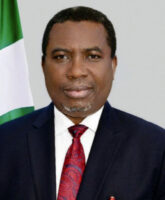
• Rev. Fr. Ehusani, is Executive Director, Lux Terra Leadership Foundation.
• Presented at the Workshop on “2027 and the Challenge of Consolidating Democracy and Economic Growth in the Face of the Emerging New World Order and Political Economy,” Abuja School of Social and Political Thought, September 17, 2026.