Follow Us on Google
From Noah Ebije, Kaduna
On losing the presidential election in 2015, former President Goodluck Jonathan reportedly consoled himself with these words: “It is better to gain honour at the cost of losing power, than to gain power at the cost of losing honour. At any point in time, the power of love should matter more than the love of power.”
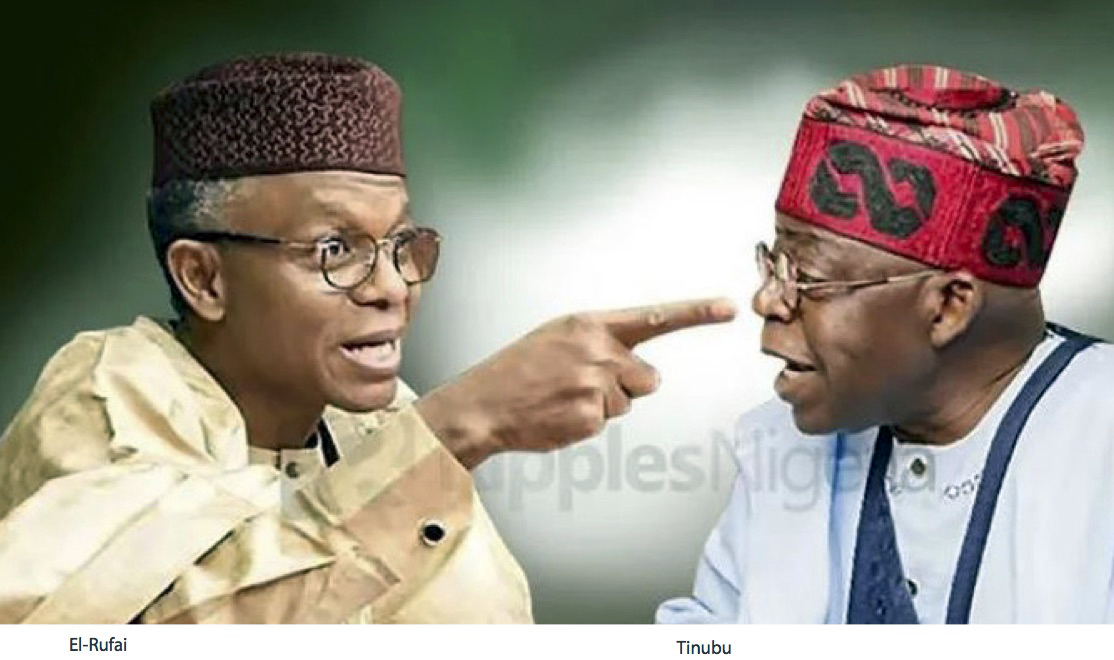
That reflection resonates strangely with the current political trajectory of former Kaduna State governor Nasir El-Rufai, a man whose story has become one of reinvention under pressure, an unfolding contest between ambition, accountability and the unpredictable currents of Nigeria’s politics. If events continue on their present course, he risks losing both power and honour before it is all over.
El-Rufai’s political journey has taken a dramatic turn, evolving from a kingmaking role within Nigeria’s ruling coalition to a prominent but embattled opposition figure ahead of the 2027 general elections. Less than three years after helping to secure victory for President Bola Tinubu, he now finds himself outside the ruling All Progressives Congress (APC), aligned with the opposition African Democratic Congress (ADC), and contending with mounting legal and political pressures that could blunt his influence in the crucial North-West region.
Political observers note that through his mobilisation as the then governor of Kaduna State, the North-West contributed the highest votes to Tinubu’s emergence as president-elect. The zone produced a cumulative total of 2,950,393 votes out of the 8,794,726 votes scored nationally for Tinubu, representing approximately 33.55 per cent of the entire votes cast in the president’s favour.
The seeds of the falling-out were planted in August 2023, when the Senate declined to confirm El-Rufai’s ministerial nomination, citing security concerns and socio-economic issues arising from his eight-year tenure as governor of Kaduna State. Though the rejection followed official procedures, political analysts widely interpreted it as a signal of deep fractures within the APC.
“That episode marked a clear shift in elite consensus,” said political analyst Dr. Kabiru Sani in Kaduna. “In Nigerian politics, rejection at that level is rarely just about paperwork. It reflects power realignment.”
In the months that followed, El-Rufai’s tone towards the Tinubu administration hardened considerably. He openly criticised key policies, including the removal of the fuel subsidy and the government’s handling of insecurity in North-West Nigeria. A senior APC official, speaking on condition of anonymity, dismissed his interventions as sour grapes. “These are the reactions of someone who feels excluded. Governance is not commentary.”
Yet others argue his criticisms carry weight precisely because of his insider knowledge. “He understands the machinery,” said one analyst. “When he speaks, it carries more weight than that of a typical figure.”
By March 2026, El-Rufai formally exited the APC, accusing the party of eroding internal democracy, and joined the ADC. His arrival significantly boosted the opposition party’s profile, particularly in northern Nigeria. “He brings structure, networks, and electoral experience that can challenge APC dominance in the North-West,” said ADC chieftain Audu Ibrahim.
However, the path to political resurgence is far from clear.
Other News
El-Rufai’s repositioning has coincided with intensifying legal scrutiny from multiple agencies. The Independent Corrupt Practices and Other Related Offences Commission (ICPC) has filed an 11-count charge against him over an alleged N10.8 billion CCTV project in Kaduna State, citing irregular contract awards and financial transactions between 2017 and 2022.
In April 2026, the Department of State Services (DSS) arraigned him before a Federal High Court in Abuja over alleged unlawful interception of communications involving National Security Adviser Nuhu Ribadu. He has pleaded not guilty to all charges. The Economic and Financial Crimes Commission (EFCC) is also reportedly investigating aspects of his tenure.
El-Rufai has consistently denied wrongdoing, describing the cases as politically motivated. “This is a pattern we have seen before. Weaponisation of institutions to settle political scores,” he said in a recent statement. Government officials rejected that claim. A senior justice ministry source insisted: “These are independent investigations. No one is above the law, regardless of political alignment.”
The timing of the legal battles has fuelled intense debate about their potential impact on the 2027 elections. Supporters argue the prosecutions are designed to weaken El-Rufai’s ability to mobilise voters against Tinubu in the North-West, a region critical to any presidential victory. “Even if he retains influence, litigation can limit mobility, messaging and coalition-building,” noted political risk consultant Lawal Musa. “It creates uncertainty around his candidacy or kingmaker role.”
Despite these obstacles, El-Rufai’s influence in Kaduna State and across the broader North-West remains a significant factor. His ability to shape alliances could determine whether opposition parties mount a unified challenge in the zone. For the APC, his departure underscores unresolved internal tensions within a coalition built on negotiated alliances. For the opposition, his arrival presents both an opportunity and a challenge.
“El-Rufai is a double-edged sword,” said political observer Zainab Yusuf. “He brings capacity, but also controversy. How the opposition manages that balance will be critical.”
Political observers note, however, that Tinubu is himself an experienced strategist who has built a political system that tends to account for both allies and adversaries. El-Rufai’s move into opposition does not automatically translate into an advantage for his former ally, and it can cut both ways.
On one hand, with legal obstacles clouding his path, El-Rufai’s departure removes one internal power struggle from Tinubu’s plate. Internal dissent is often more destabilising than external criticism. On the other hand, a figure of El-Rufai’s experience and outspokenness operating within the opposition can strengthen alternative blocs and energise coalition efforts, particularly in a region the APC cannot afford to lose.
As for his legal battles, senior lawyers who spoke on the matter were emphatic that the outcome will depend on due process and the strength of his defence. “Once a matter is before the court, it is the law and the facts that will ultimately decide the case,” one legal practitioner said. “No individual, regardless of political standing, can simply override that process.”
Beyond the courtroom, observers acknowledge that the broader political environment will shape public perception. But they caution that such factors do not determine judicial outcomes. “Courts are expected to rely on evidence and established legal principles,” another legal expert noted.
For now, attention remains on how the legal process unfolds. But the larger political question is already taking shape: can the man who delivered the North-West to Tinubu in 2023 now take it away from him in 2027?