Follow Us on Google
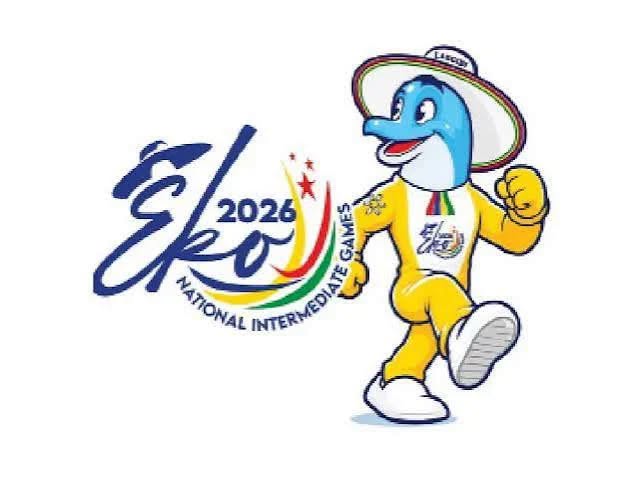
Former Nigerian Olympian and sports administrator, Yusuf Alli, has stated that the maiden National Intermediate Games, branded EKO 2026, will serve as a litmus test for states genuinely investing in grassroots athlete development versus those relying on recruiting established talents to boost medal counts.
Scheduled to run from October 1 to 15 in Lagos, EKO 2026 will feature athletes aged 15 to 18 competing across 28 sports. Organisers expect more than 14,000 athletes from Nigeria’s 36 states and the Federal Capital Territory to participate in the inaugural edition.
Alli, who is part of the organizing structure, emphasized that the competition is designed to strengthen the pathway between youth and senior sports. “This will expose states. States that just go and buy athletes for festivals — this will determine the ones that have really been training,” he said.
He noted that the Games will shift focus from short-term medal success to identifying states with sustainable systems for producing athletes. “I know for sure that states like Edo and Lagos train athletes very well. It will come to play for us to see the states that have been training athletes,” Alli added.
Other News
The issue of athlete recruitment has long been debated in Nigeria’s multi-sport competitions. The National Sports Festival, the country’s flagship event, has often been dominated by a handful of states. Delta State, for example, retained its title at the 2025 edition in Ogun, winning 323 medals, including 122 gold. At the youth level, however, Lagos showcased the strength of its development program by topping the medal table at the 2025 National Youth Games in Asaba with 52 gold medals.
This contrast underscores the significance of EKO 2026. Rather than replicating the established hierarchy of the National Sports Festival, the Intermediate Games could reveal which states have strong pipelines of athletes progressing through the youth ranks.
The age structure is particularly critical. By targeting athletes between 15 and 19, the Games occupy a transitional stage where competitors move beyond introductory youth competition and begin preparing for senior sport. Alli confirmed that talent identification teams will monitor performances closely: “We look at the extra-talented athletes that may not have what it takes now, but may have what it takes in the future. Those are the ones we are really looking to concentrate on.”
For Alli, the true value of EKO 2026 will not be measured solely by the medal table but by the number of young athletes identified, developed, and retained by their states as they progress toward senior competition. The Games are expected to become a benchmark for Nigeria’s grassroots sports system — testing whether states are building sustainable talent pipelines or simply assembling teams for short-term success.