Follow Us on Google
From Priscilla Ediare, Ado-Ekiti
The Ekiti State Government has praised the efforts of Corporate Accountability and Public Participation Africa (CAPPA) in ensuring that Nigerians consume healthy diets, aimed at reducing Non-Communicable Diseases (NCDs) in the country.
CAPPA is an advocacy group fighting to ensure a healthy food environment and to reduce the burden of deadly diseases caused by unhealthy diets.
According to CAPPA, consuming ultra-processed foods and drinks high in fat, salt, and sugar, such as soft drinks, instant noodles, salty snacks, and fast foods, is the major cause of Non-Communicable Diseases, including diabetes, hypertension, cardiovascular diseases, stroke, and cancers.
The Director General, Ekiti State Office of Development Partnership, Abiodun Oyeleye, said that the food justice advocacy is the right path to help sustain organic food consumption.
While noting that Ekiti is home to organic foods, Oyeleye disclosed that the state government has put in place agricultural policies and programmes to produce more quality and consumable food.
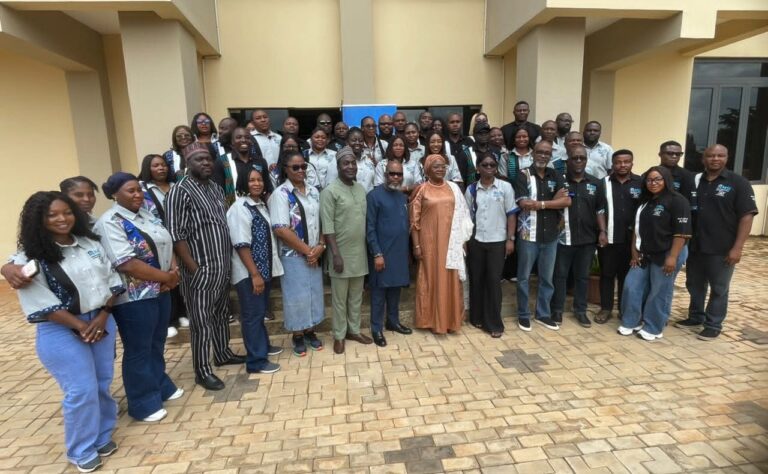
Oyeleye made the remarks during the five-day Youth Bootcamp for Food Justice 2025 held at Ikogosi Warm Springs Resort, Ikogosi-Ekiti, Ekiti State, organised by CAPPA in partnership with Global Health Advocacy Incubator (GHAI), where he noted that the Bootcamp provided the right opportunity for the participating youths, which will help them and Nigerians at large to make healthy dietary decisions.
According to Oyeleye, the programme aligned with the state Governor, Biodun Oyebanji’s vision of empowering youths and strengthening the Ekiti agricultural sector.
He pointed out that with the agricultural initiatives that have been put in place by the state government, Ekiti is determined to remain the shining light in promoting healthy diets.
His words, “Food consumption, whether for youths or the general population, is like the energy that propels us. It helps us function effectively and efficiently. That’s why this programme is very important as it educates young people about proper food intake.
“Here in Ekiti, we have many delicacies. One very popular one is Pounded Yam, which is widely known and associated with Ekiti State. Beyond that, we are blessed with abundant organic foods because agriculture is our area of strength. So, when you talk about food justice in Ekiti, you are in the right place, the right state, where you can access natural, organic foods.
“You can also see the efforts of His Excellency, Governor Biodun Abayomi Oyebanji, particularly through initiatives like Agbeyewa Farm, which reintroduces youths to farming so that we can produce quality food for our own consumption.
“So, when we talk about food production, Ekiti stands out. We are the home of organic foods, and by coming here, the youth are in the right state, at the right time. Indeed, they will pay for one and get more.”
The Assistant Executive Director of CAPPA, Zikora Ibe, in her remarks, underscored the importance of collective action. She explained that public health challenges cannot be solved individually but through a whole system approach that engages youths, policymakers and communities.
Ibe appealed to the federal government to put up policies and laws to regulate the reckless promotion of unhealthy foods and drinks and ensure front-of-pack labelling that will allow Nigerians to make informed dietary decisions to change the narratives in diet-related diseases in the country.
“The issue of non-communicable diseases is on the rise in the country, and public health can no longer be treated as an individual action. It has to be a collective action. It has to be a whole system intervention, which means that both young persons, old persons, and anybody who has what it takes to carry out the interventions that are needed to make our society whole should join hands together to make it happen.”
Continuing, Ibe said, “Most of our interventions also interact with the arms of government that can make it happen. I mean, we are working with the Federal Ministry of Health, and the National Agency for Food and Drug Administration and Control (NAFDAC), not just at the federal level, even at state levels where we can. So, we work with very targeted agencies that we know have the power and capacity to make the kind of general societal change that we want.
“And what is the general societal change that we want? We are asking that there be legislation to regulate how unhealthy foods are promoted in our society. Right now, what you see is that you go into a store and these foods are promoted very recklessly, especially to vulnerable people like young children and youths and low-income persons.
“We are also asking that we have what we call Front-of-Pack Labelling. We want legible labelling on products so that people can understand. For example, if this product of food is high in salt, a person or buyer should be able to pick it and see that it is high in salt and not good for him or her, and if it is high in sugar, a Nigerian should be able to pick something from the store or market and know that it is high in sugar. You don’t need to be a professor of nutrition to be able to know these simple things.
“These are the things we are asking from the government. These are the things we are asking that the agencies and institutions that are in charge make legislation that makes it possible for people to be able to not just eat but consume things that are healthy in order to reverse the trend of diet-related diseases in the country.”
On the choice of young persons as participants, Ibe said, “This is a structured intervention that sits at the heart of public health, governance and youth agency. And as you are aware, we brought youth participants from across Nigeria’s six geopolitical zones. These youths are people working in different spheres of life. Some of them are students, some of them work as community organisers and mobilisers and some work in different organisations too.
“The essence of having them here picked from different parts of the country is to have like a very condensed group of persons that can also carry the message to a variety of communities, and that is what we hope to achieve here.
“Why we have selected young persons most importantly is because we believe in their agency. They are at the point in their lives where they are very active, where they are building connections, where they are also making a change in the societies and communities that they belong in. And we believe that they are also highly targeted by some of these ultra-processed foods, and that is why we brought them here to have an understanding of the political economy that shapes what is accessible for people to consume. How the market is structured and what is affordable, which food is even marketed as the right food for people to eat.”
In his remarks, CAPPA Associate Director on Food Justice Programme, Abayomi Sarumi, explained that the training aimed to build a movement of young Nigerians who will contribute to policy processes and demand government action on public health.
He noted that non-communicable diseases, once associated with the wealthy and old people, are now prevalent among young people, underscoring the urgency of food policy reforms.
Sarumi listed priority policies being pursued, to include the proposed 20% tax on Sugar-Sweetened Beverages (SSB), salt limits in processed foods, Front-Of-Pack Warning Labels and marketing restrictions on unhealthy products.
The Bootcamp had in attendance 60 participants, mainly youths, which included males and females. The participants who were drawn from across the six geopolitical zones of the country were educated and prepared for public awareness, advocacy and leadership.
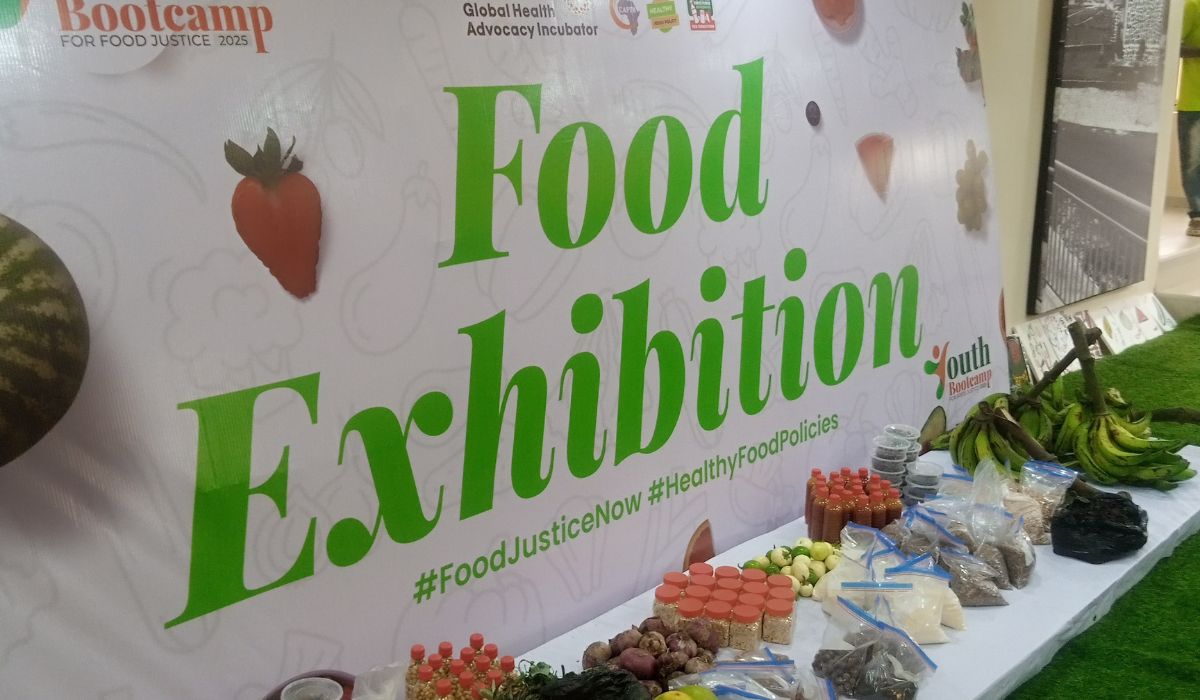
The Bootcamp also showcased specific foods from the different regions of the country, and the participants were taught how to prepare various healthy delicacies using natural ingredients and spices.
Sharing his experience, one of the participants, ThankGod Ochai, a male, said the five-day Youth Bootcamp was an incredible experience.
“The experience for me was an incredible one. During the five-day Youth Bootcamp, we have learnt how to build our capacity to become food justice advocates. I will spread this message to others using all my social media platforms. I will form a community of food justice advocates. I will reach out to various communities and schools and educate them about healthy living, about having a reduction in salt and sugar intake.”
Another participant, Hope Ogunka, a female health journalist, said her experience was beautiful.
“As a health journalist, I have a podcast channel and I will use my social media platforms to talk to people and communities about healthy living, food justice and how youths can also contribute to make sure that they encourage people in their spaces to make healthier choices because when we talk about healthier choices it starts with you as an individual because if you are not conscious of your own health there is no how you will be able to translate that information to another person.”