Follow Us on Google
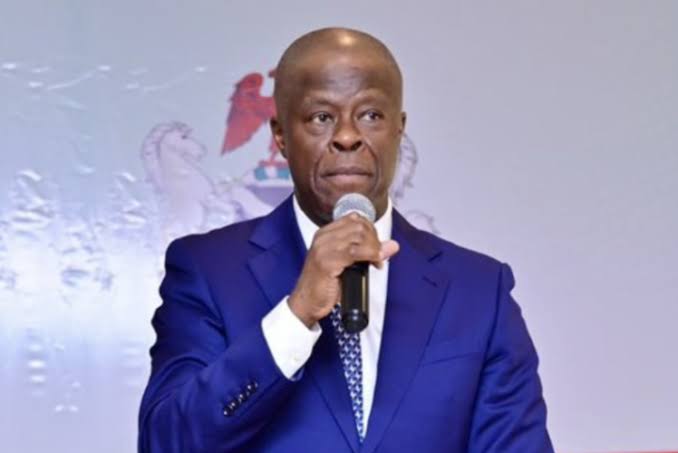
Nigeria’s Minister of Finance and Coordinating Minister of the Economy, Wale Edun, has assumed the chairmanship of the Intergovernmental Group of Twenty-Four (G-24), pledging to steer the coalition of developing nations toward inclusive, job-driven, and sustainable economic transformation.
Edun took over from Argentina’s Minister of Treasury, Luis Caputo, whose tenure strengthened the group’s coordination among emerging economies. The G-24, which includes members from Africa, Asia, and Latin America, serves as a unified platform to amplify the voice of developing countries in global financial and economic policy discussions.
In his inaugural statement to member nations, Edun said Nigeria’s leadership would be guided by the theme: “Optimising Resource Development for Inclusive, Job-Rich Economic Transformation.”
According to him, the focus reflects the urgent need for developing countries to harness all available resources, human, financial, physical, and natural, to drive broad-based growth.
“This theme encompasses all forms of resources, human, financial, physical, and natural, that are essential for sustainable economic progress,” he stated.
Outlining his agenda, Edun identified five strategic priorities to shape the group’s work in the coming year. He said the first would reforming the global financial architecture to make it more equitable and responsive to developing nations.
“Nigeria will push for a fairer and more inclusive system that strengthens the global financial safety net, expands concessional financing, advances IMF quota reforms, and supports digital and local currency-based trade,” he explained.
The second focus area is enhancing domestic resource mobilization and international tax cooperation, where he pledged that the G-24 would deepen engagement on global tax reforms, improve transparency, and curb illicit financial flows that continue to drain developing economies.
He also underscored the need to mobilise innovative finance for development, saying, “We must leverage new instruments such as blended finance, green bonds, and sustainability-linked debt swaps to bridge the growing financing gap for reform-minded economies.”
Edun said Nigeria would also champion regional integration and value-added manufacturing, aimed at expanding trade, industrialisation, and investments that create jobs and improve competitiveness across developing regions.
Other News
The fifth priority, he said, would be advancing climate finance and just energy transitions.
Edun stressed the importance of a balanced approach that considers the realities of resource-rich but energy-deficient nations. “We will advocate for resilient infrastructure and equitable access to climate finance that supports sustainable, inclusive energy transitions,” he assured.
Edun’s leadership of the G-24 comes at a critical moment for developing nations grappling with mounting debt, high inflation, and limited fiscal space amid global uncertainty. He acknowledged that many economies are facing severe financing pressures.
“Over a quarter of emerging and developing economies have lost access to international capital markets, while more than half of low-income countries are either in or approaching debt distress,” he warned.
The minister noted that the global financing gap needed to meet the Sustainable Development Goals (SDGs) has widened sharply, now estimated between $4 trillion and $5 trillion annually. He also drew attention to the challenge of job creation, citing that an estimated 1.2 billion young people are expected to join the global labour force over the next 10 to 15 years, competing for just 400 million jobs.
“This calls for deliberate investment in human capital, digital infrastructure, and structural transformation to create sustainable and inclusive employment opportunities,” Edun said.
He pledged to use Nigeria’s tenure to strengthen the collective voice of developing countries in global financial governance and ensure that global policy outcomes translate into “real progress for our people.” According to him, Nigeria will work closely with member states, as well as development partners such as the International Monetary Fund (IMF) and the World Bank, to advance reforms that promote resilience, inclusion, and job-rich growth.
Nigeria’s chairmanship of the G-24 was confirmed during the IMF/World Bank Annual Meetings in October, with Edun officially assuming the position on November 1, 2025.
Formed in 1971 under the Group of 77, the G-24 represents developing nations across Africa, Asia, Latin America, and the Caribbean. Its core mission is to coordinate member countries’ positions on international monetary and development finance issues, ensuring that the interests of the developing world are not left behind in global decision-making.
At a time when global economic shifts are reshaping the landscape, Edun’s leadership could redefine how developing economies mobilize their collective strength to secure fairer representation, stronger financing mechanisms, and more sustainable growth pathways.