Follow Us on Google
•Many agencies failed to deliver on mandates
From Fred Ezeh, Abuja
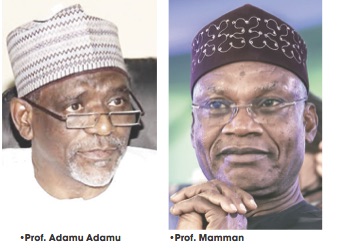
Year 2023 came with a reminder that the eight-year President Muhammadu Buhari administration was about to end. Mallam Adamu Adamu, who was Minister of Education, and his team were forced to begin final touches in their policies and programmes, preparatory to the end of the tenure. He was expected to leave some guide for the new administration.
He inherited myriad of challenges confronting the education sector. Top on the list were out-of-school children, incessant ASUU, ASUP, COEASU strikes, poor quality of education and teachers’ welfare.
Adamu was appointed in 2015 by former president Muhammadu Buhari and stayed till 2023.
Performances of agencies under Minister of Education, Prof. Tahir Mamman, in 2023.
Teachers’ Registration Council of Nigeria (TRCN)
Few weeks ago, TRCN Registrar, Prof. Josiah Ajiboye, said records from their database indicated that there are 2.3 million registered teachers in Nigeria, and a good number of them have obtained TRCN professional certification.
He stated that PQE introduced few years ago has helped to sanitise the teaching profession. It became mandatory for all teachers and graduate-teachers to get certified by TRCN before they venture into the teaching profession.
National Universities Commission (NUC)
In 2023, there was massive establishment of universities, private and public. There was public outcry on the proliferation of the universities, particularly from ASUU. But despite the huge public criticism, NUC defended the actions. It insisted that 265 universities in Nigeria are insufficient when compared to the population of young people who desire university education in Nigeria.
Before his resignation in June, NUC Executive Secretary, Prof. Abubakar Rasheed, said there was no regret in the decision to open the doors and allow entry of investors into the university system: “People who criticize the ‘proliferation’ of universities are just being unfair to young Nigerians whom are ‘desperately’ seeking university education, and had to resort to foreign institutions. With our population size, the number of enrolment of students are obviously not enough.
“In Nigeria, 70 per cent of the population are below the age of 30. If we compare the statistics with other nations of the world that have less or more population vis-a-vis number of universities and enrolment, we would realise we are not doing well enough.
“We encourage small universities that specialise in different fields like medicine, engineering and technology, sports among several others. I am happy we are achieving that for the benefit of our people.
“University education shouldn’t be a privilege that should be enjoyed by the few elites, suggesting that anyone with opportunity should acquire university education.
“Besides, nobody complained that shops, businesses, churches, mosques are springing up across the country. But people are quick to complain about universities being established which is meant to liberate and empower the people. Education is and remains the best means of fighting poverty.”
National Board for Technical Education (NBTE)
NBTE, as a regulatory body for technical colleges in Nigeria, particularly the Polytechnics and Innovation Enterprise Institutions (IEIs) completely went on deep “official slumber” in 2023. This made it possible for fraudsters to defraud students.
Thousands of innocent students were swindled of their financial fortunes by operators of unapproved satellite campuses with promise of “certificate” including NYSC discharge or exemption certificate.
Operations of satellite campuses were banned in 2019 by the federal government. But yet, the operators engaged in their fraudulent activities unchecked, perhaps, with the aid of NBTE officials.
At a particular location in Abuja, a consultant operated satellite campuses for more than four different institutions, defrauding thousands of innocent students.
Joint Admissions and Matriculation Board (JAMB)
The stability, credibility and system of JAMB was tested this year with the Miss Ejikeme Joy Mmesomma saga, a 19-year-old Anambra State female student who challenged JAMB for denying her score in the 2023 Unified Tertiary Matriculation Examination (PQE).
The claim generated discussions on social and conventional media space. Mmesomma insisted that she scored the highest in the 2023 UTME, but was denied the prize by JAMB.
It was back and forth between Mmesomma, JAMB and Nigerians. While JAMB insisted that she forged her UTME result, Mmesomma claimed otherwise. Investigation was, however, launched by Anambra State Government with the support of JAMB and other interested patties. At the end, JAMB was vindicated.
JAMB continued in its positive trajectory in the ending year. It remitted N2billion as interim surplus for the 2023 operating year to the Consolidated Revenue Fund (CRF), with a promise to remit more before the end of the year.
JAMB started remitting revenue to the coffers of the government in 2017. In that year, it remitted N7.8billion. In 2018, it was N5.2billion; in 2019 it was N3.6billion; in 2020 it was N3.8bn; in 2021, it was N3.5billion and N3.1billion in 2022.
Tertiary Education Trust Fund D (TETFund)
It was bumper harvest year for TETFund. It had the highest collection in a fiscal year in 2023. This was because, education tax was increased to three per cent from hitherto 2.5 per cent. Effective work from the Federal Inland Revenue Service (FIRS) was also instrumental to achievement.
Its Executive Secretary, Sonny Echono, said the 2023 was an impactful year that witnessed series of programmes such as the development of the TETFund ICT roadmap that culminated in the deployment of the Beneficiary Identity Management Service (BIMS) and launch of the Tertiary Education Research, Applications, and Services (TERAS) platforms.
It disbursed N320billion to public tertiary institutions in the country, notably, Universities, Polytechnics and Colleges of Education. Each University received N1,154,732,133.00; Polytechnic received N699,344,867.00; while each College of Education got N800,862,602.
Similarly, N24 bn was disbursed as special high impact projects to six universities, polytechnics and Colleges of Education (CoE), each in the six geopolitical zones. The institutions that benefitted are Ibrahim Babangida University, Lapai, Niger State; Federal University, Wukari, Taraba State; Federal University, Birnin Kebbi; Imo State University of Agriculture and Environmental Sciences; Edo State University; and Federal University of Technology, Akure, Ondo State.
The polytechnics are; Federal Polytechnics, Offa, Kwara State; Federal Polytechnic, Gombe, Gombe State; Federal Polytechnic, Kabo, Kano State; Anambra State Polytechnic; Federal Polytechnic of Oil and Gas, Bonny, Rivers State; and Oyo State College of Agriculture and Technology, Igboora, Oyo State.
The CoEs are Plateau State CoE; Federal CoE,Yola; Federal CoE, Zaria; Enugu State CoE, Delta State CoE and Taiye Solarin CoE. Each benefitting university got N3bn, while Polytechnic and College of Education got N1bn, respectively.
National Commission for Colleges of Education (NCCE)
NCCE was actively engaged in education policies and programmes in 2023. This was clear departure from what happened in the time of Prof. Bappah Aliyu who was practically on “official slumber” in the office.
Its current Executive Secretary, Prof. Paulinus Chijioke Okwelle, took several steps to digitalise the activities at the NCCE, as well as several courses that would redefine teacher-training opportunities for the betterment of basic education system in Nigeria.
He promised that in the coming year, attention would focus on stronger monitoring of activities of colleges, search light on unregistered colleges operating in different locations in the country and accreditation of courses.
Universal Basic Education Commission (UBEC)
UBEC Executive Secretary, Dr. Hamid Bobboyi, disclosed that records in its database indicated that over 45 million children are currently enrolled in basic education system in Nigeria. He lamented that N100bn federal allocation to basic education system every year was insufficient to tackle challenges of basic education in Nigeria.
Minister of State for Education, Dr. Tanko Sununu, however, described as poor, the output from the years of financial investments in the education sector, particularly the basic education system, and announced that plans are underway to meet with states governors under the umbrella of Nigeria Governors’ Forum (NGF) to fine-tune plans to revive the basic education sector which is the foundation of learning in Nigeria, thus pulling more children out of the street back to school.
National Business and Technical Examinations Board (NABTEB)
In the education sector, not much was heard from NABTEB in 2023. However, it was gathered that they conducted their NABTEB examinations successfully.
National Commission for Mass Literacy, Adult and Non-Formal Education (NMEC)
NMEC was a total failure in 2023. In activities, it was conspicuously missing. The commission couldn’t even take advantage of the World Literacy Day celebrated on September 8, every year to make an impact.
There was hope when former Executive Secretary, Prof Abba Haladu, couldn’t get re-appointment. But the new administration led by Prof. Simon Akpama Ibor, seems not to know the responsibilities of the commission to improving the education sector in Nigeria.
National Commission for Nomadic Education (NCNC)
NCNE made some efforts geared towards promoting peaceful co-existence among farmers/herders. A new survey conducted by the commission indicated that literacy level among nomads and people in same category rose to 19 per cent from 0.29 per cent that it was over the years.
Prof. Bashir Usman explained that the feat was a result of years of effort and commitment to the cause of human capital development of the nomads. The commission also developed pupil’s texts in three subject areas, namely, Islamic Religious Studies (IRS), Christian Religious Studies (CRS) and History.
National Library of Nigeria (NLN)
There was upbeat in NLN over the move to complete the abandoned National Library Project located at Central Business District (CBD), Abuja. Minister of Education, Prof. Tahir Mamman, after touring the project in August promised that the building abandoned for over 17 years would be completed in next 21 months.
He said that all stakeholders met to iron out all grey areas to enable the commencement and completion of the project within 21 months.
The Registrar, Prof. Chinwe Anunobi, said the major achievement was the digitization of library activities across the offices and branches of NLN, thus making the literary and intellectual materials easily accessible to the public from any part of the world.
National Education Research and Development Council (NERDIC)
Nothing much was heard from NERDC in 2023. However, its Executive Secretary, Prof. Ismail Junaidu, was engaged by Mamman to develop a roadmap that would guide the activities in education sector.
National Secondary Schools Education Commission (NSSEC)
NSSEC began the year with management crisis. Its Executive Secretary, Prof. Benjamin Abakpa, was sacked for alleged corruption. Few weeks after, Dr. Iyela Ajayi, was appointed as his replacement.
Ajayi said he has a commitment to promote Science, Technology, Engineering, Arts & Design and Mathematics (STEAM), Technical, Vocational Education and Training (TVET) as well as entrepreneurial skills at senior secondary education level in Nigeria
Seven science and technical colleges in Abuja participated in the maiden edition of the Annual National Science, Technology and Innovation project exhibition for senior secondary school students, with each school displaying several innovations that they made, that provided solutions to different environmental, health and other challenges in the society.
National Examination Council (NECO)
NECO successfully conducted all the examinations scheduled for the year. Few weeks ago, the council took delivery of 70 operational vehicles scanning facilities for the purposes of boosting its operations, culminating in an improved examination services.
It also took delivery of state-of-the-art scanning facility equipped with Optical Mark Reader (OMR) technology, a cutting-edge software introduced to ensure efficient grading of students and candidates in its various examinations.