Follow Us on Google

By Ighomuaye Lucky, Benin
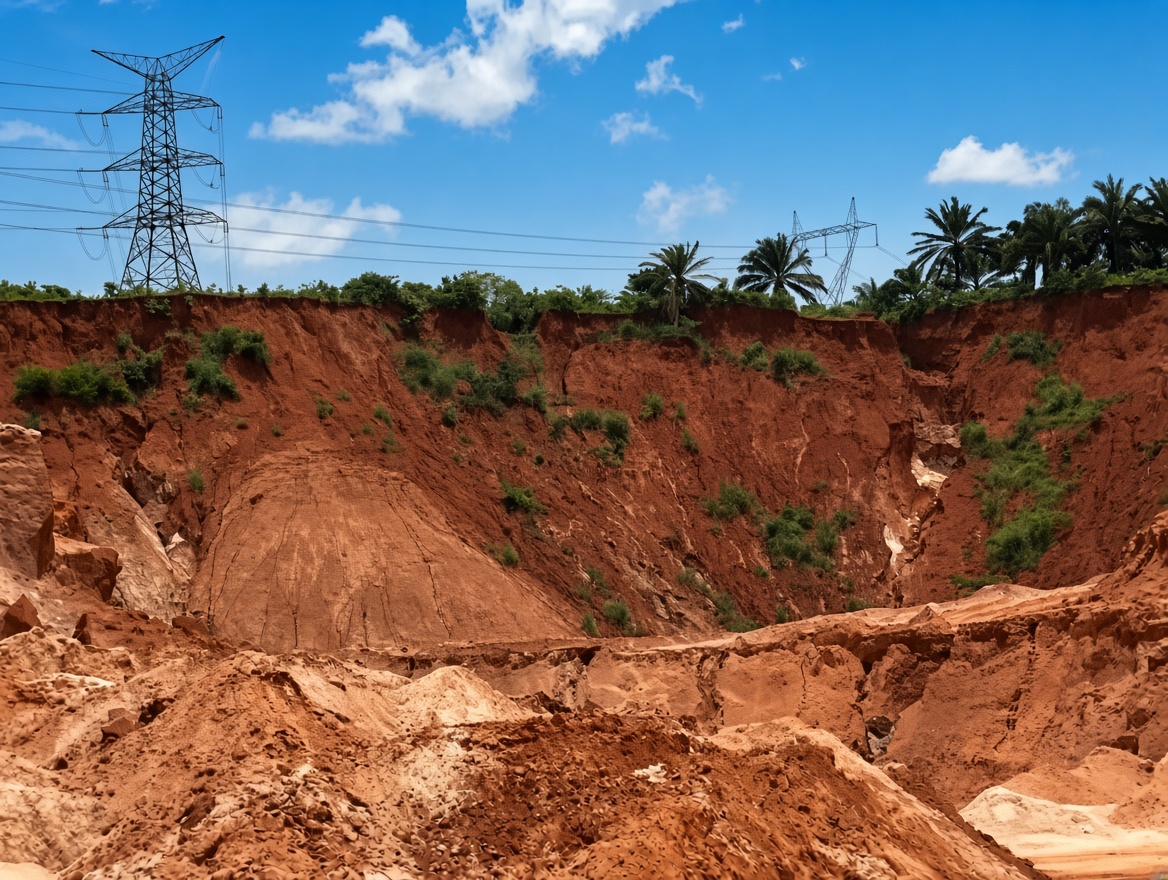
The Edo State Government has identified 129 critical ecological sites, including gully erosion hotspots, requiring urgent intervention to prevent further environmental degradation and protect vulnerable communities across the state.
The Chairman of the Edo State Ecological Funding and Management Commission, Ambassador Terry Igiebor, disclosed this on Friday in Benin City, following the commission’s statewide assessment tour of 16 local government areas.
Igiebor explained that the exercise was undertaken to identify communities grappling with severe environmental challenges, assess the extent of the damage and determine the scale of intervention required to address the situation.
He listed gully erosion, blocked drainage channels, deforestation and environmentally induced road deterioration among the major ecological threats uncovered during the assessment.
Describing the situation in some rural communities as alarming, the commission chairman expressed concern over residents living dangerously close to deep and expanding erosion channels, warning that urgent action was necessary to prevent further loss of lives and property.
He recalled a tragic incident involving a 57-year-old man who reportedly lost his life following an erosion-related disaster, adding that some communities had also recorded cases of children being swept away by floodwaters.
Against this backdrop, Igiebor assured residents that identified emergency locations would receive priority attention before the commencement of the next rainy season.
He disclosed that the commission was developing a one-year intervention roadmap, noting that findings from the ongoing assessment would also serve as critical input into the state’s 2027 budget.
Other News
To strengthen its intervention capacity, he said the commission was exploring funding opportunities through the Federal Government’s Ecological Project Office, the World Bank, the United Nations and other international development partners.
The chairman further emphasised that the law establishing the commission guaranteed the equitable distribution of ecological interventions across Edo State’s three senatorial districts to ensure that no community was sidelined in the allocation of resources.
According to him, particular attention would be given to vulnerable communities whose residents lacked the financial capacity, influence or access to government officials to draw attention to their environmental predicaments.
He maintained that access to ecological intervention should not be determined by a community’s ability to lobby government officials, stressing that areas facing genuine environmental emergencies deserved timely and equitable attention.
On measures to tackle the recurring ecological challenges, Igiebor revealed that the commission was planning an environmental education and orientation programme to sensitise residents on the causes of erosion, flooding and other environmental hazards.
He identified indiscriminate waste disposal, blocked drainage channels and poor environmental practices as major contributors to flooding and ecological degradation, insisting that residents must complement government interventions by embracing responsible environmental practices.
Igiebor added that the commission would unveil its master plan and work schedule to clearly outline the responsibilities of communities and other stakeholders in tackling the environmental challenges.
He stressed that sustainable solutions must go beyond emergency interventions to address the root causes of ecological degradation, noting that responsible environmental practices would significantly reduce the enormous financial resources required for environmental remediation.