Follow Us on Google
From Aidoghie Paulinus, Abuja
The President of the Economic Community of West African States (ECOWAS) Commission, Omar Alieu Touray, has said that the situation in the ECOWAS sub-region is worrisome.
Touray stated this in Abuja against the backdrop of the political instability, insecurity and humanitarian crisis bedevilling the ECOWAS region.
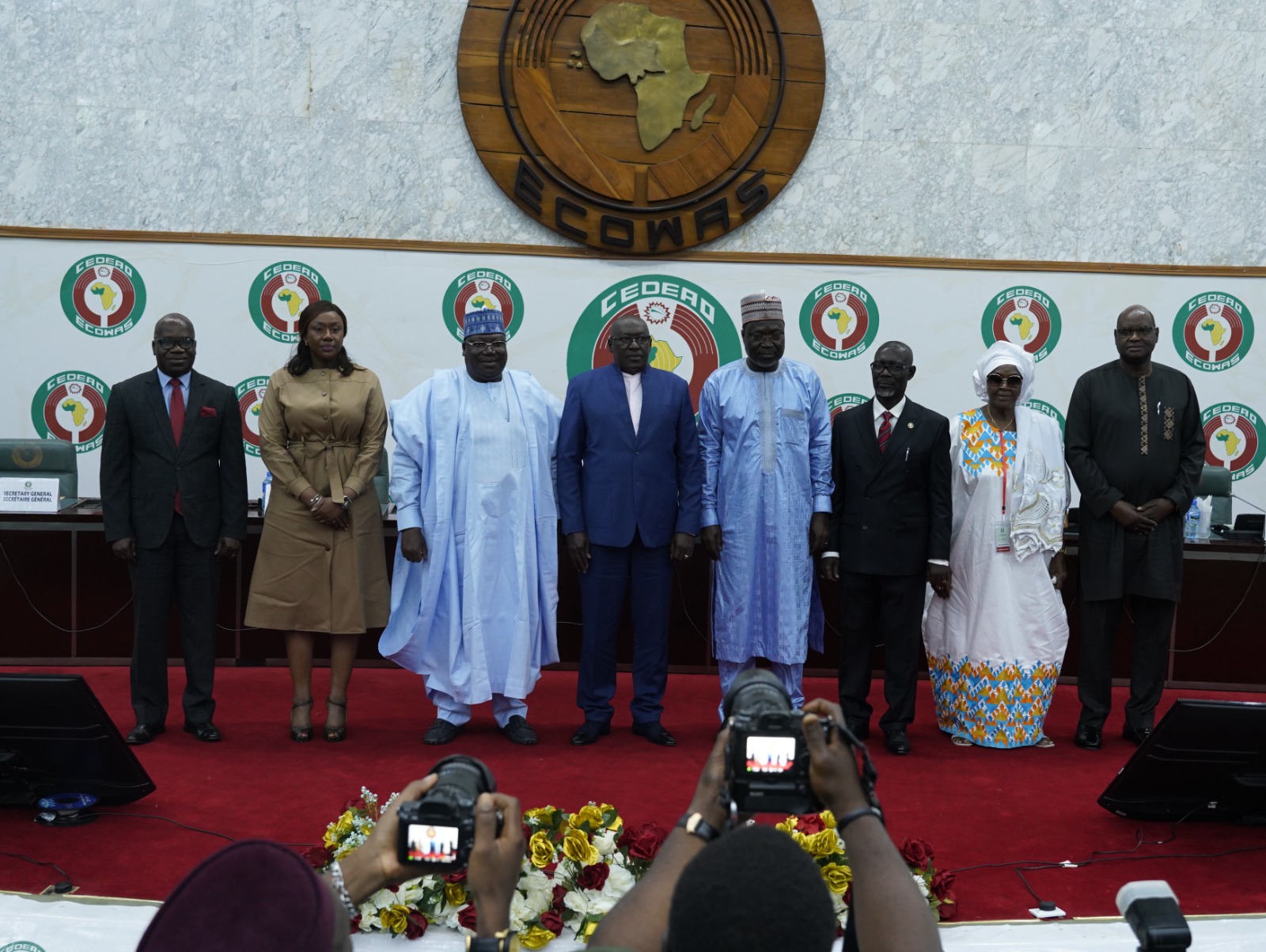
Speaking during the opening ceremony of the 2023 first ordinary session of the ECOWAS Parliament, Touray recalled that the meeting was taking place in a context characterised by upheavals in the international environment.
According to Touray, “The situation in our region remains worrisome. Nonetheless, we are deploying all resources to ensure stability, security, and resilience in our member states.”
Touray added that the ECOWAS Commission continued to support member states in transition, particularly Burkina Faso, Mali, and Guinea, for a return to normal constitutional order.
“We have also been mobilising international support for Burkina Faso and Mali to fight terrorism and address humanitarian crises. We also continue to support elections in our member states, both as a conflict prevention measure and a support to our democratization process,” Touray also said.
The ECOWAS Commission President further said ECOWAS is deploying the necessary electoral assistance to member states going for elections soon such as the legislative elections in Guinea Bissau and the Presidential elections in Sierra Leone and Liberia.
On the economic situation in the region, Touray explained that despite inflationary pressures due to the COVID-19 pandemic and the war in Ukraine, the economies of the region are resilient and continue to post growth rates (3.1 percent according to the World Bank) with good prospects in general.
He however said the commission is seriously concerned about the security situation prevailing in the region, with the persistence and resurgence of terrorist acts in the countries of the three-border line: Burkina Faso, Mali, Niger, and north-eastern Nigeria.
“These acts have resulted in targeted attacks against both military personnel and civilians, resulting in numerous casualties, material damage and displacement. The novelty of these attacks is that they are spreading to coastal countries (Benin, Togo, and Côte d’Ivoire). Therefore, our region must adopt a multifaceted, and coordinated approach and pool our resources to eradicate this scourge,” Touray added.
On his part, the Speaker of the ECOWAS Parliament, Sidie Mohamed Tunis, said the Parliament remained very concerned over the pace at which the transitional processes are unfolding in Mali, Guinea and Burkina Faso.
Tunis also said the Parliament is equally worried about the proliferation of terrorist activities in the Sahel, which has resulted into the killings of innocent lives.
“It is expected that the President of the ECOWAS Commission, during the presentation of his report, would kindly provide detailed explanations on these issues to inform Parliament’s position.
“Additionally, we are closely following events in Sierra Leone and Liberia, as they prepare to hold Presidential and Legislative elections in June and October respectively,” Tunis said.
Tunis however proffered solutions to securing a better region for present and future generations of ECOWAS citizens.
“First, we have a responsibility to foster peace in our region which can only be possible by supporting the structures and respecting the policies and protocols we already have.
“Second, collective and immediate actions are needed to tackle the challenges we have, including poverty, inequality, climate change and a host of others.
“And third, we owe to one another, mutual accountability in our pursuit of solutions to our looming challenges. The application of these principles is critical to the advancement of humanity. I hope we can find these very useful and work in concert for the good of our region and the world,” Tunis also said.
In his remarks, the President of the Senate, Ahmed Lawan, said the questions of trans-border crime, human trafficking, threats to democracy, conflicts and insurgencies, unemployment and underemployment and the general well-being of the people were still significant matters that needed the continuous attention of the sub-region.
“The essence of making our conversations ongoing is not that we are not discussing them correctly, or that we are not formulating the right policies, but because new realities continue to emerge around the subjects.
“While we are probably making progress in some regards, we are additionally challenged by the need to sustain our reviews, so as to strengthen our action plans, in view of changing dynamics.
“Our role as parliamentarians is always to extract the details involved and provide a clearer picture and understanding, for an appropriate government response.
“Coming together as participants from different nations is more opportunity to harness the experiences of our different jurisdictions, towards reaching a suitably overarching conclusion.
“As representatives of the people, it is trite to argue that we are more in touch with a wider scope of citizens, especially those at the grassroots. This puts us in the vantage position of reflecting realities as they affect the mass of our people.
“From that standpoint, our resolutions are often people-oriented and the reason we are central is not just for the search for solutions, but for ongoing consultations in the course of executing plans,” Lawan said.