Follow Us on Google

By Merit Ibe
To unlock growth and investment in the economy, the Centre for Promotion of Private Enterprise (CPPE) has urged the incoming government of Nigeria to establish quality economic governance, prioritise macroeconomic stability, fiscal consolidation and reform foreign exchange policy, oil and gas sector, trade and tariff, financial institution, regulatory, industrialisation and agriculutre.
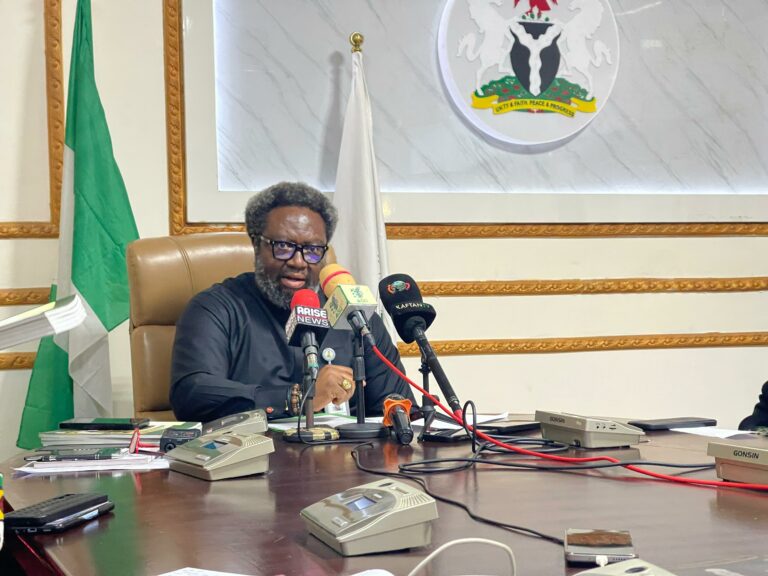
Director of the Centre, Dr Muda Yusuf, who made the remark at the weekend noted that the economy is in a stumbling, fragile state and in dire need of a new direction, stressing that the political transition offers a great opportunity to chart a new course.
Yusuf opined that on economic governance, the administration should establish quality economic governance consistent with tested economic principles, empirical evidence contextualised within socio-economic peculiarities.
He said this was critical from the onset of the administration for signalling and investor’ confidence.
On microeconomic issues, the CPPE boss emphasised that the administration needs to prioritise macroeconomic stability with emphasis on moderating inflationary pressures, stabilising the exchange rate and boosting economic growth.
He pointed out that for fiscal consolidation, reform tax regime was important to ensure efficiency in tax administration, reduce tax evasion and tax avoidance and eliminate multiple taxation, fuel subsidy, foreign exchange; unlock more income from revenue generating agencies, Initiate budget reforms, ensure value for money in government expenditure and procurement and commit to reduction in the cost of governance. “Foreign exchange policy reform to unlock inflows of capital into the economy, reduce arbitrage in the forex market and improve transparency in the forex allocation.
“Ensure a market reflective exchange rate to eliminate the distortions in the forex ecosystem.
“Ensure level playing field in forex transactions
“Remove impediments to markets mechanism in allocation of forex. This will boost inflows from Foreign Direct Investment [FDI], Foreign Portfolio Investment [FPI], “Export Proceeds and Diaspora remittances.”
On industrialisation, the CPPE boss said the following urgent steps needs to be taken to address the concerns of the of manufacturing sector:
“Ensure liquidity in the foreign exchange market to guarantee access to foreign exchange for the procurement of raw materials and machineries for industry.
“Rapid investment in core industries to support backward integration aspirations of government. Such core industries include the iron and steel, petrochemicals, aluminum smelter, pulp and paper and refineries.
“Scaling up investment in infrastructure through the injection of more funds and the attraction of private capital into the infrastructure space. This would reduce production cost and boost productivity in manufacturing.
“Creation of more industrial parks across the country and improvement in the facilities in existing ones.
“Need to strengthen current development finance to support the real sector with appropriate financing – single digit facility with a minimum of five years tenure.
On oil and gas reform, the administration should “Demonstrate unmistakable commitment to the implementation of the Petroleum Industry Act. This would attract more investment into the oil and gas sector.
“Remove petrol subsidy with minimum shocks to the economy and the citizens.
“A substantive minister of Petroleum Resources should be appointed to promote professionalism and transparency in the sector. The practice of the President assuming the role of Minister of Petroleum should be discontinued.
“The current impressive momentum to tackle oil theft should be sustained in order to boost oil production
Trade and tariff reform
“Ensure Tariff regime that adequately protects local industries.
“Import duty on intermediate products and critical industrial inputs should be reviewed to reduce production costs.
“Tariff review processes should be more inclusive and transparent.
“The administration should prioritize trade facilitation and removal all non-tariff barriers to trade.
“Removal of all customs checkpoints within the country.
“The practice of intercepting cargoes that have been duly cleared at any of our ports should be discontinued. The practice has been proven to be extortionist.
“The practice of appointing non career persons as Comptroller General of the Nigeria Customs Service should be stopped. It is detrimental to professionalism and morale of career officers in the customs service.
“There should a balance between the revenue objectives and trade facilitation objectives of the Nigeria customs service. There is currently a disproportionate focus on revenue generation.
Agriculutre
“Policy on agriculture must be holistic, focusing on the entire value chain. Due attention must be given to cost and availability of inputs, production and productivity, application of technology, logistics and marketing, processing and storage.
“There is an urgent need to transit from subsistence farming to mechanized and commercial agriculture driven by technology.
“There is need to attract the youths into agriculture as the farming population is rapidly ageing. This would only happen if sector is technology driven.
“Strengthen the linkage between agriculture and industry within a sustainable backward integration framework.
“Agriculture policy should cover activities in crop production, poultry, livestock and forestry. There is a tendency among policy makers to focus disproportionately on crop farming to the neglect of other segments of agriculture.
Regulatory reforms
We desire a regulatory environment where regulatory risks and regulatory shocks are at the barest minimum. This is necessary to boost investors’ confidence.
“Regulatory institutions and economic players must relate as partners, without necessarily compromising regulatory effectiveness.
“We should put an end to the culture of regulatory intimidation, coercion and undue harassment.
“There should regular consultative forums between industry players and regulators.
Financial institution reforms
“The banking system must be repositioned to play its fundamental role of financial intermediation for the benefit of investments in the economy.
“Some key regulatory instruments of the CBN should be interrogated to ensure their appropriateness and impact on the economy. The CRR regime is one of such policy instruments that would require a review. Current CRR of 32.5% is one of the highest globally. It has serious implication for financial intermediation.
“The imperial and intimidating disposition of the current leadership of the CBN needs to be moderated in the interest of the development and stability of the financial system.
“The development finance operations in the economy have had some positive impact for a few beneficiaries in the real sector. But it needs to be streamlined to minimize loan losses and ensure effective targeting of deserving investors.
“There is need to ensure full compliance with the recent ruling of the Supreme Court on the currency redesign policy of the CBN.”
•