Follow Us on Google

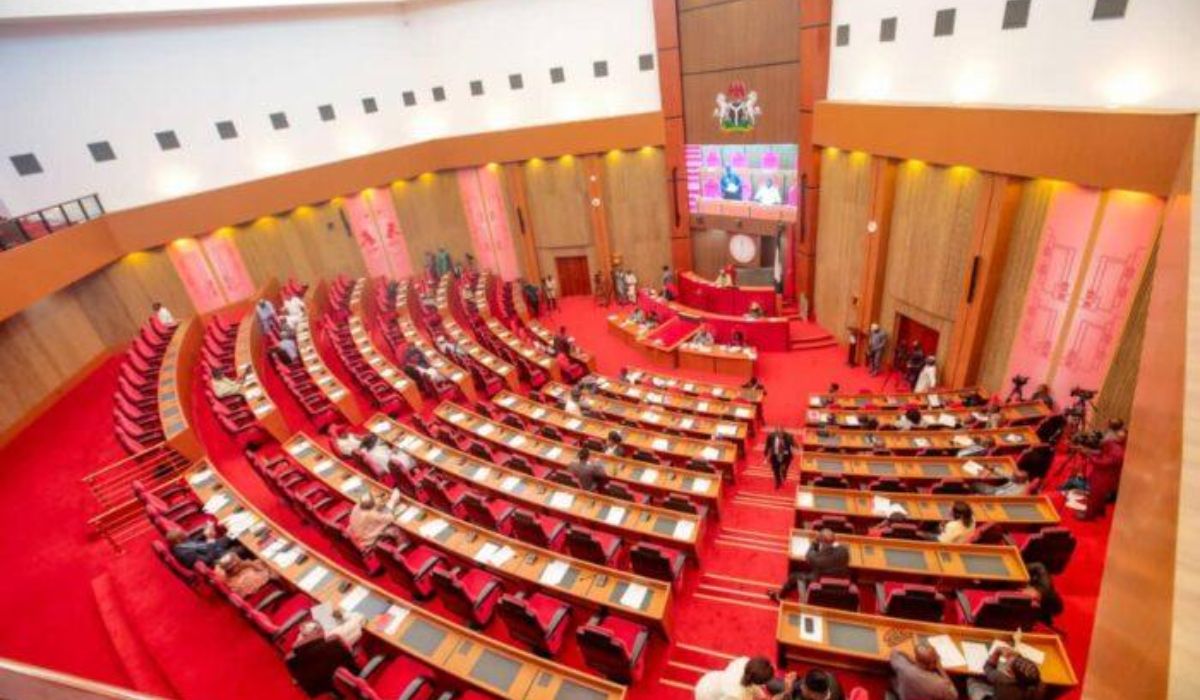
…Rejects proposal for lawmakers to conduct on-site visit to point of entry
The Senate has urged the Federal Government (FG) to release emergency funds from the Service Wide Votes to strengthen measures against the spread of Ebola in Nigeria, insisting that the country cannot afford delays in responding to the outbreak.
It also urged the National Assembly to immediately repeal and re-enact the Quarantine Act of 1926 to provide a modern public health law in line with the International Health Regulations of 2005.
This followed a motion of urgent national importance sponsored by Francis Faduyile, which raised concerns over the risk of importing the deadly virus and weaknesses in health screening at the nation’s international airports and other points of entry.
The lawmakers argued that sourcing funds through fresh budgetary provisions could take too long, given the urgency of the situation, and called for immediate funding for the Nigeria Centre for Disease Control and Prevention (NCDC) and Port Health Services.
They adopted the amendment after a debate over claims that President Bola Tinubu had approved N10 billion for the Ebola response, with some lawmakers insisting that the National Assembly had not received official confirmation of the approval or release of the money.
Senator Ali Ndume had argued that the government should ensure the release of funds already approved by the President, while other lawmakers maintained that the immediate priority was to secure emergency funding through the Service Wide Votes.
Supporting the latter position, Senator Adamu Aliero argued that the country could not afford to wait for the preparation and consideration of a supplementary budget before responding to the public health emergency.
His position was carried by his colleagues, and the Senate subsequently adopted the proposal urging the Federal Government to make the necessary funds available immediately from the Service Wide Votes to tackle the potential spread of the virus.
The lawmakers also urged the executive to make health screening compulsory for all international passengers arriving through airports, seaports and designated land borders, regardless of their nationality or country of departure.
Among the recommended screening measures are health declaration forms, temperature checks and symptom screening, with enhanced checks for travellers who have visited or transited through affected areas within the previous 21 days.
The Senate further called for the deployment of trained Port Health officers, thermal scanners, protective equipment and isolation rooms at all entry points, as well as the readiness of isolation and treatment centres across the 36 states and the Federal Capital Territory.
However, a proposal to conduct an on-site visit to principal points of entry was rejected during the deliberations, although the Senate retained a provision mandating relevant committees to liaise with government agencies and report back within four weeks for further legislative action.
The committees are to include those on Health, Primary Healthcare and Disease Control, Aviation, Interior and Appropriations, while the Committee on Legislative Compliance is to monitor the implementation of the resolutions.
Leading the debate earlier, Faduyile, a professor of medicine and former president of the Nigerian Medical Association, said Nigeria must act swiftly to prevent another Ebola crisis, recalling the country’s experience with the virus in 2014.
He warned that an imported case could trigger wider transmission if the country failed to strengthen surveillance and response mechanisms at its entry points.
The motion noted that Nigeria was already grappling with other infectious diseases, including Lassa fever, cholera and diphtheria, making the prevention of another outbreak particularly important.
It also recalled the 2014 Ebola outbreak in Nigeria, when an infected traveller arrived through Lagos, underscoring the need for vigilance at the country’s borders.
Faduyile, therefore, urged the relevant agencies to intensify surveillance, strengthen coordination and ensure that the resources required to contain the threat were made available without delay.
He also highlighted the need for a new Quarantine Act of 1926 to refect current realities.
Contributing to the motion, Senator Ekong Sampson backed the motion, describing the outbreak as a serious threat that required an urgent and coordinated national response.
He said, “There is a strong case for us to be alive to our responsibilities that we have to respond with every urgency that this health challenge deserves.”
Sampson added that an infectious disease could spread rapidly and cause widespread damage if preventive measures were not implemented promptly.
Similarly, Sadiq Umar called for a coordinated response involving relevant government agencies, stressing that Nigeria must not allow its previous achievements in containing Ebola to be undermined.
He said the country needed adequate resources and effective systems to prevent further transmission.
On his part, Mohammed Monguno, also called for the replacement of the Quarantine Act of 1926, arguing that the existing law had become obsolete and was no longer adequate for modern public health challenges.
He urged the National Assembly to work with the Federal Ministry of Health and other stakeholders to enact a new legal framework that would enable health personnel to respond effectively to emerging threats.
During the debate, Senate President Godswill Akpabio expressed concern over reports that a traveller arriving from Kenya had passed through an airport without temperature checks or other screening procedures.
He said screening should apply to all arriving international passengers rather than being restricted to travellers from countries specifically listed as being of concern, since an infected person could have transited through another country.
The Senate also considered additional preventive measures, including improved hygiene practices in public places and the provision of handwashing facilities and sanitiser dispensers at public institutions and other locations where people gather.