Follow Us on Google
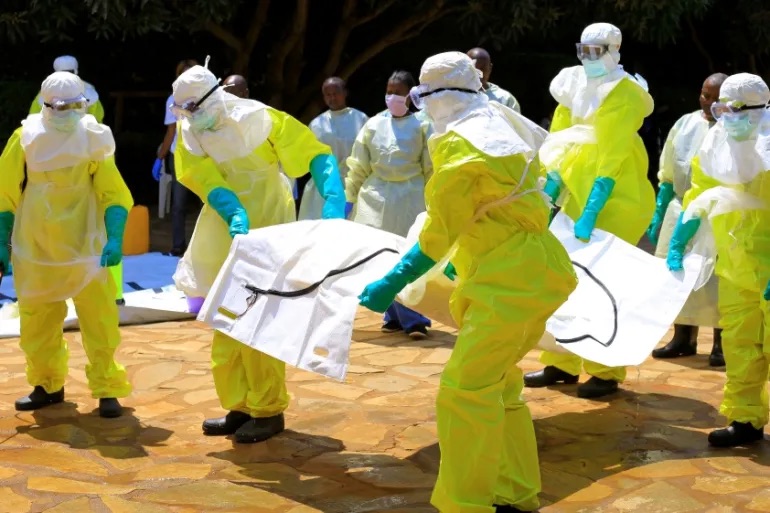
Nigeria has heightened surveillance and preparedness at its borders and other points of entry following the continued spread of Bundibugyo Ebola virus disease in the Democratic Republic of the Congo (DRC).
The Nigeria Centre for Disease Control and Prevention (NCDC) said the country was on “high alert” and was strengthening surveillance and response measures to reduce the risk of the virus being imported into Nigeria.
The latest advisory was signed by the NCDC Director-General, Jide Idris, following a dynamic risk assessment and consultations with public health experts and the Federal Ministry of Health and Social Welfare.
The Centre said its preparedness measures would be reviewed continuously as the epidemiological situation develops.
One of the immediate measures involves travellers arriving from countries with active or relevant Ebola Virus Disease (EVD) transmission.
The NCDC advised such travellers to complete the Nigeria Health Declaration Form, which is designed to provide health and travel information that can assist surveillance and follow-up where necessary. The form currently includes travel history, symptoms and possible exposure information.
“Passengers from all other countries are exempted from completing the form at this time,” the NCDC said.
The move reflects Nigeria’s reliance on surveillance at airports, seaports and land borders as a first line of defence against the importation of infectious diseases.
The country had already assessed the risk of Ebola importation as high in May following the emergence of the Bundibugyo virus outbreak in the DRC and Uganda.
At the time, the NCDC identified international travel, regional population movement, major airports, seaports, porous land borders, informal crossings and trade routes among the factors that could increase the possibility of an imported case.
The latest alert comes as the outbreak in the DRC continues to expand.
According to the European Centre for Disease Prevention and Control (ECDC), the DRC had recorded 7,672 confirmed cases and 3,699 related deaths as of September 20, based on data available up to September 19.
The agency said 886 patients were hospitalised in isolation, while 1,879 people who had tested positive for the Bundibugyo virus had recovered.
Other News
Ituri Province remained the epicentre, accounting for 5,913 confirmed cases and 2,703 deaths across 28 of its 36 health zones.
The ECDC also reported that 58 additional confirmed cases and 23 deaths had been recorded in the latest reporting period, with new cases reported in Ituri, North Kivu, Haut-Uélé and Tshopo.
The scale of the outbreak has prompted additional international support.
On September 21, the ECDC announced that it was deploying two epidemiologists to the DRC to strengthen surveillance and support the broader outbreak response.
The current outbreak is caused by Bundibugyo virus, a species of ebolavirus. According to the ECDC, there are currently no licensed vaccines, post-exposure prophylaxis or specific treatments for disease caused by the virus, making surveillance, early identification, isolation, contact tracing and infection prevention particularly important.
Against this background, the NCDC has urged Nigerians to remain vigilant and seek medical attention promptly if they develop symptoms consistent with Ebola.
People who become ill after possible exposure or travel to affected areas are also advised to provide healthcare workers with relevant travel and exposure information.
The agency stressed that its current measures were precautionary and based on its assessment of the evolving regional threat.
Nigeria’s experience with previous infectious disease outbreaks has placed considerable emphasis on early detection, contact tracing and surveillance at points of entry.
The present measures therefore seek to identify potential imported cases early, particularly given the volume of movement between Nigeria and other African countries.
The NCDC said it remained committed to protecting Nigerians through evidence-based surveillance, preparedness and response to public health threats.
The latest development also underscores the importance of maintaining vigilance even in the absence of a confirmed case in Nigeria. The NCDC’s May advisory had stated that Nigeria had no confirmed case of the 2026 Bundibugyo outbreak at that time.
With the DRC continuing to battle rising case numbers and international health agencies reinforcing their response, Nigerian authorities are relying on enhanced surveillance and preparedness to reduce the possibility of the virus gaining a foothold in the country.