Follow Us on Google
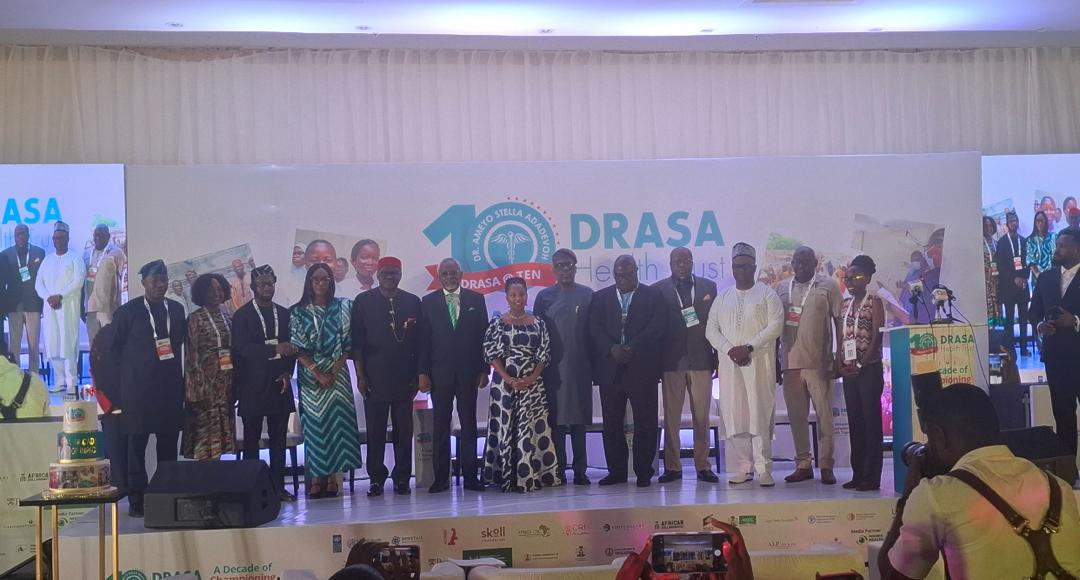
- launches endowment fund at 10th anniversary
From Fred Ezeh, Abuja
A memorial signature for the late public health champion, Dr. Ameyo Stella Adadevoh (DRASA) has announced plans to establish six centres of excellence in healthcare services across the six geopolitical zones of Nigeria.
Niniola Williams, the Managing Director of DRASA Health Trust, stated this at an event to mark the 10th year memorial of late Dr. Stella Adadevoh, a frontline health worker who died during the Ebola virus crisis.
She said: “It was 11 years ago today in 2014 that the World Health Organization (WHO) declared Nigeria Ebola-free. By the grace of God, we have remained so since, but not without a few scares, including two recent scares right here in Abuja, last month.
“Exactly a year after our country’s Ebola-free declaration, on October 20th, 2015, we
launched DRASA Health Trust to celebrate Nigeria being 1 year Ebola-free. So that is why we choose today, October 20th, 10 years later to gather, look back at where we are coming from with gratitude, and also look ahead with hope.
“In doing that, we have developed DRASA’s strategic plans for the next 10 years include: establishing the DRASA Academy which includes a state-of-the-art IPC Simulation Centre and an edutainment hub where health messages meet culture and creativity.
“We will train and certify 50,000 more health workers in infection control. We will expand the Health Champion network to 500,000 people across schools, markets, faith institutions, and borders. We will embed antimicrobial resistance (AMR) education in secondary schools to raise prevention-minded
citizens.
“Additionally, we will embed youth-led coalitions into National technical working groups and State governance structures to strengthen youth participation and use of community data in public health decision making.
“We are formalising youth advisory roles in programmes and policy dialogues so that the people who will inherit this system help design it now. We will keep working from the grassroots to the highest levels of government, with our trademark blend of humility, evidence, and persistence.”
The Coordinating Minister of Health and Social Welfare, Prof. Muhammad Ali Pate, represented by Dr. Nse Akpan, the Director of Port Health Services, said the event reminds all that prevention is the cornerstone of a resilient health system.
He said: “Too often, the world waits for crises before investing in preparedness. Yet, the lessons of Ebola and COVID-19 are clear: every naira spent on infection prevention, hygiene, and AMR control saves many more in treatment and economic loss.
“The rising threat of drug-resistant infections is a silent pandemic. If we fail to act now by investing in strengthening infection control in hospitals, promoting responsible use of antibiotics in communities, and embedding hygiene practices in schools, then we risk undermining the very foundations of modern medicine.
“Through DRASA’s support to the government in developing and launching Nigeria’s second One Health AMR National Action Plan and their work training nearly 16,000 health workers in infection prevention and control, we see what is possible when prevention is prioritized.
“DRASA’s grassroots-to-government approach, evidenced by how they have mobilized nearly100,000 Health Champions in communities, schools, health facilities, and government institutions and how they have supported policies like the National Patient Safety and Care Quality Strategy, fits squarely within this national reform agenda.
“DRASA’s role and contributions in key technical platforms such as the SWAp Health Security Technical Working Group and the National AMR and IPC Committees are strengthening the partnership between government and civil ociety and demonstrating the results of such collaborations.
“In our work together, which ranges from shaping national AMR and IPC policies to building public health capacity at borders and in hospitals, DRASA has proven to be a trusted and expert partner of the government, ensuring that interventions are not parallel or fragmented but woven into our national health system.”
The Minister, however, maintained that health security is not the work of the Ministry of Health and Social Welfare alone, stressing that it demands the active participation of other stakeholders especially in finance, environment and education; private sector partners, who can drive innovation and sustainable financing; development partners, who bring technical and.catalytic support; communities and youth, who need to embrace daily disease prevention and are often the first to detect and respond to emerging health threats.
“DRASA’s story illustrates this truth. Whether in equipping border officials, engaging artisans and market women as Health Champions, or supporting young people to shape AMR policy, DRASA has shown how a whole-of-society approach is essential.
“As we celebrate DRASA’s first decade and look to the future as they plan to establish an Academy, scale infection-control training to 50,000 health workers, and embed AMR education in every secondary school, I urge all stakeholders to join and strengthen the collaboration.
“Let us commit to close coordination under the SWAp framework, aligning our investments, and scaling inclusive interventions that make our health system more resilient to both present and future threats,” he advocated.
Meanwhile, an endowment fund window was launched for local and international partners to support the efforts of the DRASA to the cause of access to quality healthcare for all.