Follow Us on Google
By Bianca Iboma -Emefu
Lagos is often described as a “smiling city” – a symbol of resilience, commerce and endless possibilities. But beneath that celebrated smile lies a disturbing reality that is becoming harder to ignore. A journey along the Badagry Expressway, from Mile 2 to Okokomaiko, exposes the city’s hidden wounds: mountains of refuse, collapsing sanitation systems and a looming public health crisis.
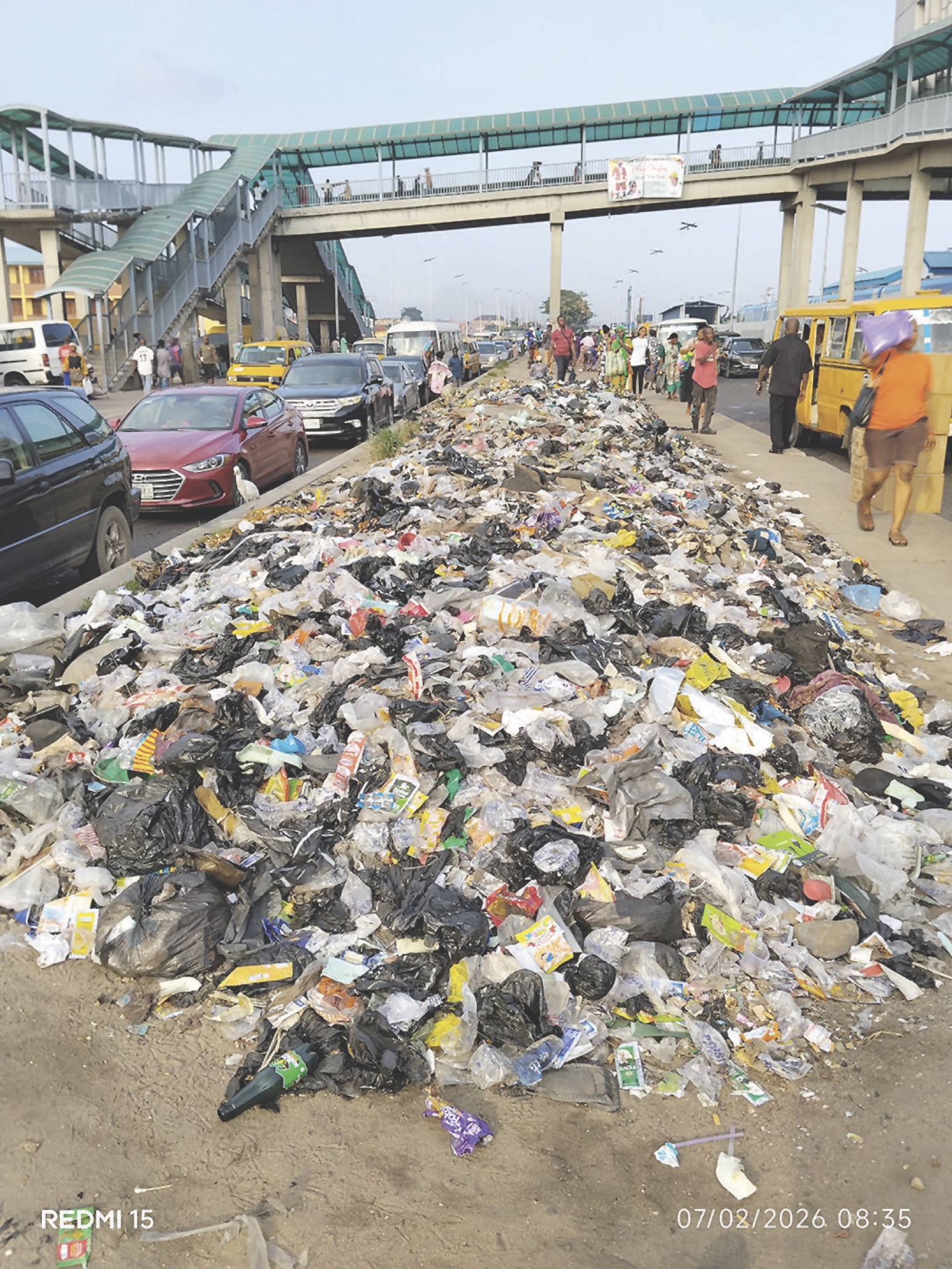
The other day, what should have been a routine drive through one of Lagos’ busiest corridors turned into a grim encounter with neglect. From Mile 2, Maza Maza, Peace Park, Agboju, Agric, Ilaje through Iyana Iba and down to Cassidy, heaps of waste now dominate the landscape, redefining what was once a major commercial artery.
Plastic waste, sachet water bags, broken household items, discarded mattresses and organic refuse spilled over the roads; it may choke the drainage systems as it narrows motorable lanes. In several spots, refuse has completely overtaken the gutters, leaving stagnant pools of foul-smelling water that breed mosquitoes and disease-causing organisms.
At Ilaje, the way faeces are plastered within the culvert and gutters, especially due to open defecation, is detrimental to human health. The refuse may block water channels and create ponds of stagnant water that pose serious health risks to residents. The stench is overwhelming, and the visual assault resembles decay rather than development.
The reporter was shocked to see a middle-aged man among others who were defecating with no sense of humanity, shame or consciousness. They were just in a relaxed mood, polluting the environment.
The situation deteriorates further at Iyana Iba, where refuse heaps have grown so large that vehicles now maneuver through narrow paths carved between waste piles. Motorists slow to a crawl, pedestrians cling to the edges of the road, and commerce suffers under the weight of environmental neglect.
Cassidy bus stop presents perhaps the most alarming scene, as the middle lane has been occupied by refuse and human excretion. Once a vital link between Lagos and Badagry, the road is now partially buried under refuse. Drivers are forced to maintain a single lane, while traders and commuters inhale toxic air daily. The risk of accidents and disease looms large.
A local trader at Cassidy, Bisi Adedeji, visibly frustrated, summed up the despair: “We have lost this road to refuse. Every day it gets worse. Sometimes we feel abandoned.”
Beyond the environmental degradation lies a deeper human tragedy. At Ilaje, the absence of functional public toilets has pushed residents to open defecation. During the visit, a middle-aged man was seen relieving himself in public, on the road, with others – an act that underscores the erosion of human dignity and the failure of basic sanitation infrastructure.
Commuters warn that such conditions create fertile ground for outbreaks of cholera, typhoid, skin infections and respiratory illnesses, especially as the rainy season approaches. Children, often seen playing near refuse heaps, are particularly vulnerable.
Despite repeated promises to transform Lagos into a modern mega city, the refuse crisis reveals a widening gap between policy declarations and lived reality. Irregular waste collection, inadequate disposal facilities, weak enforcement of sanitation laws and rapid population growth have combined to overwhelm existing systems.
A septuagenarian who identified himself as Baba Ibeji recommends that the crisis requires urgent, coordinated action. He called for improved waste collection, functional recycling systems, waste-to-energy initiatives and stronger community engagement. Without decisive intervention, he warned, the refuse menace could spiral into a full-blown health disaster.
He stressed that the Badagry Expressway should represent progress and connectivity. Instead, it now tells a story of neglect and systemic failure—a city struggling to manage the by-products of its own growth.
Another commuter, Aliyu Badmus, said Lagos will continue to chase global city status; one pressing question remains: Can a city truly shine while drowning in its own waste?
The reporter’s mission was simple: to feel the heartbeat of Nigeria’s largest city. But what she encountered was a nightmare dressed in the guise of progress. Instead of vibrancy and vitality, She found a landscape that resembled a graveyard – “filled with refuse, decay and despair,” she noted.
“This was a trip that revealed Lagos’s most urgent crisis: its sanitation emergency, a crisis that threatens to choke the very soul of the city. What should have been a routine drive turned into a stark confrontation with the city’s neglected wounds—mountains of refuse towering like monuments of neglect, spreading sickness and despair along the once-pristine roads.”
From the moment she got to Ilaje to Iyan Iba and beyond to Cassidy, the picture was clear: Lagos’s refuse crisis is spiraling beyond control. The heaps of garbage are no longer mere roadside nuisances—they are the landscape now. Plastic bottles, sachet wrappers, polythene bags, broken furniture, and discarded mattresses spill over the gutters and side ditches, forming chaotic mountains that threaten to swallow the roads.
At Ilaje, the area has long been transformed into a dumpsite. The refuse is so dense that it blocks the flow of water, creating stagnant pools of foul-smelling water that breed disease. The sight is both nauseating and tragic—a city that prides itself on being a commercial hub, yet visibly drowning in its own filth.
Further down at Iyana Iba, the situation worsens. The refuse heaps are so extensive that they have effectively become the roads themselves. Vehicles, instead of navigating asphalt, weave through narrow pathways carved out by waste, dodging piles that seem to have taken over entire lanes. The smell—an overpowering mix of rot and decay—clings to the air and assaults the senses.
The most shocking sight was at Cassidy, a crucial artery connecting Lagos to Badagry. The highway here is supposed to be a conduit for commerce and movement, but it is now almost impassable. The refuse spills over onto the asphalt, forcing drivers to follow just the last lane. Pedestrians risk their lives walking along the edges of mountains of waste, exposing themselves to health hazards that are as invisible as they are deadly.
Moreso, a local trader at Cassidy, who looked resigned as he described the situation: “This is our reality now. We’ve lost the road to refuse. Sometimes, I wonder if the government even sees this mess.” His words echo the sentiments of countless residents who have grown numb to the filth surrounding them but remain deeply frustrated and helpless.
The trader also said that people defecate openly in a corner—an act born out of desperation, because there are no functioning toilets or sanitation facilities left to support him or countless others. The streets have become open-air latrines, exposing residents to health risks and shame.
This is not just about aesthetics or inconvenience; it is about dignity. When citizens are forced to urinate or defecate in public, it signifies systemic failure—failure of infrastructure, governance, and societal priorities. It’s a dangerous game with disease transmission, especially cholera, which has recurrently claimed lives during rainy seasons.
He added: “Lagos’s leaders have spoken passionately about transforming the city into a mega city, a hub of modernity and economic growth. But the reality on the ground paints a far different picture. The refuse crisis exposes a deep disconnect between aspiration and actuality.
“How did Lagos, a city of over 14 million people, become so comfortable driving past mountains of refuse that tower over vehicles? The answer lies in systemic neglect—poor waste management policies, lack of enforcement and an infrastructure that has long been broken.”
He emphasised that private waste collectors operate irregularly, and public waste bins are either overflowing or nonexistent in many neighborhoods. Residents resort to indiscriminate dumping, creating a vicious cycle that seems impossible to break.
This crisis is more than an aesthetic disaster; it is a public health emergency. The refuse heaps serve as breeding grounds for rats, flies and other disease vectors. Floodwaters during the rainy season wash refuse into water channels, contaminating water sources and amplifying the threat of cholera and other waterborne diseases.
Children, especially the most vulnerable, play amid the refuse, unaware of the health hazards they face. Respiratory issues, skin infections, and other sanitation-related illnesses are rampant among residents living near these dumps.
Lagosians are crying out for urgent action. The city’s leadership must prioritize waste management—investing in modern disposal infrastructure, increasing public awareness, and enforcing sanitation laws. Community-led initiatives, such as neighborhood clean-up campaigns, can also play a crucial role.
The government must ensure that refuse collection is reliable and accessible, especially in underserved neighborhoods. Proper disposal plants, recycling initiatives, and waste-to-energy projects are vital to reducing the burden and creating economic opportunities.
The journey from Mile 2 to Okokomaiko should symbolize Lagos’s progress, not its failure. But today, it reveals a city that is crumbling from within. The refuse menace is a symptom of deeper systemic issues—a failure of governance, infrastructure, and civic responsibility.
Lagosians must ask: “Are we willing to accept this as our new normal?” Because right now, the road to Okokomaiko is crying. It’s crying for help, for dignity and for a future where the city’s beauty is not marred by rot and neglect.
Lagos’s future depends on how urgently and collectively we respond. We need accountability from our leaders, active participation from residents, and innovative solutions that turn waste into wealth.
Our roads should connect us, not divide us with refuse. Our city’s pride is rooted in its people and environment. It’s time we work together—government, stakeholders, and ordinary citizens—to restore Lagos’s smile, free from the rotting teeth of refuse.
Lagos is a city of dreams, resilience, and unyielding spirit. But its current sanitation crisis threatens to undermine all that. The journey along the Badagry Expressway is a stark reminder: behind the glamour, there are wounds that need urgent healing.
Our roads should be pathways of progress, not corridors of decay. Our environment should be a source of pride, not shame.
Lagos deserves better. And it’s time we give her that future—clean, safe, and dignified. Because a city that refuses to clean up its act can never truly shine.