Follow Us on Google

…Says decision now gaining acceptance among Igbo leaders in diaspora
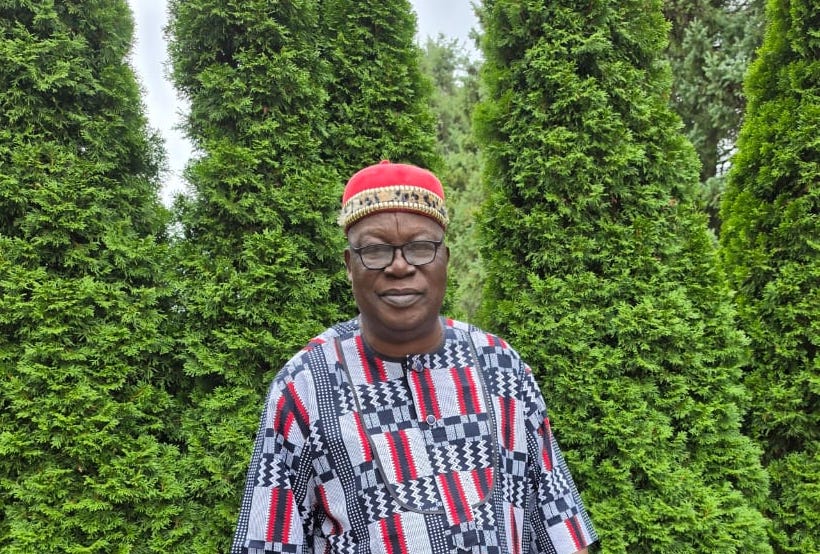
Long before Igbo traditional leaders in the diaspora began embracing the nomenclature of Ndindu, one Igbo leader had already taken a different path by voluntarily accepting the title of Onyendu Ndigbo in 2000, instead of the Eze Ndigbo title conferred on him by the Igbo-speaking community.
In an interview with the media recently, Onyendu Dr Alex Nwoye, Duru Ochiriozuo na Uga, Anambra State, and Bobaselu of Ejigbo Land, Lagos, said his respect for Igbo culture and traditional institutions informed his decision to politely decline the Eze Ndigbo title in favour of the nomenclature Onyendu, meaning leader.
Recounting the circumstances surrounding his decision, Nwoye said that when he was honoured with the position of Onyendu Ndigbo of Ejigbo in 2000, with the endorsement of the Ojon of Ejigbo, Oba Moroof Ojoola, many people misunderstood his choice.
“When, in the year 2000, I was honoured with the position of Onyendu Ndigbo of Ejigbo, with the sole endorsement of Oba Moroof Ojoola, the Ojon of Ejigbo, many people told all kinds of stories. Some dismissed my decision as cowardly.
“Some laughed that I had chosen a defeatist approach to Igbo leadership in the diaspora. But today, my decision back then has become a beacon of light and a foundation upon which the South-East traditional rulers have built reforms.
“Today, that singular effort and vision have resulted in a more dignified approach to, and greater respect for, Igbo leaders outside Igboland,” he said.
Nwoye recalled that his installation came at a time when the Eze Ndigbo title was generating considerable controversy among those who believed that its use outside Igboland could conflict with the authority and traditional institutions of Igbo communities at home.
According to him, some Igbo leaders were travelling across Lagos State and other parts of the West African region, crowning one another as traditional rulers.
He, however, noted that he had already been honoured by his community in Uga, Anambra State, with the title Duru Ochiriozuo, while the Ejigbo community in Lagos recognised him as Bobaselu of Ejigbo. He was also honoured as Omereoha Ndigbo in recognition of his contributions to societal development.
Nwoye said these honours reinforced his conviction that leadership and service to the community did not necessarily require the adoption of the Eze Ndigbo title.
Reflecting on the recent emergence of the Ndindu movement, he disclosed that during its inauguration in Imo State and public presentation in Lagos in October, he told the organising committee that Onyendu, which means leader, was a more appropriate title than Eze Ndigbo.
He added that even when two or more individuals were crowned Eze Ndigbo in Ejigbo, he remained committed to the Onyendu title without adding any other designation.
Other News
“After more than 20 years of pioneering a new approach to Igbo leadership through the Onyendu title, it has now become the rave of the moment. Many Igbo leaders in the diaspora are beginning to see it as the preferred option,” he said.
He further noted that the new movement had given rise to the Association of Ndieze, Ndindu and Igbo Nobles (ANNIN), reflecting the evolving conversation around Igbo leadership and traditional titles in the diaspora.
Asked how he came about the name Onyendu and why he remained committed to it despite criticism from some fellow Igbo leaders, Nwoye said he had felt comfortable with the title from the moment he first heard it.
“When Igbo speaking king makers that was sent to my Ejigbo residence by former PG Igbo speaking community Lagos State chief Ebere Ubani to install me Eze Ndigbo of Ejigbo I told them that after my installations I prefer to use Onyendu Ndigbo title as recommended and approved by Ohanaeze
“I was really at peace with the title of Onyendu Ndigbo from the moment I first heard it. It suited the purpose, did not antagonise anyone and was self-explanatory.
“Moreover, I heeded the call by Igbo leaders at a historic meeting in Ibadan that the Eze title appeared antagonistic to the communities in which we reside,” he explained.
Expressing satisfaction that the idea was gaining wider acceptance, Nwoye said he felt fulfilled that a decision he made more than two decades ago was now being embraced by other Igbo leaders in the diaspora.
“I feel fulfilled that the idea is now acceptable to all. I also feel very good that the title is catching on after many years, despite the barrage of criticisms I received in those early years,” he said.
Beyond traditional leadership, Nwoye traced his journey from humble beginnings as an apprentice to his present involvement in the hospitality industry.
He disclosed that he now owns Rockland Garden, Mecvilla Garden/Hotels and Suites, and Aceland Royal Garden.
Looking back on his decision to adopt Onyendu instead of Eze Ndigbo, Nwoye said he remained convinced that he had chosen the right path in promoting and respecting Igbo culture and traditional institutions in the diaspora.
For him, the growing acceptance of the Onyendu title represents not only personal vindication but also an evolving approach to leadership that seeks to balance Igbo cultural identity with respect for the traditions and institutions of host communities.