Follow Us on Google

From Noah Ebije, Kaduna
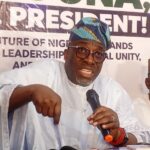
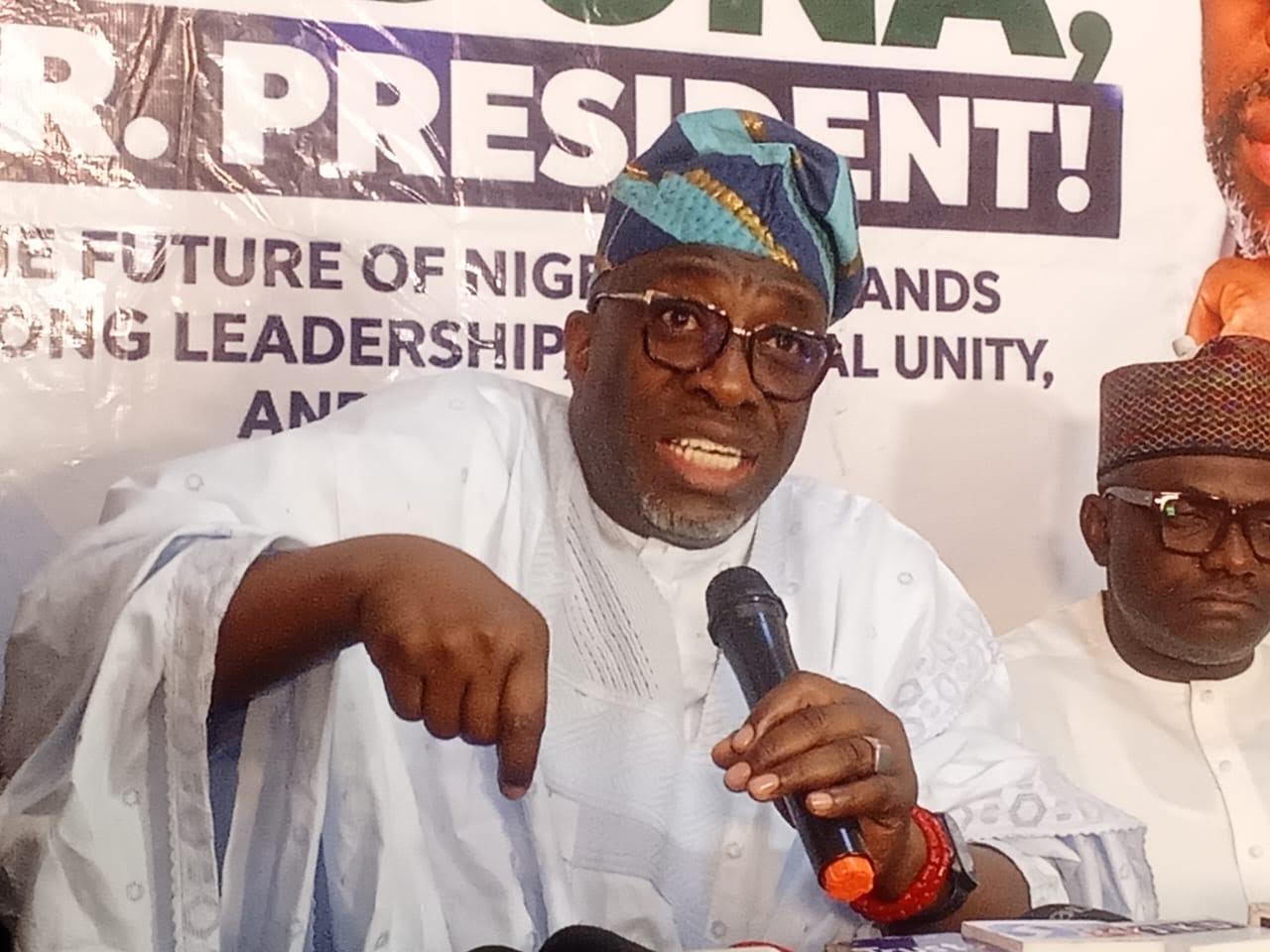
A member of the APC-Presidential Campaign Council, Otunba Segun Showunmi, has urged Nigerian journalists to resist misinformation, hold politicians accountable and prevent political campaigns from deepening ethnic and religious divisions across the country.
Showunmi made the appeal at a press conference in Kaduna on Sunday, where he commended journalists for their role in sustaining Nigeria’s democracy and urged media professionals to protect the credibility of their profession against the growing spread of false information, including content manipulated through artificial intelligence.
According to him, the media has a critical responsibility to ensure that political competition does not degenerate into public disorder, hatred and social instability.
“The stability of a nation is in the hands of those of you who own bylines, who have the microphone, who are in charge of everything communication,” he told journalists.
He urged media professionals to ensure that political actors remained focused on issues rather than resorting to falsehoods and inflammatory statements to discredit their opponents.
“Help us to insist that people stay on messaging, whether they are opposition or even the ruling party. They should stay on messaging, because that’s what’s going to be in our best interest,” Showunmi said.
He added: “If somebody, if I’m telling lies, stop me. If they are telling lies, stop them.”
The politician warned that allowing untrained individuals to dominate public discourse with fabricated stories and manipulative content could undermine the credibility of journalism and threaten national stability.
“Evolution is taking place even in our profession. In such a way that if those of you and those of us who are the owners of this profession do not maintain a very serious guardrail to prevent this profession from going under the manipulation of charlatans, who can just carry a phone and start communicating and writing rubbish, manipulating and telling lies and instigating society, what would you and I say was our duty as the fourth realm of the estate, if we allow that?” he asked.
He specifically cautioned against the misuse of artificial intelligence during political campaigns, warning that digital manipulation, inflammatory messaging and the mobilisation of young people for political confrontation could have damaging consequences.
“Manipulating things, using AI, playing tricks, instigating small, small children, causing crisis, how does that help us?” he queried.
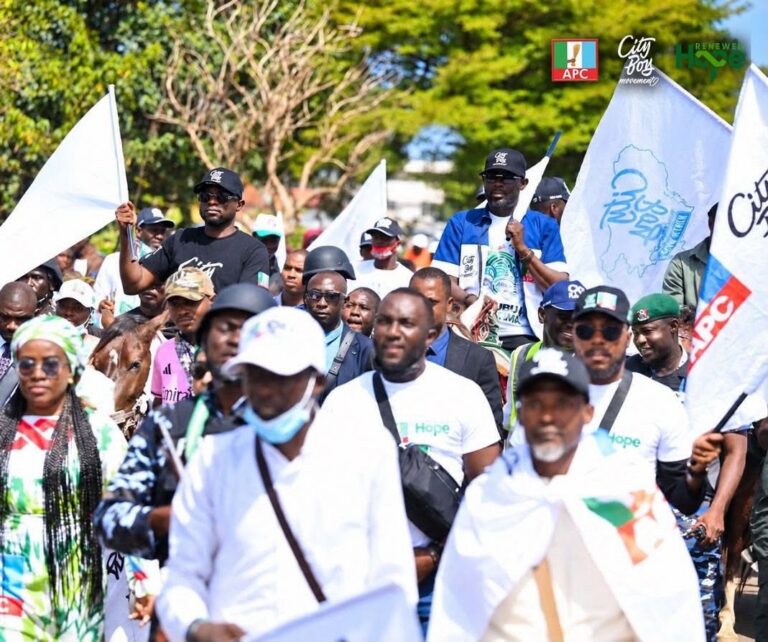
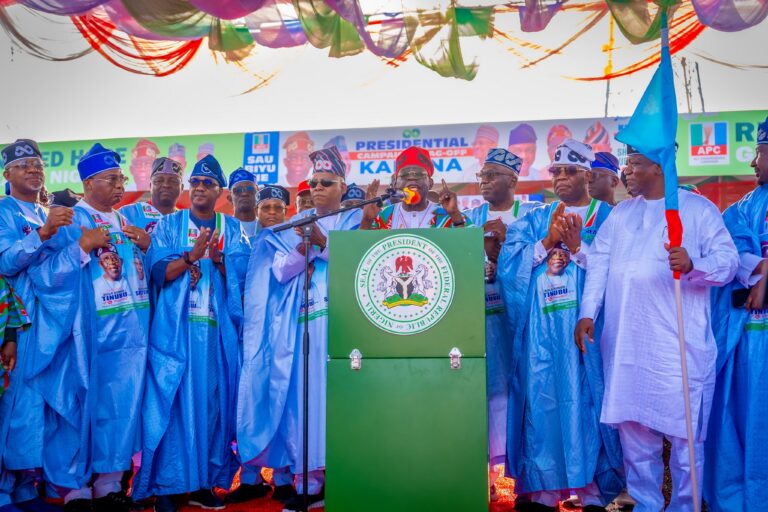
Showunmi also thanked journalists and residents of Kaduna for the reception accorded Tinubu and his campaign team during their visit to the state on Saturday.
He praised what he described as the large turnout, peaceful atmosphere and spirit of unity displayed during the visit, saying he considered it necessary to meet journalists personally to express his appreciation.
He said he was initially concerned by reports suggesting that the president and his team might encounter hostility in Kaduna but was encouraged by the reception they received.
“Ladies and gentlemen, help me through you, thank the people of Kaduna. Do you know how my heart was in my mouth? Because of all the nonsense information: ‘Ah, nobody wants to see them; they’re going to tear posters.’ Why now?” he said.
He questioned the wisdom of creating an atmosphere in which political figures or visitors might feel unwelcome in parts of the country because of their political affiliations.
“Why do you want to make this place a land that people will not freely come to do holiday, people will not freely come to enjoy themselves?” he asked.
Describing Kaduna as a historically diverse community, Showunmi said the state had long provided an example of coexistence among people of different ethnic, religious and cultural backgrounds.
“One of the greatest unique things about Kaduna is that, wallahi, Kaduna is the Lagos of the North,” he said.
“When you come into this town, if you are from here, one thing that you will notice about Kaduna is that it is almost as if every tribe, every race, every religion, every culture is living here peacefully and living here normally.”
He recalled his childhood experiences in Kaduna, including interactions among residents of different faiths and backgrounds, and urged political leaders not to allow electoral competition to destroy those relationships.
“Is this not this Kaduna where Christians will be doing Christmas carols, Muslims will sit down and we’ll have them eat bones?” he asked, reflecting on what he described as the state’s tradition of social and religious interaction.
He called on journalists to challenge political narratives that could alienate communities from one another and undermine the social cohesion for which Kaduna has historically been known.
The campaign figure also defended Tinubu’s leadership, arguing that Nigeria needed political stability, continuity in governance and a deliberate approach to succession.
He urged Nigerians to support the president’s re-election bid, saying continuity would provide an opportunity to consolidate ongoing reforms and begin preparing a new generation of leaders.
“Help us to support him, get him over the line with big numbers, so that we can start planning the future,” Showunmi said.
He argued that political competition should not become an endless struggle for power among established political figures at the expense of younger Nigerians seeking opportunities to lead.
“You cannot have a perpetual, non-ending ambition that has even disturbed a lot of brilliant young Northerners from even being able to come up,” he said.
“Must it be only you? Can’t people sit down somewhere and let’s even look for other people? Maybe when those ones are talking, the language will even be sweeter in our ears.”
Showunmi also advocated a balanced approach to political succession among Nigeria’s regions, arguing that an understanding of power-sharing could help reduce unnecessary political tension.
Other News
According to him, a predictable succession arrangement would give different regions a sense of inclusion and help the country avoid prolonged political disputes.
He cited the legacies of former leaders, including Muhammadu Buhari and Shehu Musa Yar’Adua, while making a broader argument about leadership, political accommodation and the responsibility of established politicians to create opportunities for others.
However, his position on political continuity and regional succession reflects his political argument and is not, in itself, a settled constitutional requirement.
Showunmi also defended the Tinubu administration’s policy direction, pointing to infrastructure development, access to education, workers’ wages, pension payments and security as areas Nigerians should consider when assessing governance.
He argued that responsibility for improving living conditions should not rest solely on the president, insisting that state governments and local government administrations also had important roles to play.
“You can’t run a country to lead people out of poverty only from the office of the President,” he said.
“As a matter of fact, there are responsibilities to do policy. Nobody lives in the Villa, apart from the office of the President. Every human being in Nigeria, we are all living in one local government or the other.”
He called on journalists to scrutinise the activities of governors and local government chairmen, particularly in the use of public funds and the delivery of services to residents.
“Is it not our own responsibility to beg our own brothers who are local government and governors to do more for us?” he asked.
On education, Showunmi argued that expanding access to higher education could create opportunities for children from low-income households to improve their circumstances.
He maintained that a child from a disadvantaged background should have the opportunity to attend university even when their parents cannot afford the cost upfront.
“Are you not even happy that now, if a child wants to go to the university, even if his parents cannot afford it, at least he can access the facility? Let him go to school first. When he goes to school, nature and life may smile at him,” he said.
He also referred to changes in workers’ wages and the timing of salary payments, arguing that public discussion of the economy should acknowledge both existing difficulties and any improvements that can be demonstrated.
On security, he pointed to the efforts of military personnel, police officers and other security agencies in confronting insurgency and kidnapping, stressing that security personnel were Nigerians whose sacrifices should not be overlooked.
His claims about improvements in security, wages, pension payments and other economic indicators were not independently established during the press conference and would require verification against relevant official data.
While defending the president’s policy direction, Showunmi said journalists should not overlook the responsibilities of state and local governments when reporting on poverty, unemployment and public service delivery.
He argued that national challenges required cooperation across all levels of government and warned against attributing every difficulty to the federal administration.
He also maintained that development projects, including road construction, should be assessed in terms of their wider economic benefits, such as employment and opportunities for local suppliers, artisans and other businesses.
On healthcare, he referred to an alleged reduction in dialysis costs from N50,000 to N20,000, presenting it as an example of a policy intervention intended to ease the burden on patients.
The specific scope, implementation status and availability of the reported reduction were not established in his remarks.
Showunmi further argued that reforms should be judged by their practical impact on ordinary citizens, rather than by political slogans alone.
He called for a more balanced public conversation that considers government policies, implementation challenges and the responsibilities of elected officials at every level.
Showunmi devoted a significant part of his address to the political direction of Northern Nigeria, warning against the concentration of political ambition in the hands of a few established figures.
He questioned whether the region was creating enough room for younger politicians and emerging leaders to participate meaningfully in public affairs.
Invoking the legacies of Buhari, the late Ahmadu Bello, popularly known as the Sardauna of Sokoto, and other historical figures, he challenged contemporary political actors to consider whether their conduct reflected the leadership traditions they claimed to represent.
He argued that political ambition should be balanced with a willingness to make room for new leadership and that regional interests should not be used to justify endless political confrontation.
He also cautioned against rhetoric that could deepen ethnic and religious suspicion, insisting that national unity required political leaders to recognise the shared interests of Nigerians across regional boundaries.
“Nigeria is not that divided tribally,” he said, urging journalists to challenge divisive narratives and remind politicians that voters had a stake in demanding responsible leadership.
Towards the end of his address, Showunmi described his visit as an opportunity not only to thank journalists but also to listen to their concerns and carry their feedback back to the campaign.
Showunmi ended his remarks with a call for peace and unity in Kaduna and across the country, expressing hope that the state would continue to preserve the coexistence and shared identity he described as central to its history.