Follow Us on Google

By Chinenye Anuforo
The federal government has unveiled a comprehensive strategy to bridge the connectivity gap plaguing millions of Nigerians, particularly in rural and underserved communities.
Bosun Tijani, Minister of Communications, Innovation, and Digital Economy disclosed the urgency of the situation, noting that millions of Nigerians on the fringes of digital transformation are yet to have access to reliable connectivity.
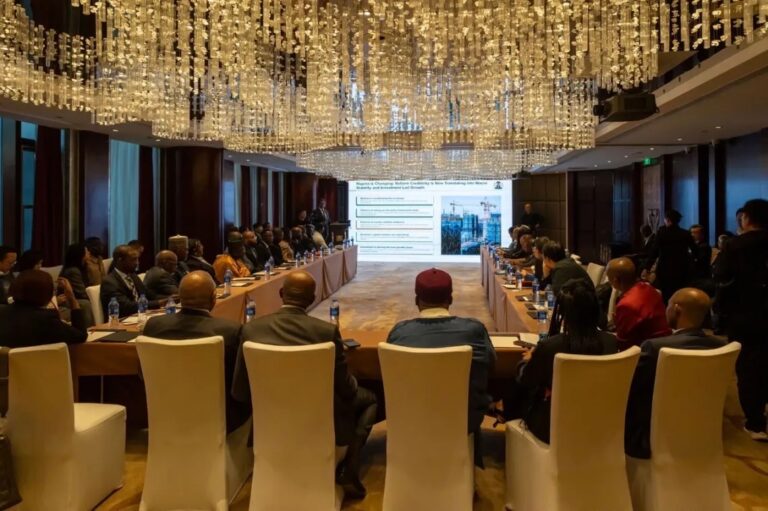
The government’s multifaceted approach, unveiled at an industry-focused stakeholder engagement session of the Universal Service Provision Fund (USPF) in collaboration with the International Telecommunication Union (ITU), and the United Kingdom Foreign, Commonwealth & Development Office (FCDO) includes a series of transformative projects aimed at expanding broadband infrastructure and fostering digital literacy. Key initiatives include Project BRIDGE, a 90,000km fiber optic expansion, and Project 774, which will ensure high-speed connectivity for every local government secretariat.
The Universal Access Project, a game-changing initiative, aims to connect over 20 million Nigerians currently excluded from digital services. The National Broadband Alliance of Nigeria (NBAN) and the 3 Million Technical Talent program (3MTT) further underscored the government’s commitment to building a robust digital ecosystem.
“These projects are not just focused on infrastructure; but also about enabling businesses, empowering individuals, and unlocking the full economic potential of Nigeria’s digital landscape as we work towards a $1 trillion economy,” . Tijani stated.
However, the minister stressed that achieving universal connectivity requires a collaborative effort involving the public and private sectors, development agencies, civil society, and local communities. He outlined four key pillars for effective collaboration: community engagement, leveraging existing infrastructure, capacity building, and sustainable solutions.
“We stand at a defining moment in Nigeria’s digital transformation. We have the vision, the policy framework, and the will to connect every Nigerian to the digital economy. But we need your partnership to explore alternative innovative ways to deliver on all elements of our plans” Tijani asserted.
Other News
Dr. Aminu Maida, Executive Vice Chairman of the Nigerian Communications Commission (NCC), echoed this sentiment, highlighting the crucial role of the USPF in expanding access. He emphasized the need for a multi-stakeholder approach to explore innovative financing models, leverage emerging technologies, and promote policies that incentivize collaborative participation.
“Collaboration remains the cornerstone of sustainable development in this sector,” Maida stated, urging stakeholders to “harness our collective expertise, resources, and innovative capabilities to build a resilient and sustainable telecommunication infrastructure.”
Maida made a strong call to action, urging government agencies, mobile network operators, infrastructure providers, equipment manufacturers, development partners, and telecom trade groups to work closely together. He outlined three key areas for collaboration: exploring innovative financing models for rural telecommunications, leveraging emerging technologies and alternative power solutions for sustainable connectivity, and promoting policies that incentivize collaborative participation.
He emphasized the importance of tailoring solutions to local challenges and aligning with current realities. “Crucially, I must mention that our solutions must be tailored to address local challenges/needs and align with current realities,” he noted.
Mr. Yomi Arowosafe, Secretary of the USPF, further underscored the importance of partnerships, emphasizing that the event marked the start of a “collective journey towards a more connected, inclusive, and prosperous Nigeria.” He highlighted the USPF’s commitment to developing customized solutions that address both immediate and long-term connectivity needs.
Engr Faruk Yusuf Yabo, Permanent Secretary in the Ministry of Communications, Innovation and Digital Economy, highlighted the integration of USPF into the wider telecom business, saying, “USPF, which is Universal Service Provision Fund, has been fully integrated into the wider telecom business in Nigeria, where local developers are given funds to create BTS sites where the normal MNOs would not like to go because of lack of business returns.”
He added, “We believe that in the coming months and years, under the able leadership of our President, President Ahmed Bola Tinubu, Nigeria will be in the league of those nations that have transformed not only their cities but their communities in the hinterlands.”
Dr. Tijani concluded with a powerful call to action, stating, “Together, with a clear focus on investment in last mile connectivity, capacity building and infrastructure development as well as the creation of policies that enable the rapid deployment of digital infrastructure, we can achieve universal access to communications and digital literacy for all Nigerians by 2030.”
“Our goal is clear: meaningful and affordable connectivity for all Nigerians. No one will be left behind in this digital revolution,” Tijani declared, solidifying the government’s unwavering commitment to closing the digital divide.