Follow Us on Google
• Months after creation, non-release of take-off funds stalls activities at new regional development commissions
• It appears creating new ones is a scam – Okorie
• FG remains committed – Momoh
By Omoniyi Salaudeen
The persistent issue of the non-release of take-off funds for the newly established regional development commissions has raised concerns about their viability as effective vehicles for economic integration.
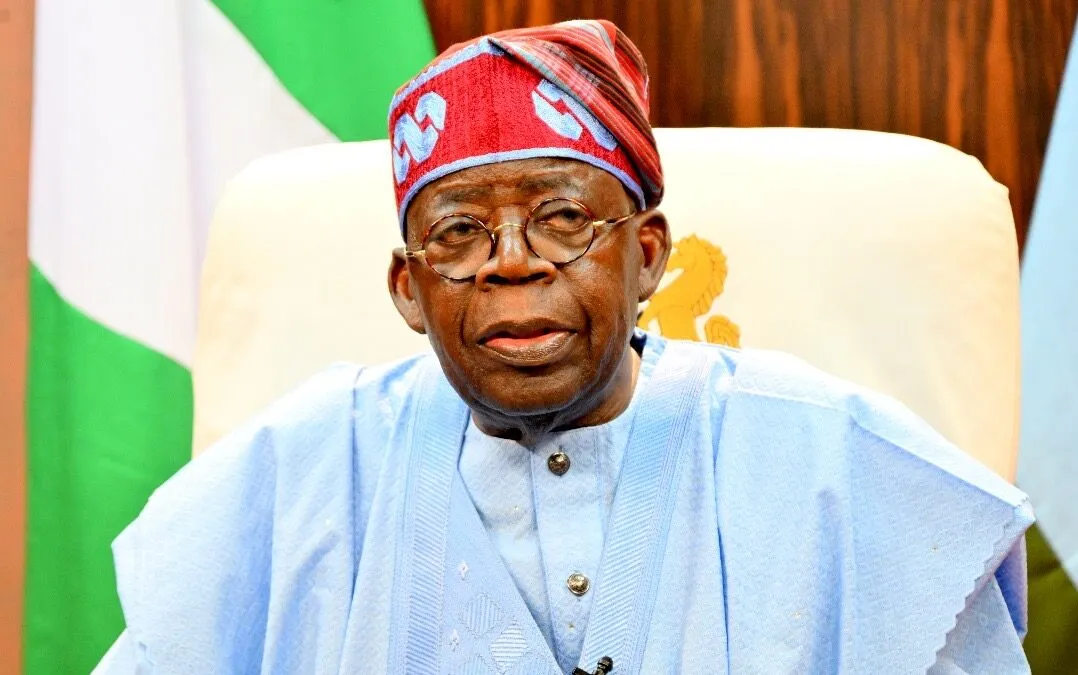
President Bola Ahmed Tinubu signed the bills establishing the four new regional development commissions into law on three separate dates between 2024 and early 2025. The bills establishing the North-West Development Commission (NWDC) and South East Development Commissions were signed into law on July 24, 2024; the North-Central Development Commission was signed on February 4, 2025, while South-West Development Commission and South-South Development Commissions on March 25, 2025. With the signing of these bills, all six geopolitical zones now have a dedicated federal development commission.
Core mandates of the commissions
The establishment of the regional development commissions under President Tinubu is driven by a comprehensive set of objectives aimed at accelerating development, ensuring equity, and addressing specific regional crises. They are designed to be powerful, specialised federal intervention agencies that tailor their actions to meet the specific development, security, and integration needs of their geopolitical zones.
Many stakeholders believe that the establishment of multiple regional development commissions (SWDC, NWDC, SEDC, NCDC) would foster healthy competitiveness among the regions, turning the need for development into a constructive rivalry.
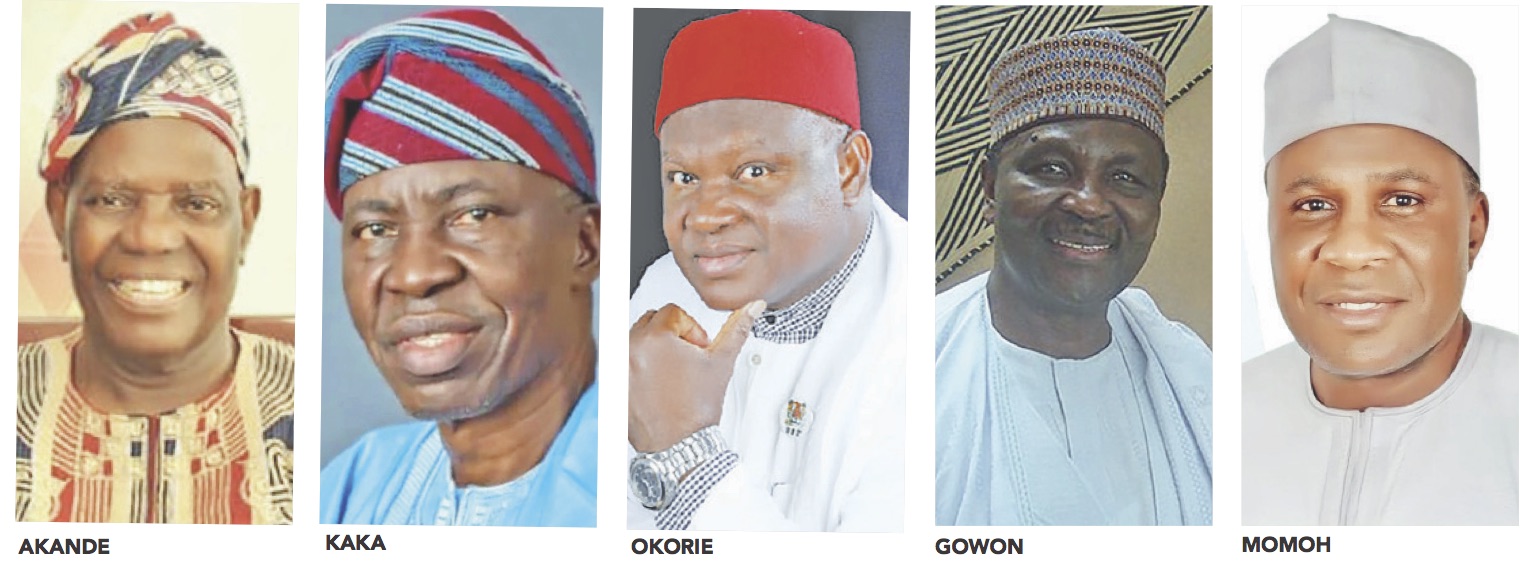
The former Interim National Chairman of the All Progressives Congress (APC), Chief Bisi Akande, during a recent summit in Akure, publicly applauded the creation of the regional development commissions, describing the move as a quiet step toward restructuring. He viewed them as a significant and pragmatic step toward achieving the long-sought goal of restructuring and regionalism in Nigeria. He said: “The establishment of the commissions is a quieter, more profound restructuring than the clamour for constitutional changes.” He emphasised that these commissions are “not just geographical entities, but economic development engines” and “grassroots-focused commissions.”
He maintained that the commissions are a recognition that “true development must begin from the grassroots, with each region in charge of its own destiny.” According to him, this initiative aligns directly with the core philosophy of regionalism. He saw the commissions as a move to fix the structural imbalance by empowering the regional tier once again.
By design, the commissions are positioned to compete to become the most successful economic bloc in Nigeria, especially between the North, South-West, and South-East. For instance, the SWDC’s One Bloc Integration agenda is expected to compete directly with the SEDC’s 10-year Development Roadmap aimed at growing its economy from $40 billion to $200 billion. The blueprint focuses on attracting the highest share of Foreign Direct Investment (FDI), domestic manufacturing, and technology talent.
On the other hand, the South-West Development Commission (SWDC) is explicitly designed and mandated to serve as the primary vehicle for economic integration across the six states of the region. The core philosophy guiding the commission is the principle of Six States, One Bloc, transforming the South-West into a cohesive economic entity rather than a collection of fragmented states. The initiative is intended to harmonise policies, coordinate development priorities across all six state governments (Lagos, Ogun, Oyo, Osun, Ondo, Ekiti) in critical sectors like agriculture, technology, and transport.
The idea is to discourage individual states from pursuing isolated projects and, instead, promote regional solutions that deliver shared prosperity. By presenting the region as a unified market with synchronized infrastructure and regulations, the SWDC aims to catalyze large-scale investments that otherwise wouldn’t flow to single states.
Senator Gbenga Kaka, speaking with Sunday Sun, argued that the creation of the development commissions would promote healthy competition, leading to economic supremacy contest among the regions. He said: “The regional development commissions will engender healthy competitions among the regions. The states within the regions can collaborate among themselves to make possible what them cannot do individually. That way, there will be less pressure on the Federal Government.
“For example, electricity generation and distribution has been removed from the exclusive list. Under the new arrangement, Ogun and Lagos can decide to collaborate to generate and distribute electricity. Oyo and Osun can do the same. Ondo and Ekiti can join hands together and go into generation and distribution. If they do desire, the entire South West can collaborate to put certain things in place. Apart from electricity generation, we also have road interconnectivity that requires collaboration.
“It is now left for the respective states to own the commissions. The creation of the commissions means that more responsibilities are now been devolved to the states and local government as grassroots development centres. The competitiveness arising from the arrangement will benefit the people the more. Because of healthy competitions and collaboration effect, there will be faster development. There will be regional advantage which can be explored for the benefits of the states within the commission.”
The approved allocation of ₦140 billion for each of the newly established commissions currently reflects the government’s financial commitment for their capital projects and recurrent expenditure in 2025.
Headache of non-release of take-off funds
However, the non-release of funds, despite budget approvals, compromises the commissions’ sustainability in three critical ways. Apart from stalling the integration effort and exacerbating the dependency syndrome, it also compromises core crisis mandates. A meaningful economic integration depends on cross-border infrastructure like regional highways, shared energy grids, inter-state industrial clusters. Without the initial capital, the commissions cannot award contracts, commence construction, or even finalize crucial site assessments. The reliance on an unpredictable federal lifeline becomes a major viability threat, strengthening the public cynicism that they will only survive if they are perpetually dependent on consolidated revenue from the centre.
For commissions in security-challenged regions like North East, North West, and North Central, delayed funding affects the most urgent elements of their viability. The non-release of funds hinders their ability to support state security efforts, thereby keeping the economic environment volatile and unsuitable for integration. The Chairman of the North Central Development Commission (NCDC) recently confirmed that the commission’s inability to access its ₦140 billion initial annual allocation had stalled the take-off of key operational and developmental programmes.
The viability of the commissions as integration vehicles therefore hinges entirely on the swift, comprehensive resolution of the funding crisis and the establishment of a clear, consistent disbursement mechanism.
The total allocation for all commissions in the 2025 budget is ₦2.49 trillion. But the budgetary allocations for the regional development commissions vary significantly, particularly between the older established commissions with dedicated funding streams and the newly created commissions. The final approval saw the four new development commissions (South-East, North-West, North-Central, and South-West) all receive a harmonized allocation of ₦140 billion each. North-West Development Commission (NWDC) ₦145.61 billion, Niger Delta Development Commission (NDDC) ₦776.53 billion and North-East Development Commission (NEDC) ₦291 billion.
The current approved annual allocation of ₦140 billion for each new commission is generally viewed as insufficient for the immense infrastructure and security challenges they face. Some analysts argue that this inadequacy will force them to perpetually rely on supplementary federal transfers, deepening the dependency. Much more concerning is the delay in releasing take-off funds for the newly established commissions. The Chairman of the NCDC, for example, confirmed that the commission’s initial annual allocation has not yet been released.
Mixed reactions
Mixed reactions have continued to trail the alleged delay in release of funds for the take-off of the new commissions. A prominent leader of thought in the South East, Chief Chekwas Okorie, who spoke with Sunday Sun on the matter, noted a shift from excitement to disenchantment. His words: “The non-release of funds by the Federal Government is very disappointing. To me, it appears that the speedy manner with which President Bola Tinubu signed those bills into law is meant to sedate the people who were clamouring for their own commissions. It was meant to make them go to bed to sleep by not giving the commissions the oxygen to breathe.
“When the South East Development Commission was established, it was so celebrated, especially given the perspective of reconstruction, rehabilitation and reconciliation the Gowon administration promised after the civil war in 1970 which was observed in the breach. So, when this commission was eventually signed into law by the Tinubu administration, the celebration was that, at least, over 50 years after the war, that aspect of reconstruction would be implemented given government’s support.
“To know that 11 months after signing the bill, the government has not given them the start-up fund, it appears that it is a scam. I pray the President will give them the opportunity to function.
“The dependency of these commissions is similar to the dependency of the states on the Federal Government. In the South East, within the short period the commission was set up, the management met and came up with a proposal to inject over $150 billion into the commission as a Direct Foreign Investment. The blueprint was presented to the President by the Managing Director of South East Development Commission, Mr. Mack Okoye (Jn), and he was impressed that they were already thinking ahead. But the commission needs to take off before you can begin to invite investors. Till date, the commission has no office in Enugu where it is supposed to be sited. There is no functional staff. Playing politics with the commission is very disappointing.”
However, Senator Kaka, in his own reaction, countered the outright dismissal of the initiative, saying “it is too premature.”
“First step is the beginning of any movement. When you talk of restructuring, some people will develop cold feet. The new commissions were established less than a year ago, it is too premature to start lamenting that they have not been provided the wherewithal to make them function effectively.
“The instrument of development has been provided, it is now left to the governors in the various regions to find a common ground, harmonise and find a way to get things done using the development commissions as a vehicle. The hope can never be lost. We should encourage the commissions, give them the lifeline to breathe and we will be better for it,” Kaka posited.
The Minister of Regional Development, Abubakar Momoh, and the Chairmen of the commissions recently met with President Tinubu to address the issue. Following the meeting, he assured that President Tinubu was actively looking into the funding challenges and that the funds would be released “in a very short time.”
The stated that the government remained committed to resolving the issue to allow the commissions to begin their work on infrastructure, economic growth, and security across the regions.