Follow Us on Google

… Says Intelligence Sharing Key to Defeating Crime
From Taiwo Oluwadare, Ibadan
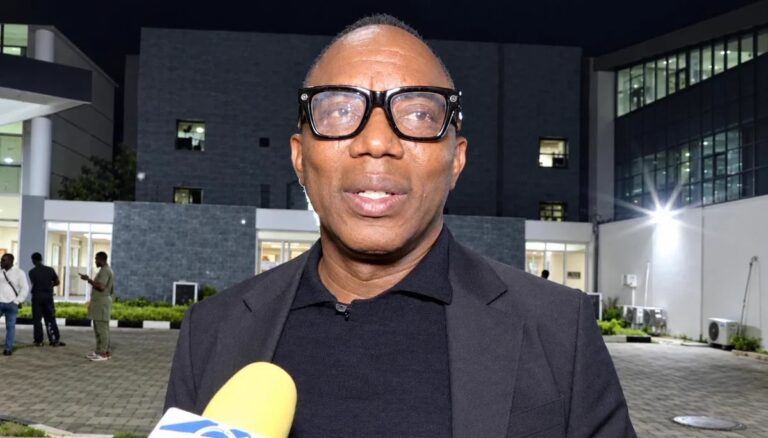
As Nigerians marked Democracy Day, Senator Yunus Akintunde has called for a shift in the country’s approach to security, urging citizens to take a more active role in intelligence gathering and community vigilance rather than leaving the responsibility solely to government agencies.
The senator representing Oyo Central Senatorial District made the appeal during a special Democracy Day edition of a television programme on Friday, where he argued that tackling insecurity requires collaboration between government, communities and individuals.
According to Akintunde, security challenges are a global phenomenon driven by factors such as poverty and conflicts across different regions of the world, stressing that Nigeria’s situation should be viewed within that wider context.
While expressing sympathy for victims of insecurity, he maintained that President Bola Tinubu’s administration has continued to demonstrate commitment to addressing the problem through changes in military leadership and evolving security strategies.
The lawmaker, however, warned against placing the entire burden of national security on the President alone.
“Security issues are not a one-man job,” he said, noting that meaningful progress can only be achieved when citizens actively support security agencies with timely information.
Akintunde revealed that the National Assembly is intensifying discussions on state policing, community policing and technology-driven security systems as part of efforts to strengthen the country’s security architecture.
He said lawmakers had resolved to advance conversations around decentralised policing models that would allow communities to contribute more effectively to crime prevention and intelligence gathering.
Other News
The senator cited a recent security incident in Oyo State as an example of how suspicious activities can go unnoticed within communities until they escalate into major security threats. According to him, residents often possess valuable information that could help authorities intervene before crimes occur.
He also advocated stronger community-based intelligence networks, arguing that local residents are often better positioned to understand their environment and identify unusual developments than security personnel deployed from distant locations.
Akintunde cautioned against discussing sensitive operational matters in public forums, suggesting instead that structured channels should be created through which citizens can confidentially relay security information and recommendations to relevant authorities.
Beyond security, the senator used the Democracy Day platform to defend the economic reforms introduced by the Tinubu administration, describing them as necessary steps toward long-term national recovery.
He highlighted the federal government’s student loan programme as one of the administration’s notable interventions, saying it has expanded access to higher education for students who previously struggled to afford tuition fees.
Akintunde acknowledged that economic challenges remain, but insisted that reforms often require time before their benefits become fully visible.
He also defended the removal of fuel subsidy, arguing that the policy has freed up resources for infrastructure and development projects, including investments in agriculture and major transportation initiatives.
According to him, economic growth should be measured not only by immediate cash availability but also by long-term planning, investment and the establishment of sustainable systems capable of driving future prosperity.
The senator further pointed to what he described as increasing exchange-rate stability and ongoing tax reforms as indicators that the economy is gradually being repositioned.
On electoral credibility and public confidence in democratic institutions, Akintunde said distrust of election outcomes remains a major challenge, attributing it partly to years of contested polls and public scepticism.