Follow Us on Google
From Adewale Sanyaolu, Houston,Texas
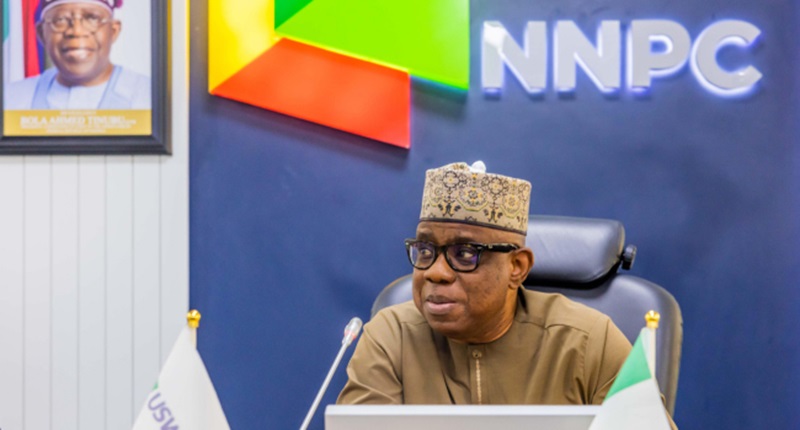
Group Chief Executive Officer (GCEO), Nigerian National Petroleum Company Limited (NNPC Ltd), Mr. Bayo Ojulari, has declared that execution discipline, not policy or potential, will determine the company’s success over the next decade, as Nigeria accelerates efforts to reposition its energy sector.
The GCEO stated this at the CERAWeek Leadership Dialogue session by S&P Global Conference in Houston,Texas.
According to him, the national oil company has moved decisively from reform to delivery following its transition into a commercially driven entity under the 2021 industry reforms.
“We have the resources, the market and a more investible environment. What matters now is execution, delivering projects on time, on budget and at performance,” he stated.
He explained that NNPC’s evolution from a government-funded corporation into a competitive commercial enterprise is now firmly underway, with the focus shifting to measurable results.
He added that a full portfolio review has been completed, and engagements with global partners, including ExxonMobil, Chevron, Shell, TotalEnergies and ENI, have been reset to rebuild trust and unlock stalled investments. “That effort is already yielding results, with key projects advancing toward Final Investment Decisions and long-standing disputes resolved, signaling renewed investor confidence in Nigeria’s energy sector,”.
Ojulari also highlighted Nigeria’s strategic pivot toward gas, describing the country as fundamentally gas-rich with over 200 trillion cubic feet of proven reserves and significant untapped potential.
He noted that past delays were largely due to weak fiscal frameworks and challenging investment conditions, but recent reforms have improved project viability.
Other News
NNPC, according to him, is now focused on pricing transparency across the value chain, accelerated infrastructure development and improving project bankability.
He stressed that critical pipeline projects, including the Ajaokuta–Kaduna–Kano (AKK) line, are nearing completion as part of greater efforts to link supply to industrial demand.
On balancing exports with domestic needs, Ojulari was clear that Nigeria does not face a trade-off.
“While Nigeria LNG continues to expand, with Train 7 progressing and additional trains planned, the company is simultaneously driving domestic gas utilisation through industrial parks, power generation and gas-based industries.
“It’s not a choice. We have enough resources to scale exports and meet domestic demand,” he said.
On refining, he described the 650,000 barrels-per-day Dangote Refinery as a turning point for the country’s downstream sector, noting that its emergence is already reducing reliance on imported fuel, stabilising supply and creating a reliable outlet for locally produced crude.
Beyond its immediate impact, he said the refinery demonstrates Nigeria’s capacity to deliver large-scale industrial projects and is expected to catalyse further investment in refining while positioning the country as a net exporter of petroleum products within Africa.
Addressing concerns about reliability, Ojulari acknowledged Nigeria’s historical challenges but pointed to significant improvements in security, particularly in the Niger Delta, where pipeline availability has risen sharply due to closer collaboration between government forces and host communities.
He also highlighted the role of the Petroleum Industry Act (PIA) in providing regulatory stability, alongside the operational autonomy granted to NNPC, which enables it to function as a commercially oriented entity capable of sustaining long-term investor confidence despite political cycles.
Ojulari reiterated that with the right foundations now in place, disciplined implementation will help the country fully realise its vast energy potential.