Follow Us on Google


By Chinenye Anuforo
The Development Bank of Nigeria (DBN) and the African Development Bank (AfDB) have signed a $61 million gender-focused credit line to expand access to finance for women-owned businesses in Nigeria.
The deal, signed on the sidelines of DBN’s seventh Annual Lecture in Abuja, reinforces efforts to address financing barriers confronting women entrepreneurs and support the growth of micro, small and medium-sized enterprises (MSMEs).
At the event, DBN also launched DAWN (DBN Action for Women in Nigeria), a new initiative designed to help women-led businesses access financing, technical assistance, credit support and market opportunities.
The bank said the initiative would go beyond conventional lending by combining financing with credit guarantees, outcome-linked grants, business development support and market linkages.
Its priority sectors include agriculture and exports, healthcare, arts and creatives, technology, and green businesses.
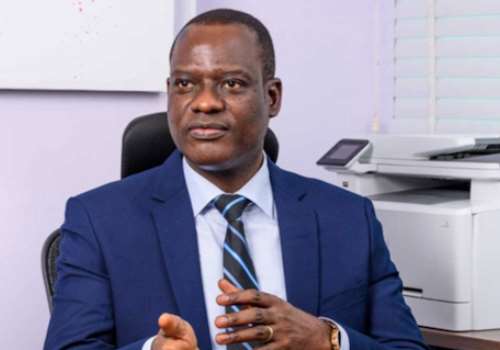
Speaking at the lecture, the Managing Director and Chief Executive Officer of DBN, Dr Tony Okpanachi, said access to finance alone had not enabled enough women-led businesses to expand, highlighting the need for a more comprehensive approach to supporting female entrepreneurs.
” DAWN is about moving gender-focused lending beyond intention and turning access into opportunity,” he said.
The lecture, themed “From Policy to Prosperity: Translating Economic Reforms into MSME Growth,” brought together government officials, regulators, development partners, financial institutions and entrepreneurs to discuss how economic reforms could translate into improved business performance and job creation.
Okpanachi said the central challenge was ensuring that the benefits of economic reforms reached small businesses across the country.
“The major reforms are now in place. How do we make sure their benefits reach the trader in Onitsha, the fabricator in Aba, the farmer in Kebbi and the young founder in Yaba?” he asked.
He noted that MSMEs account for close to half of Nigeria’s Gross Domestic Product and more than eight in every 10 jobs, stressing that their ability to access financing and expand operations was critical to economic prosperity.
Other News
“When reform works for MSMEs, it works for most Nigerians,” he said.
According to him, DBN had disbursed a cumulative ₦1.4 trillion to MSMEs through 84 participating financial institutions as of December 2025, supporting the creation of approximately 1.6 million jobs nationwide.
Under its new five-year strategy, the bank plans to reach more than two million MSMEs, with specific targets for women-led and youth-led businesses and enterprises in underserved states.
DBN provides longer-term funding through participating financial institutions, partial credit guarantees through its subsidiary, Impact Credit Guarantee Limited, and capacity-building support, including its Entrepreneurship Training Programme.
The bank also unveiled its Impact Report and presented its MSME Data Assets at the annual lecture.
The Vice President, who was the special guest of honour, was represented by Dr Fred Iklaga, Senior Technical Adviser in the Office of the Special Adviser to the President on the Economy.
Keynote speakers included the Chief Executive Officer of MTN Nigeria, Dr Karl Toriola, and the Chairman of the Nigeria Sovereign Investment Authority, Dr Segun Ogunsanya.
A fireside chat featured Sterling Bank Chief Executive Officer, Mr Abubakar Suleiman; manufacturing and trade entrepreneur, Mrs Omoyemi Chukwurah; and Babban Gona Chief Executive Officer, Mr Kola Masha, who participated via video.
Representing the Secretary to the Government of the Federation, Mrs Augusta Warrens Bekaredebo, expressed optimism that Nigeria’s 2026 tax reforms would provide relief to many small businesses through tax exemptions.
She expressed the hope that more businesses would benefit from the changes by next year.
Okpanachi urged participating financial institutions to extend lending to underserved sectors and states, while calling on policymakers and regulators to measure the success of economic reforms by their impact on businesses.
He also encouraged MSMEs to formalise their operations, maintain proper records and take advantage of available financing and business support opportunities.