Follow Us on Google

From Godwin Tsa, Abuja
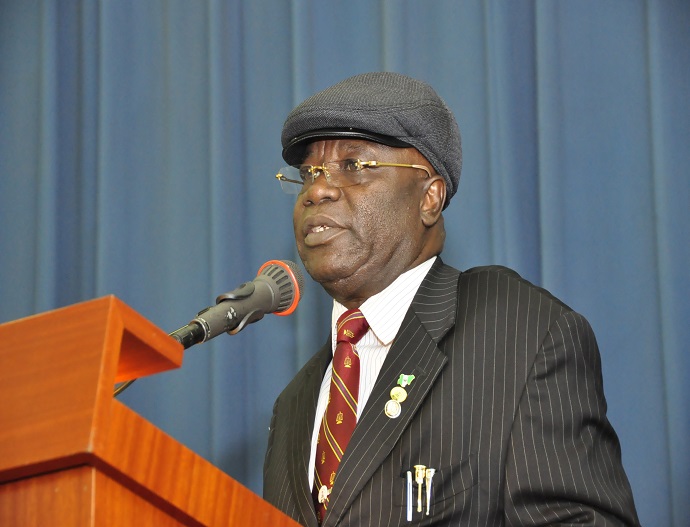
Administrator of the National Judicial Institute (NJI), Justice Babatunde Adejumo, has cautioned that data, though a valuable resource, is increasingly exploited by illicit actors in ways that threaten national sovereignty and erode public confidence in government institutions.
Justice Adejumo spoke in Abuja at the opening of a capacity-building workshop on data protection for judicial officers, organised by the NJI in collaboration with the Nigeria Data Protection Commission (NDPC) at the Mohammed Bello Centre of the Institute.
He said the world had come to accept data protection and privacy as matters of paramount national concern, given their far-reaching impact on governance, economic growth, crime prevention, institutional stability and citizens’ security.
According to him, the digital era has made the challenge more urgent. Technological innovation, he noted, now produces data at an exponential rate, allows its rapid alteration and opens repositories to many entities, including rogue actors, thereby heightening risks to data security and national governance.
The NJI administrator, who later declared the workshop open on behalf of the Chief Justice of Nigeria (CJN), Justice Kudirat Kekere-Ekun, stressed that the judiciary has a crucial role to play, as the collection, management, use and disposal of data create rights that must be vigorously safeguarded. These include the rights to be informed, to rectification, to erasure and to object to data processing.
He said the courts are regularly called upon to resolve disputes over regulatory compliance, determine liability where data rights are breached, and weigh proportionality, particularly where collective public interest conflicts with individual privacy.
Justice Adejumo urged participants to familiarise themselves with the Nigeria Data Protection Act (NDPA), 2023, which he described as a vital legal framework for protecting personal data in the country, adding that its implications for public institutions, including the judiciary, deserve careful consideration.
He disclosed that the workshop would feature a comparative analysis of jurisdictions with advanced data governance regimes.
While such foreign standards are persuasive rather than binding, he explained, they could guide the interpretation of domestic laws and point to areas for legal reform and innovation.
Judicial officers, he added, must also keep abreast of the technological realities that shape data protection, since these introduce complex intricacies into the adjudication of such cases. Providing that clarity, he said, was one of the workshop’s primary objectives.
Also speaking at the event, the Commissioner and Chief Executive Officer of the NDPC, Dr. Vincent Olatunji, described the courts as the last hope of citizens seeking redress over data protection grievances, noting that the Commission’s own function is essentially regulatory.
“Yours is the inherent power of adjudication,” he told the judges. “The very last hope of the common man.”
He said the NDPC, as an independent regulator, ensures that the public understands the law and that data controllers and processors are held accountable.
Dr. Olatunji pointed out that the NDPA itself recognises the role of the courts. Under Section 50, a person dissatisfied with an order of the Commission may apply for judicial review within 30 days of the order.
Other News
It was in the national interest, he said, that citizens and legal residents enjoy the protection of the country’s institutions in line with the law.
The NDPC chief said the Commission was mindful of emerging norms on data privacy contained in the ECOWAS Supplementary Act on Personal Data Protection (2010), the African Union (Malabo) Convention on Cyber Security and Data Protection (2014) and the European Union General Data Protection Regulation (2016).
Under these norms, he said, personal data must be processed lawfully, fairly and transparently, with purpose limitation, data minimisation and accountability.
Processing must also be necessary and proportionate to the legitimate aim pursued, while controllers must exercise a duty of care.
Because the platforms that process the personal data of more than 90 per cent of Nigerians are subject to diverse national and international frameworks, he argued, international comity requires Nigeria to align with these norms as far as practicable.
He added that Nigeria chairs the Regulatory Harmonisation Committee of the Network of African Data Protection Authorities, with the aim of ensuring that the global digital space is governed in line with the spirit of the United Nations Charter, including respect for human rights and the sovereignty of nations.
Dr. Olatunji listed some of the Commission’s achievements to include: More than 41,000 data controllers and processors of major importance had registered within three years, while the commission received over 8,000 compliance audit returns.
Over 27,000 jobs were created within the data protection ecosystem, with more than 1,500 Data Protection Officers certified under the national programme.
It had investigated more than 240 data breach cases, issued over 20 major remediation orders and named more than 1,900 non-compliant organisations in public notices.
The commission said the NDPA had been translated into Yoruba, Igbo and Hausa, while its Virtual Privacy Academy had reached more than 66,000 people.
It also cited a 2025 PICASSO award and finalist positions in four categories of the 2026 Global Privacy Awards.
Although the NDPC is the statutory authority for regulating data privacy, Justice Adejumo said the importance of the subject demands partnership across government. He expressed the hope that the workshop would serve as a benchmark for collaboration among Ministries, Departments and Agencies (MDAs).
The Administrator thanked the Chief Justice of Nigeria and Chairman of the NJI Board of Governors, Justice K.M.O. Kekere-Ekun, for approving the programme, praising her commitment to strengthening the judiciary’s capacity through targeted training.
He also commended the Education Committee of the Board, chaired by Justice John Inyang Okoro, JSC, for its guidance, and thanked Dr. Olatunji for the Commission’s collaboration.