Follow Us on Google
From Laide Raheem, Abeokuta
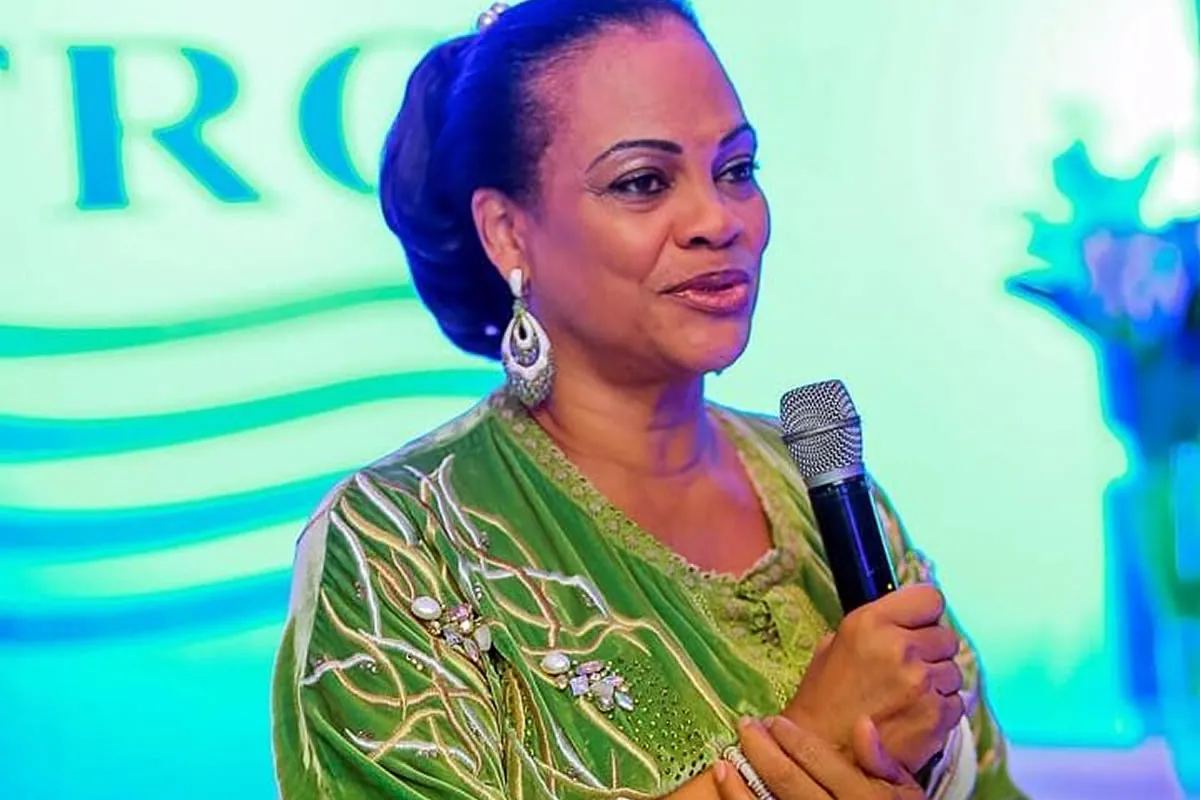
The wife of the former Defence Minister and a former federal lawmaker, Senator Daisy Danjuma, has called for an increase in the allocation of political positions for women in Nigeria, declaring no country can survive without having women in strategic positions.
Mrs Danjuma, who bemoaned a low percentage of women holding political positions in Nigeria, posited that the country must create a conducive atmosphere for more females to be elected into both executive and legislative positions.
She stated this on Tuesday, in her address at the HID Awolowo Foundation Dialogue to commemorate the 110th posthumous birthday of Mrs Hannah Idowu Dideolu Awolowo, the wife of the late Premier of the defunct Western Region, Chief Obafemi Awolowo, held in Ikenne-Remo, Ogun State.
The dialogue featured prominent speakers including Senator Lady Uche Ekwunife; the deputy governor of Ogun State, Noimot Salako-Oyedele; Mrs Nyaradzayi Gumbozudema, UN Assistant Secretary-General and Deputy Executive Director of UN Women; Chantal Fanny, Vice President of the Senate of Côte d’Ivoire; Dr Toyosi Akerele-Ogunsiji, among others.
Speaking further at the event equally marking 30 years since the Beijing Women Conference, with the theme “Breaking Barriers or Standing Still? Nigerian Women in Politics 30 Years After Beijing”, Senator Danjuma, who is the Chairman of the Foundation, however charged Nigerian women to wake up and join forces to support women in politics.
She noted that the only period Nigeria had the highest number of women in elective posts was in 2007, when she went around the country advocating for more women representation in the country’s political space.
“A country cannot survive well, for every country that has survived and every country that is doing very well today, they have maybe 50 to 60% women. Nigeria has at least 40 to 30% percent women.
Nigeria, we are yet to wake up to join that team, women must tend to support women like they say the sky is wide enough for birds to fly without collision. Whatever position you are occupying does not disturb any other woman. Please, I’d like to advise women to support women.
I will like to see more women elected and in policy you can see that the highest number of women we’ve ever had in politics was in 2007. I did a lot of work from state to state begging governors. A lot of advocacy went into play, so 2007 had the highest number of women in politics that is the work we did,” Danjuma who represented Edo South at the Senate between 2003 and 2007 stated.
The Minister of Art, Culture, Tourism and Creative Economy, Hannatu Musa Musawa, in her presentation, “Advocacy: Power in Numbers: The Role of Women’s Movements, Civil Society Organisations and Alliance”, urged women to move in numbers, adding that when they move together they can move mountains.
Musa Musawa advocated for collective effort, thereby calling for a movement when everyone plays her role.
She said women should recommit themselves to the true essence of power in numbers and not in symbolic unity or photos.
“As we look 30 years beyond Beijing, let us recommit to the true essence of power in numbers: Not symbolic unity. Not unity for photos.
But with unity that is strategic, active, and sustained. Because when Nigerian women gather, movements rise. When we rise, barriers fall,” she said.
Other News
In her keynote address, Professor Mrs Olabisi Aina, the Executive Director, Gender, Women and Children in Sustainable Development, emphasised the need for women to be proactive with the system, stating that doing everything at the grassroots without watching the system will not change anything in terms of the political will.
“Nigeria has a replica of policies so I will not say let’s write more policies. But, first, people in the National Assembly can take on what we have on national gender policy. We have 36 states and I know that only six states domesticated the 2006 Gender Policy, so we revised in 2021,” she said.
While reflecting on the progress and persistent challenges facing Nigerian women in politics, she urged emerging women leaders to act boldly, prepare diligently, and reject self-doubt.
In her welcome address, the Convener of Dialogue, Ambassador Dosunmu Awolowo, explained that the event was to reflect on the journey of Nigerian women in politics thirty years after the landmark Beijing Conference.
She added that the Dialogue was also to recall the extraordinary woman whose name the Foundation bears and the pivotal roles she played in the political trajectory of the late Premier.
The former Nigerian Ambassador to the Netherlands urged the next generation of aspiring women leaders to prepare well for the task ahead, embrace courage, persistence and determination.
Participants at the dialogue identified persistent under-representation, structural and cultural barriers, and entrenched party gatekeeping as key challenges facing women in politics.
Meanwhile in a communiqué issued at the end of the Dialogue, participants called for measures to strengthen women’s political participation, including the need for systemic imagination, national implications for sidelining women, and the enactment and enforcement of gender quotas.
They submitted that Nigeria’s future depends on inclusive, intersectional, intergenerational, and female-friendly politics, saying “Nigeria will rise when Nigerian women truly rise”.
The communiqué further called on political parties, civil societies and the private sector to recommit to ensuring that Nigerian women reclaim their positions and reimagine a more inclusive and equitable political future.