Follow Us on Google
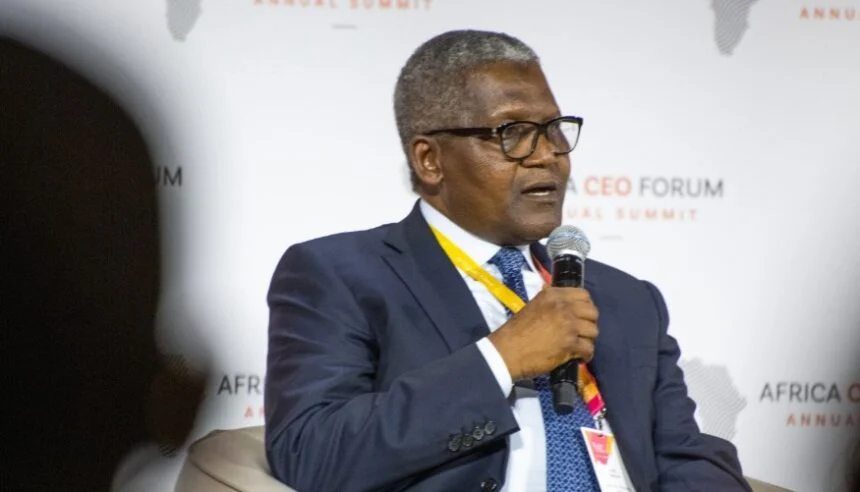
President of the Dangote Group, Aliko Dangote, has revealed fresh plans to expand into steel manufacturing, electricity generation and port infrastructure in his efforts to fast-track industrialisation across Africa.
Dangote, whose business empire spans cement, sugar, salt, fertiliser and petrochemicals, said the continent must move beyond commodity exports and build a robust manufacturing base capable of competing globally. “We have to industrialise Africa,” he declared, stressing that refining petroleum is only one phase of a much broader vision to transform the continent’s economic architecture.
His flagship project, the Dangote Petroleum Refinery & Petrochemicals, is currently producing about 650,000 barrels of refined products daily. According to him, production is expected to double within the next three years as expansion plans progress.
However, in a recent interview with The New York Times, Dangote made it clear that the refinery represents a foundation — not the finish line. His next strategic targets are steel, power and port development, sectors widely regarded as the backbone of industrial economies. Analysts say entry into steel would position the group at the heart of infrastructure development, construction and heavy manufacturing. Steel remains a critical input for roads, bridges, rail systems and housing — sectors that underpin long-term economic growth. Similarly, investments in electricity generation and port infrastructure could directly address structural constraints that have slowed Nigeria’s industrial take-off. Unstable power supply and congested ports have long inflated production costs and reduced competitiveness.
Dangote cited India’s Tata Group as an example of how diversified, large-scale industrial enterprises can reshape emerging economies. He described its broad footprint across sectors as a model for sustainable industrial expansion.
Job creation, he noted, sits at the centre of his expansion blueprint. With Nigeria projected to need between 40 and 50 million new jobs by 2030, Dangote argued that transformative industrial projects — rather than small-scale interventions — are required to absorb the country’s rapidly expanding workforce.
Other News
The refinery alone currently employs about 30,000 workers, around 80 per cent of them Nigerians. With expansion into steel, power and port operations, total employment within the group is projected to rise to approximately 65,000.
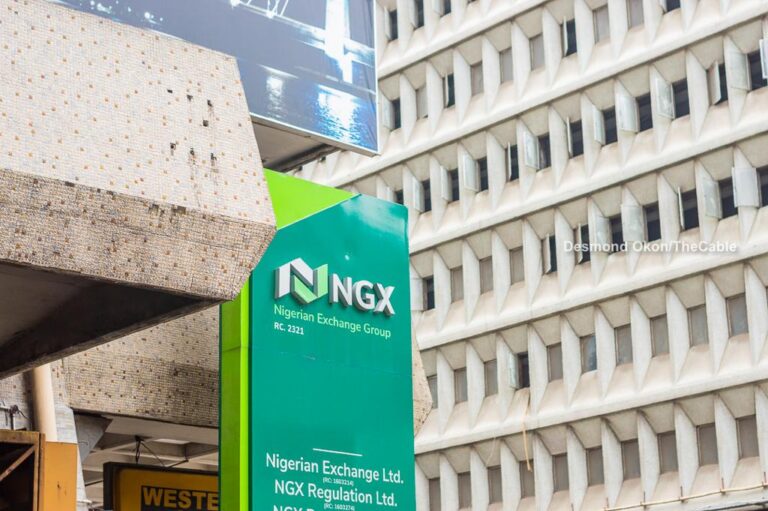
Dangote also announced plans to list shares in the refinery on the Nigerian stock exchange, a move intended to broaden ownership and allow local investors to participate directly in the asset.
While acknowledging infrastructure gaps and crude supply challenges, he maintained that such obstacles would not derail the group’s long-term strategy.
“Nobody dared to do it, so we did it,” he said, reinforcing his belief that bold private investment is essential to unlocking Africa’s industrial potential.
With operations already stretching across multiple African countries, Dangote’s latest expansion plans signal a decisive shift from sectoral dominance to integrated industrial leadership — a strategy designed not only to build factories, but to anchor Africa’s economic future on manufacturing strength.