Follow Us on Google
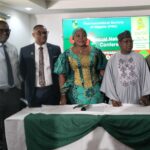
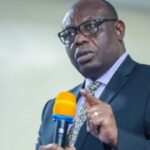
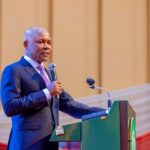
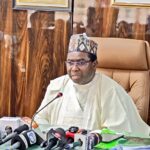
The messy public spat between the president of Dangote Industries Limited, Alhaji Aliko Dangote, and Engr. Farouk Ahmed, who until few days ago was the Chief Executive Officer of Nigerian Midstream and Downstream Petroleum Regulatory Authority (NMDPRA) was decisively halted with the resignation of the latter. Apparently, Farouk smartly tendered his resignation to stave off public pressure for further scrutiny of his financial profile. He was accused of using a whopping sum of US$5m to sponsor his children’s education abroad, impliedly from underhand dealings in the opaque oil sector. Indeed, Dangote went for the kill and hit the bull’s eyes. The CEO of the Nigeria Upstream Petroleum Regulatory Commission (NUPRC), Mr. Gbenga Komolafe, was also consumed in the crossfire. He resigned too. Both of them have been replaced immediately by President Tinubu.
While I concede that the boobytrap for Dangote Refinery by the regulators in Nigeria’s oil industry is myopic, self-serving and unpatriotic, I agree with Olusegun Adeniyi that the manner in which Farouk was bullied as a regulator is unfair. There might be some things that he did right. Resorting to bullying could send a wrong signal and embolden the powerful to escape regulatory oversight. Trust Nigerians! They will try it on other public officers and siege mentality would creep in. Politicians will also deploy it against their opponents as 2027 approaches. However, in Dangote’s case, one may argue that extreme cases demand extreme measures. The man-made frustration and sledgehammer of bureaucracy by the supposed gatekeepers have been too suffocating for the US$20 billion investment.
Though one may express some reservations with Dangote’s monopolistic antecedents but we have to accept that we played into his hands as a nation. Is it not disheartening that, over the years, the turn-around maintenance of our four dysfunctional refineries yielded nothing? Why did the career thieves block Dangote’s purchase of Kaduna Refinery under Obasanjo? Why is it that Norway’s national oil company, Equinor (former Statoil) maintains the largest sovereign wealth fund in the world from its oil proceeds and accumulated investments in 35 countries but its Nigeria’s counterpart is dogged by corruption, huge public debt, and mass disempowerment?
The truth of the matter is that we need more whistle blowing in the rapacious oil sector. It was to unravel the sleaze in fuel subsidy regime that eclipsed the brimming political career of Farouk Lawan in 2012. He became a fall guy of the spring operation pulled off by Femi Otedola, the CEO of Zenon, and friend of Dangote. The oil thieves who milked the country dry escaped till today. Further enquiry of whether Otedola actually offered bribe to Lawan was drowned by a cacophony of Lawan’s hugely disappointing tumble. The ad hoc Committee of House of Representatives probing the fuel importation in the period under review collapsed flatly. But after the successor-committee empaneled by the executive discovered a deluge of humongous false claims in the subsidy regime, the then Coordinating Minister of the Economy, Ngozi Okonjo-Iweala announced that federal government would not settle those outstanding questionable claims. Hell was let loose. She was bullied with threats, blackmail, instigated calls for her resignation, and eventually, kidnapping of her aged mother.
So, who will rescue the poor masses from the hands of economic saboteurs masquerading as business men? Do we wait for the interests of billionaires to be at stake before they entertain us with populist activism? Do we call these interventions from the likes of Dangote and Otedola, bullying or whistle blowing? Be that as it may, Nigerians do not bother provided the hands of their oppressors are taken off their jugular. A victim of strangulation does not care about how his rescue effort is conducted – he just needs relief at all cost. That was why Nigerians supported Dangote’s fireworks against Farouk. His refinery parades hope after years of unending economic nightmares fueled by the oil industry. The causal relationship between oil sector corruption and endemic poverty in Nigeria is an open secret.
Beyond the oil sector, a dragnet of whistle blowing should extend to government departments that are seen as a cash cow. In Nigeria, the quickest way to make money in public service is to work in finance departments, revenue generation agencies, regulatory commissions, law enforcement units, and top echelon of security formations where procurements are largely conducted in secrecy. But conversely, those working as teachers in the education sector, middle level health professionals, technology hubs, research institutes, etc., mostly end up with visible economic deprivations based on low emoluments and steady inflationary pressures. Thus, we need to restructure the public service to guard against breeding of economic inequality and a system skewed in favour of a few who lobbied their way to the ‘juicy’ agencies of government.
Back to Dangote Refinery, Nigeria government should advance strategic trade policies to protect indigenous conglomerates. Even the developed countries are not exempt from economic nationalism. Though some have argued that Dangote is a beneficiary of a rigged system, but he has, without doubt, utilized the waivers and tax holidays for industrialization and job creation. Like the chaebols in South Korea – Samsung, Hyundai, LG, among others, that receive state protection, they have become the forces of modernization, economic development, and national pride, to the extent that the country joined the elite club of trillion-dollar economies and attained in just 30 years what took other developed countries longer years to achieve.
Going forward, it is obvious that whistle blowing achieves faster result in curbing and exposing corruption than the combined efforts of EFCC and ICPC. The National Assembly is urged to revisit the whistle blower policy and enshrine it in our national laws. People are more inclined to taking risks when they have something to benefit. After all, Dangote and Otedola became whistle blowers when their personal interests were in jeopardy. Given the pace of state capture and vested interest, its passage may take longer years like PIB. Nonetheless, no efforts should be spared in dealing with corruption, the elephant in the room.