Follow Us on Google

Dangote Industries Limited has acquired a 25 per cent stake in a petroleum pipeline network in Kenya as part of an ambitious $50 billion investment programme aimed at expanding its refining, energy distribution and industrial operations across Africa between 2026 and 2030.
The Group is also developing petroleum storage and distribution infrastructure in Djibouti, Cameroon and Namibia, while pursuing plans for a 700,000-barrel-per-day refinery in Lamu, Kenya, in a major push to establish an integrated petroleum supply network across East, Central and Southern Africa.
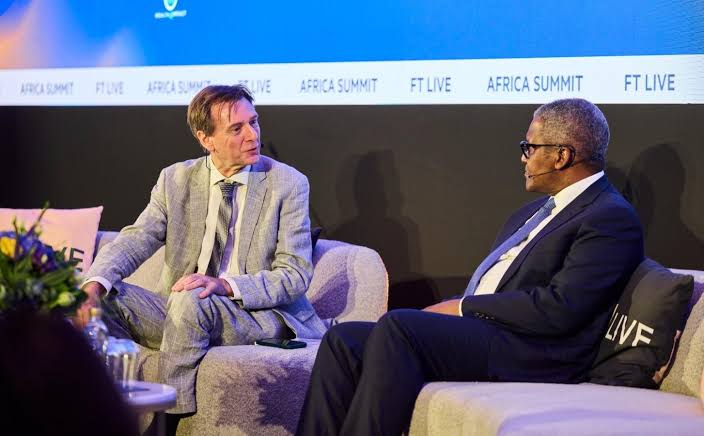
President and Chief Executive of Dangote Industries Limited, Aliko Dangote, disclosed the investments during an interview with Financial Times journalist David Pilling, saying the expansion would strengthen Africa’s energy security, improve access to refined petroleum products and reduce dependence on fragmented supply systems.
Dangote said the Kenyan pipeline investment was concluded with the support of the country’s government, describing it as an important step towards establishing an efficient petroleum distribution network in East Africa.
“Just let me tell you, yesterday, with the support from the President of Kenya, we bought 25 per cent of the pipeline network for the distribution of petroleum products,” he said.
Although he did not disclose the value of the acquisition, Dangote said the Group was moving aggressively to establish the infrastructure required to transport and distribute petroleum products across African markets.
“We are very aggressive with that,” he said when asked about investments in petroleum depots, pipelines and other logistics facilities.
Under the expansion programme, the Group is developing a petroleum distribution corridor between Djibouti and Addis Ababa, Ethiopia, supported by storage terminals and tank farms to facilitate the movement of refined products.
Another project in Cameroon is nearing completion, while Namibia has been identified as a strategic entry point into Southern Africa because of its proximity to the Dangote Petroleum Refinery in Lagos.
“From our refinery to Namibia is just about four days of steaming,” Dangote said.
He explained that petroleum products shipped from Lagos to Namibia could subsequently be distributed to Botswana and South Africa, with additional supply corridors being considered for Zimbabwe and Zambia.
The investments are intended to connect major refining centres with markets that have historically depended on imported petroleum products and inefficient distribution arrangements.
Beyond the distribution network, Dangote disclosed plans to establish a refinery in Lamu, Kenya, with a projected processing capacity of approximately 700,000 barrels of crude oil daily.
He said the decision to locate the proposed refinery in Lamu followed technical assessments of the area’s deep-water access, marine infrastructure and availability of essential resources for large-scale refining operations.
According to him, the refinery would source crude oil from different international markets rather than depend exclusively on production from Kenya or neighbouring Uganda.
He said East Africa’s expanding economies, growing mining activities and rising demand for petroleum products made the region an attractive destination for investment in refining capacity.
Dangote disclosed that the investment decision was reached within four months, although he alleged that vested commercial interests attempted to frustrate the project through legal proceedings shortly before its announcement.
He maintained that the proposed refinery and distribution investments were part of a broader strategy to establish a more reliable African energy supply system, supported by strategically located pipelines, storage facilities and transportation corridors.
Turning to industrial policy, Dangote urged African governments to protect domestic manufacturers against unfair competition from imported products, warning that unrestricted imports could undermine industrial development and worsen unemployment across the continent.
“Allowing imports to displace local production means we are exporting our jobs out of the continent and importing poverty into the continent,” he said.
He argued that African countries should not be discouraged from adopting policies that support domestic production when advanced economies were increasingly protecting their own industries.
“If America is now saying, no, we are going to protect our industries, who are we in Africa not to protect our own industries?” he asked.
Dangote maintained that industrialisation would remain difficult without substantial investments in infrastructure, reliable electricity, manufacturing capacity and policies designed to encourage local production.
He said the Group’s planned $50 billion investment between 2026 and 2030 was intended to demonstrate that African businesses possessed the capacity to undertake large-scale industrial projects capable of transforming the continent’s economy.
“The legacy we are trying to set up is how do we industrialise our continent?” he said.
According to him, the investment programme goes beyond expanding the Group’s commercial interests, as it is also intended to encourage other African entrepreneurs to undertake ambitious industrial ventures.
He identified inadequate electricity supply, weak financial systems and poorly developed industrial policies as major obstacles to Africa’s economic transformation.
Dangote said reliable electricity remained indispensable to manufacturing, mining and mineral processing, particularly as African countries sought to move beyond exporting raw materials towards producing finished goods.
He expressed concern that an estimated 650 million Africans still lacked access to electricity despite the continent’s enormous energy resources and economic potential.
He argued that addressing the electricity deficit would create opportunities for industrial development, employment generation and economic diversification.
Dangote also questioned why Africa continued to struggle with poverty despite possessing abundant natural resources, extensive agricultural land and a large youthful population.
He maintained that the continent had the resources and human capacity required to become a major industrial centre if governments created an enabling environment for investment and domestic manufacturing.
“The journey has started,” he declared. “But now we’re awake, and we will make it happen.”