Follow Us on Google
- Unveils ‘Century 2’ plan, digitises 100-year archives
- Says country can’t continue outsourcing its image to outsiders
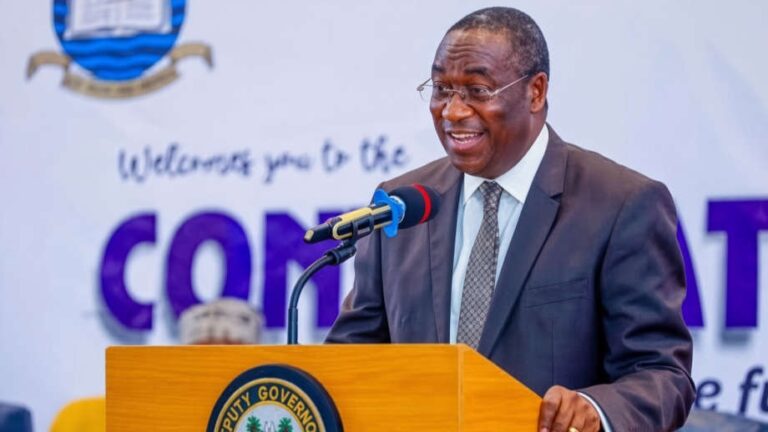
Publisher of Daily Times Nigeria, Fidelis Anosike, has challenged Nigerians to take control of the country’s global narrative, warning that the nation cannot continue to leave its image and story in the hands of foreign organisations.
Anosike, who spoke in Lagos on Thursday as part of activities marking the newspaper’s centenary, said there was a troubling disconnect between the global acceptance of Nigerians as individuals and perceptions of Nigeria as a country.
“We can’t sit down and do nothing. People love Nigerians, but they don’t love Nigeria, and we are not able to transition that love for Nigerians into love for the country,” he said.
Against this backdrop, Anosike unveiled a “Century 2” strategy to reposition the 100-year-old newspaper around digital publishing, preservation of its historical archives, education and history products, and initiatives aimed at promoting Nigeria’s story to the world.
Daily Times was founded in 1926.
Anosike said the newspaper, as custodian of a century of Nigeria’s history, had a responsibility to deploy its institutional memory to help correct negative perceptions of the country.
“We felt that the first thing we need to do is to be able to figure out how we can become a catalyst to change the global perception of Nigeria,” he said.
“It is not for us to keep outsourcing our image or our global perception to other people.”
He disclosed that Daily Times was digitising its archives, with a team working to recover and preserve every available edition published over the last 100 years.
“Every edition, because there is somebody somewhere in the world that has that edition. That’s the power of digital publishing,” he said.
According to him, the archive will form the foundation of a new business model built partly around history and education.
“History and education is now core of our business. That’s why we are starting with the grand book which flows from our archives,” Anosike said.
The proposed centenary book, which he described as a book of changemakers and a national souvenir, will draw on the newspaper’s archives and other contributions to document Nigeria’s evolution and achievements.
Anosike argued that Nigeria had produced people, businesses and innovations capable of competing globally but had failed to weave those successes into a compelling national story.
He cited advances in oil and gas, refining, lithium mining, technology, entertainment and finance as evidence of the country’s capacity.
“We want to work with the entire media ecosystem to begin to push our narrative,” he said.
The publisher said Daily Times itself would have to evolve beyond the conventional newspaper model if it was to remain relevant in its second century.
He said Folio Media Group, which acquired Daily Times in 2004, was re-engineering the newspaper around digital publishing, intellectual property and new media franchises.
Among the initiatives are the Times Heroes Awards, a reworked Miss Nigeria franchise, the CAX Creative Market and international content partnerships.
Chairman of the Times Heroes Award Council, Bolaji Okusaga, said the objective was to transform Daily Times into a media-agnostic platform, with its century-old archive providing material for new history and educational products.
“When that is consolidated, we create products of history, education around it,” he said.
Okusaga said the Century 2 strategy went beyond commemorating the newspaper’s 100th anniversary and was intended to redefine how the organisation operates in a rapidly changing media environment.
“It’s not just awarding; it’s also taking us on a journey to what the media will look like over the next century,” he said.
As part of the centenary programme, Daily Times will hold another major event on November 3 at Harbour Point, Lagos, featuring a fireside session and keynote address by the National Chairman of the All Progressives Congress (APC).
Okusaga said discussions would focus on how Nigeria could bring together developments across different sectors into a coherent national growth strategy.
“Development is logical. Development is not from everywhere. But if you look at what is happening in Nigeria today, it looks as if Nigeria is developing in a scattered manner. Now, how do we consolidate?” he said.