Follow Us on Google

By Uche Usim
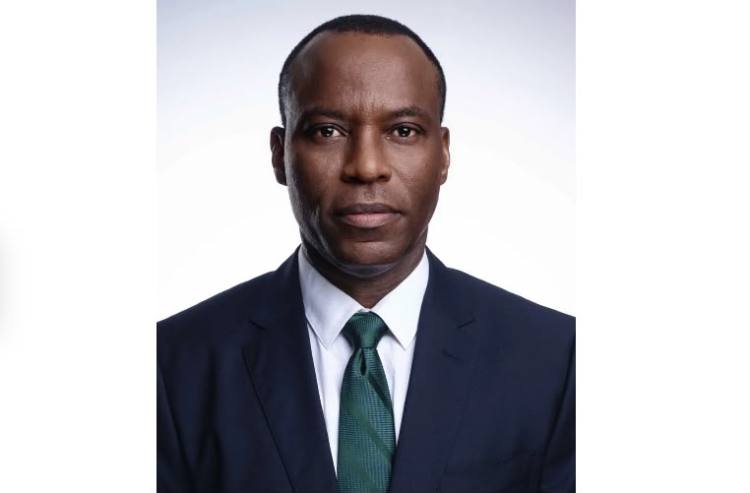
The Managing Director of the Nigerian Ports Authority (NPA), Dr Abubakar Dantsoho, has warned that cyberattacks could disrupt African ports, international trade and economic activities, urging port authorities across the continent to strengthen digital security and share intelligence.
Dantsoho, who is also president of the Port Management Association of West and Central Africa (PMAWCA), said the growing use of artificial intelligence (AI) and digital platforms in port operations must be matched with stronger safeguards to prevent attacks that could halt cargo movement, disrupt supply chains and cause economic losses.
Speaking at the African Ports Conference in Casablanca, Morocco, on Tuesday, he cited cyberattacks involving South Africa’s Transnet, Japan’s Port of Nagoya and DP World terminals in Australia as examples of the damage such incidents could cause.
“In July 2021, a cyberattack on Transnet forced South Africa’s container terminals to declare force majeure. In 2023, cyber incidents disrupted the Port of Nagoya and DP World terminals across Australia for days. These were not merely IT problems. They were interruptions to trade,” he said.
The NPA chief stressed that cybersecurity must become a key part of port security as authorities increasingly rely on connected systems to manage cargo, collect revenue and coordinate shipping activities.
“AI can help a port work more intelligently, but cybersecurity protects its ability to work at all,” he said.
He also warned that digital platforms designed to simplify trade could become major weaknesses if they were not adequately protected.
“A single window must not become a single point of failure,” Dantsoho said.
Nigeria has introduced digital reforms, including the National Single Window and a beta version of the Port Community System, to improve information sharing among Customs, terminal operators, shipping lines and regulatory agencies.
However, Dantsoho said the success of such platforms would depend on the ability to protect them against cyber threats and keep essential operations running during disruptions.
He outlined measures for improving cybersecurity at Nigerian ports, including separating operational systems from administrative networks, setting security standards for technology partners, testing backup systems and training workers to identify and report suspicious activities.
He said port authorities must ensure that recovery plans could work in practice rather than exist only on paper.
“A recovery plan is not proven because it exists. It is proven because it works,” he said.
Dantsoho also called for cybersecurity to be treated with the same seriousness as physical security, in line with relevant International Ship and Port Facility Security (ISPS) requirements and International Maritime Organization (IMO) standards.
Beyond security, he said AI could help African ports reduce vessel waiting times, speed up cargo clearance, improve truck movement, prevent revenue losses and identify equipment faults before they cause breakdowns.
He said the value of a smart port should be measured by how much it improves efficiency and reduces costs, rather than the amount of technology installed.
“A smart African port is not defined by how much technology it buys. It is defined by the performance it delivers,” he said.
Dantsoho identified improved vessel arrival forecasts, better berth planning, coordinated truck scheduling and targeted cargo-risk assessments as some of the ways AI could improve port operations. The technology could also help authorities detect unusual vessel movements and identify inconsistencies between cargo declarations, actual movements and applicable charges.
However, he warned against investing in technology without clear objectives and measurable results.
Other News
“But every project needs discipline: a defined problem, a measurable target and an accountable owner,” he said.
“The objective is not to replace professional judgement, but to strengthen it.”
Highlighting Nigeria’s experience, Dantsoho said the NPA had begun addressing basic operational challenges while building the digital systems needed for more advanced port management.
He recalled that cargo previously spent as long as three weeks at Lagos ports, while the Apapa access road, designed to handle about 2,400 trucks daily, carried more than 7,000 trucks.
He said the electronic truck call-up system, known as Eto, had helped address congestion along the port access corridor, while the National Single Window and beta Port Community System were advancing digital coordination among port stakeholders.
“The Eto electronic truck call-up system helped address corridor gridlock. This year, we went live with the National Single Window and a beta version of the Port Community System, advancing digital coordination among Customs, terminals, shipping lines and regulators,” he said.
According to Dantsoho, Tin Can Island Port ranked 10th and Apapa Port 12th among the world’s most improved ports in the World Bank’s Container Port Performance Index 2025, released in June 2026. He added that Nigeria’s cargo throughput rose by 24.8 per cent to 129.3 million metric tonnes in 2025.
He said the NPA’s $1 billion modernisation programme for Apapa and Tin Can Island ports also offered an opportunity to incorporate secure digital infrastructure and intelligent maintenance systems into port development.
“Our work is not complete. But the lesson is clear: digitalisation creates the information base; AI helps turn information into better decisions. We must build in that order,” he said.
Dantsoho called for stronger cooperation among African ports, warning that cyber threats and operational disruptions could spread across interconnected shipping routes and trade corridors.
Using the Abidjan-Lagos corridor as an example, he said delays at one port could affect subsequent vessel calls, while cargo destined for landlocked countries such as Niger, Chad and Mali depended on effective links between ports, roads and border posts.
“If we modernise in isolation, we risk replacing paper-based fragmentation with digital fragmentation,” he said.
As PMAWCA president, he proposed greater sharing of cyber threat intelligence, common data standards, joint performance assessments and stronger cooperation with technology suppliers and development partners.
He also proposed a PMAWCA working group on AI and data governance, with cybersecurity and digital resilience included in its responsibilities.
Dantsoho urged member ports to identify one high-impact AI pilot project each, supported by clear targets, responsible implementation teams and performance assessments.
“I invite each member port to identify one high-impact AI pilot, with a baseline, an accountable team and a measurable target. Start with the problem—not the product,” he said.
He further called for clear rules governing the ownership, access, sharing and protection of port data, warning against technology contracts that limit interoperability or create excessive dependence on individual suppliers.
“Data sovereignty does not mean isolation. It means benefiting from innovation while retaining the capacity to govern its use,” he said.
Dantsoho said African ports must work together to build secure and reliable digital systems that reduce trade costs, improve efficiency and protect the continent’s growing role in international commerce.
“The smart African port will not be imported. We will build it together,” he said.