Follow Us on Google

From Godwin Tsa, Abuja
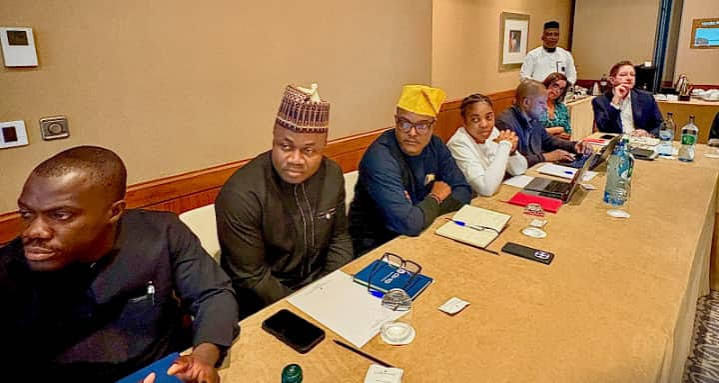
The Nigeria Customs Service (NCS) has concluded a three-day review of its B’Odogwu Unified Customs Management System in Lisbon, Portugal, with resolutions designed to fix operational challenges, speed up cargo clearance, tighten cargo tracking and boost revenue collection.
The workshop brought together NCS management and officers, Trade Modernisation Project Limited (TMPL) and representatives of CB-XP.
Its purpose was to assess the system’s implementation and agree on technical and operational improvements.
Speaking at the opening on November 9, the Deputy Comptroller-General of Customs in charge of ICT Modernisation, Oluyomi Adebakin, commended the Comptroller-General of Customs, Adewale Adeniyi, for supporting innovation and capacity development.
The Managing Director of TMPL, Jummai Umar-Ajijola, who represented the company’s Chairman, Saleh Ahmadu, said the B’Odogwu system had attracted the interest of the African Continental Free Trade Area (AfCFTA) Secretariat.
She added that improvements to the platform had yielded higher revenue and strengthened the revenue ecosystem.
“We are to work to find a concrete plan not only to consolidate but to build a change roadmap going forward at the assessment of the three years so far,” she said.
Umar-Ajijola also commended the NCS Public Relations Unit for its consistent reporting on the project.
Among the main resolutions were: upgrading the Electronic Cargo Tracking System (ECTS); strengthening bond and transit management; automating the approval of customs procedure codes; and improving the processing of import, export, re-importation and transit declarations.
Participants also examined the harmonisation of procedure code nomenclature to promote consistency, efficiency and accountability in customs operations.
On cargo tracking, participants reviewed plans to integrate the upgraded ECTS with B’Odogwu and to replace 200 obsolete electronic seals with 2,000 newly procured units.
Other News
Discussions also covered individual container tracking for relevant transit declarations, improved bond registration and validation, and stronger controls over bonded cargo movements to minimise diversion.
The workshop also considered:
integrating B’Odogwu with the Nigeria Export Processing Zones Authority (NEPZA); improving the Transire Processing System; upgrading the reporting dashboard, search filters and Harmonised System (HS) Code search function; providing access to previously processed declarations;
improving the monitoring of procedure code applications; introducing system alerts to reduce processing errors; and
incorporating Time Release Study requirements.
Compliance and governance
Participants reviewed the Standard Operating Procedures (SOPs) for Bond Management, Transire Commands and Export Commands to ensure compliance with the Nigeria Customs Service Act 2023.
They also agreed that every request for system modification must be reviewed and approved by the Officer in Charge of the Project Management Office before deployment. The project’s communication plan was likewise reviewed to strengthen stakeholder engagement.
At the closing ceremony on November 11, the Deputy Comptroller of Customs in charge of Finance, Administration and Technical Services (FATS), Kikelomo Adeola, stressed the need to implement the workshop’s resolutions.
The ceremony featured a presentation by the Customs Area Controller, Comptroller Murtala Mu’azu, and goodwill remarks by CB-XP Chairman, Edward Bowen.
Specific responsibilities were assigned to the relevant NCS and TMPL units to ensure that the agreed resolutions translate into practical improvements in the B’Odogwu system.