Follow Us on Google
From Ndubuisi Orji and Adesuwa Tsan, Abuja
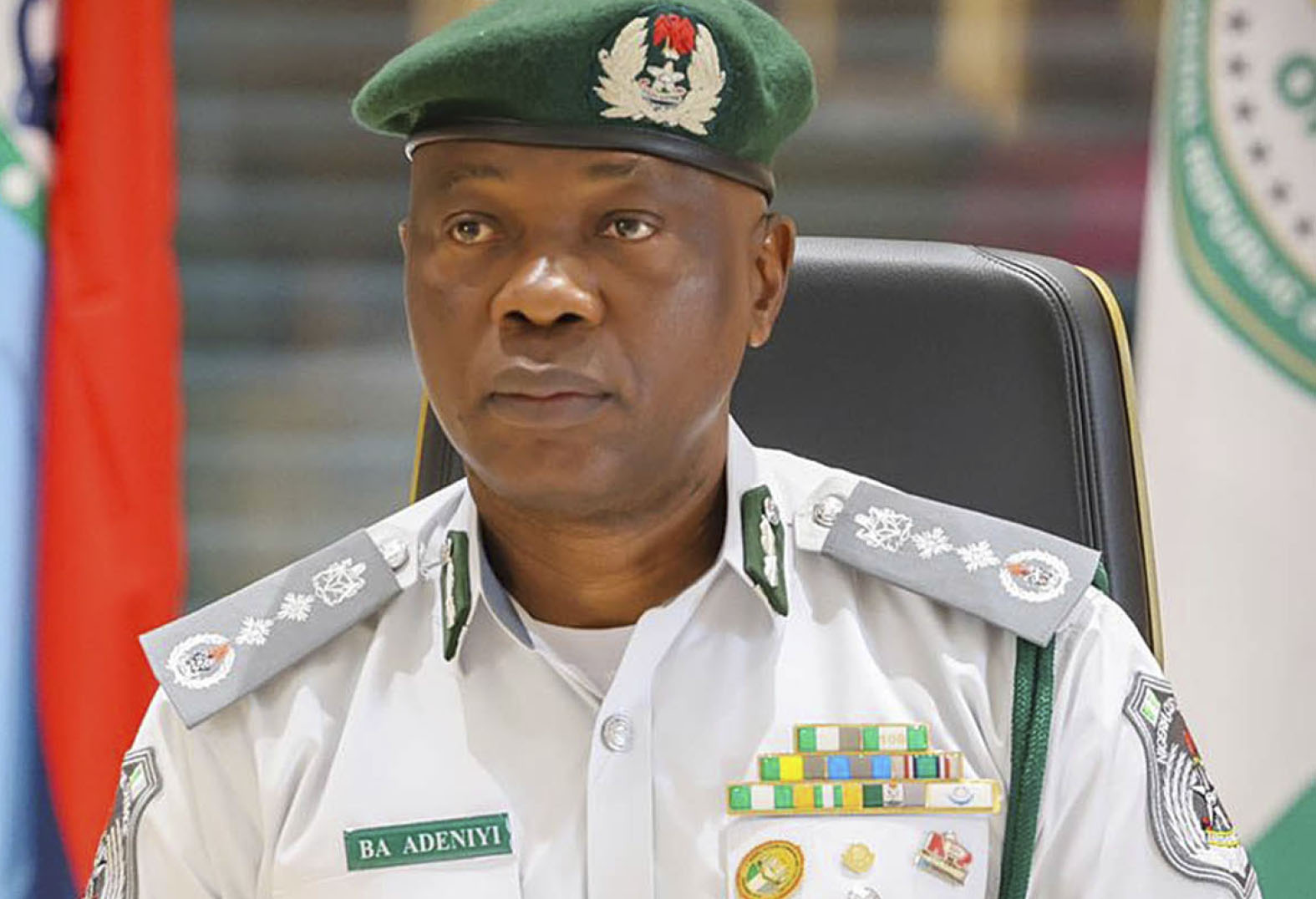
The Nigeria Customs Service (NCS) has said it is targeting a revenue of N11.07 trillion for the 2026 fiscal, noting that it would deepen automation, expand intelligence-led enforcement and enhance trade facilitation to achieve its projection.
This is as Senate Committee on Customs and Excise approved the proposed revenue target and N1.235 trillion expenditure estimate.
Comptroller-General of Customs, Mr. Adewale Adeniyi, had separate sessions with the Senate and Reps committees at the National Assembly to defend the NCS 2026 budget proposal.
At the House of Reps, Adeniyi explained that the target comprises ₦5.54 trillion from the federation accounts, ₦1.49 trilion from non-federation accounts, ₦2.27 trillion from import Value Added Tax and ₦1.26tn from the four per cent FOB Cost of Collection.
According to him, the Service would leverage on the Unified Customs Information System popularly known as B’Odogwu, in the pursuit of its revenue projection.
“The Unified Customs Management System is now up and running very well. We believe it provides the platform for robust revenue collection.”
The Customs boss, who confirmed that import duty on used vehicles had been reduced from 15 per cent to five per cent while duty on brand-new vehicles was cut from 20 per cent to 10 per cent, stated that the tariff reductions may affect its target.
On the 2025 budget performance, he said the NCS surpassed its revenue target for last by 10.24 per cent, as generated ₦7.28 trillion between January and December, not minding series of tax waivers and fiscal incentives approved by the government to stimulate economic growth.
The Customs boss, who explained that the Service exceeded its 2025 revenue target of ₦6.58 trilion by ₦696 billion, attributed its performance to sustained reforms in revenue administration, technology deployment and trade facilitation.
“The correct revenue generated from January to December 2025 is ₦7.28 trilion. This represents a positive variance of 10.24 per cent above our annual target of ₦6.58tn,” adding that “in 2025, a total of about ₦34.53tn worth of imports received various exemptions and waivers.”
He explained that the affected imports waivers included military equipment and other strategic items approved under government intervention programmes.
Responding to a question by the Committee Chairman, Leke Abejide, on why many importers still preferred neighbouring ports despite the lower tariffs, the CG said it was too early to assess the impact of the policy.
“This is a new policy. It takes an average of about 90 days before we begin to see its full effects. The implementation commenced on May 1, 2026, and we believe the impact will become more evident over time.”
The CGC added that for the 2026 fiscal year, the Service was proposing an expenditure budget of N1.235 trillion. The proposed expenditure, according to him, would cover N421.70 billion for personnel costs, N307.77 billion for overheads and N565.93 billion for capital projects.
In a related development, Chairman of the Senate Committee on Customs and Excise, Isah Jibrin, described the proposed revenue target as ambitious but achievable, urging the Customs management to intensify efforts to meet the projection.
He also commended President Bola Tinubu for extending the tenure of the Comptroller-General, saying the decision would enable him to consolidate ongoing reforms within the Service.
“I want to appreciate the President of the Federal Republic of Nigeria for extending the service of the Comptroller-General of Customs. Since assuming office, he has embarked on far-reaching reforms that have resulted in improved revenue generation, stronger anti-smuggling operations and better trade facilitation.
“I believe the additional period granted to him will enable him to fully consolidate these reforms and place the Nigeria Customs Service on a sustainable path,” Jibrin said.
He noted that with the Federal Government’s huge investment in infrastructure, Customs remained one of the country’s most strategic revenue-generating agencies.
“Customs remains one of the biggest revenue-generating agencies in the country. That places enormous responsibility on the Service, and I urge the management to work even harder to achieve its ambitious revenue target for 2026,” he added.
Other News
Reviewing Customs’ performance in 2025, the CG disclosed that although the National Assembly approved a revenue target of N6.584 trillion, the Service generated N7.277 trillion, exceeding the target by N674.1 billion, representing a 10.24 per cent increase.
He attributed the performance to improved operational efficiency despite fiscal policy interventions and global economic disruptions.
According to him, revenue generation was affected by the suspension of excise duty on telecommunications services, delayed implementation of the Green Tax, import duty waivers on compressed natural gas (CNG) and electric vehicles, healthcare equipment and industrial raw materials, as well as extensive import duty exemption certificates approved by the Federal Government.
He also cited the lingering effects of the Russia-Ukraine war, which disrupted imports of strategic commodities such as wheat.
Despite surpassing its revenue target, Adeniyi disclosed that the Service received only N808.86 billion, representing 71.46 per cent of its approved N1.132 trillion expenditure budget for 2025.
For 2026, he said Customs was projecting total revenue of N11.074 trillion, comprising N5.542 trillion from Federation Account revenue, N1.491 trillion from non-Federation collections, N2.773 trillion from Import VAT and N1.266 trillion from the four per cent Free-on-Board (FOB) cost of collection.
He said the projection was driven by ongoing institutional reforms, including the deployment of the indigenous Unified Customs Information System (UCIS), code-named B’Odogwu, enhanced post-clearance audit, intelligence-led anti-smuggling operations and expanded trade facilitation initiatives.
“Our technology platform is now stable and fully operational. It has strengthened automation across our commands, improved compliance and enhanced revenue collection,” he said.
The Customs boss added that the Presidential Enabling Business Environment Council had recently rated the Service as Nigeria’s most improved government agency in trade facilitation and ease of doing business.
However, he warned that global developments could affect revenue performance.
He disclosed that Customs generated N4.043 trillion in the first half of 2026 against a projected N5.5 trillion, attributing the shortfall to the crisis in the Middle East.
“The major challenge confronting us today is the crisis around the Strait of Hormuz. It has disrupted global supply chains and reduced cargo throughput into Nigerian ports.
“We are optimistic that as the situation continues to de-escalate, international trade will recover. June recorded our highest monthly revenue this year, and we expect that trend to continue,” he said.
Adeniyi also briefed lawmakers on Nigeria’s implementation of the African Continental Free Trade Area (AfCFTA), saying Customs was working with the AfCFTA Secretariat, the African Development Bank and neighbouring customs administrations to improve cross-border trade.
He disclosed that Nigerian Customs officials would soon visit Zimbabwe to study the joint border management system between Zimbabwe and South Africa for possible adoption at the Seme border and other strategic entry points.
During the budget defence, lawmakers sought clarification on the allocation of over N210 billion under “Financial and Miscellaneous Services.”
Explaining the provision, Adeniyi said the classification was based on the Federal Government’s Chart of Accounts issued by the Office of the Accountant-General and covered 84 approved expenditure items, including publicity, overseas missions, sports development, annual conferences, recruitment, promotions, advocacy programmes and laboratory services.
“Every expenditure item is clearly itemised in the detailed budget documents submitted to the committee. What appears in the summary simply reflects the classification provided under the government’s Chart of Accounts,” he explained.
Satisfied with the explanations, the committee unanimously approved the proposed N11.074 trillion revenue target and N1.235 trillion expenditure estimate for the 2026 fiscal year.
Before adjourning the session, Jibrin congratulated the Comptroller-General on the extension of his tenure and urged the Customs management to sustain its reform agenda.
“You have demonstrated capacity and delivered impressive results. We encourage you and your team to work even harder so that the Service can meet and even surpass its revenue target for 2026 in the interest of the nation’s economy,” he said.