Follow Us on Google
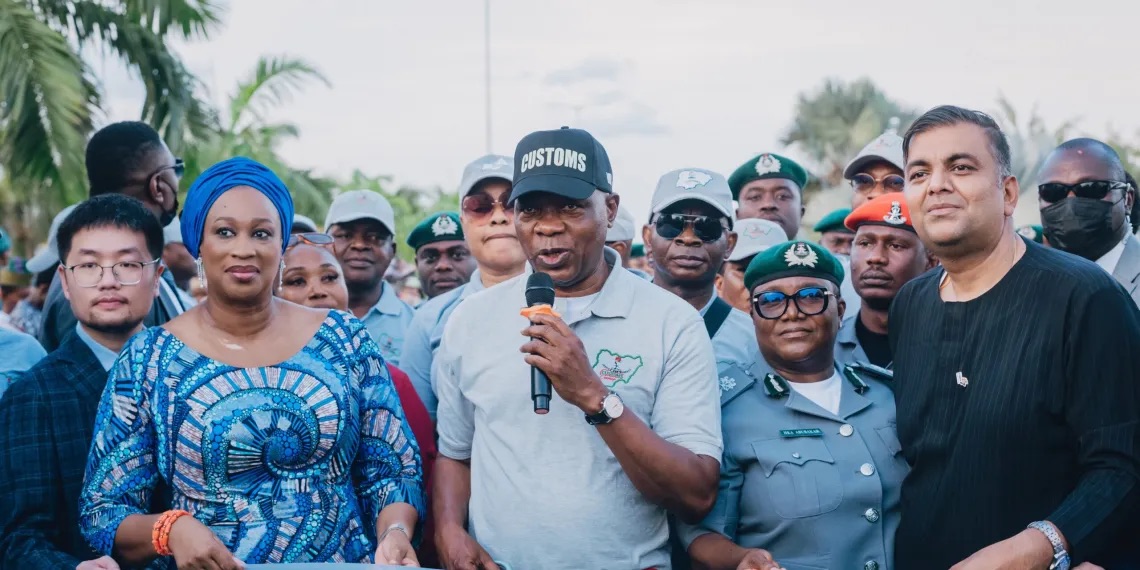
In a great boost for Nigeria’s trade facilitation drive, the Nigeria Customs Service (NCS) has approved the activation of a dedicated “Green Channel” connecting the Lekki Deep Sea Port directly to the Lagos Free Zone (LFZ). The move establishes a streamlined, Customs-sanctioned corridor for the controlled transfer of Free Zone cargo from the port into the zone, marking a first in the country’s Special Economic Zone ecosystem.
With the Lekki Deep Sea Port as its anchor tenant, Lagos Free Zone now stands as the only Free Zone in Nigeria authorized to operate such a channel. The approval effectively aligns Nigeria with global best practices seen in major trade hubs across the Middle East and Asia, where seamless port-to-free-zone integration underpins industrial competitiveness and export efficiency.
The Green Channel is designed to eliminate longstanding friction points in cargo movement between seaports and industrial zones. By removing traditional exit bottlenecks, the initiative introduces what stakeholders describe as a true “port-to-factory” logistics model. For businesses operating within LFZ, this translates into faster cargo clearance, lower demurrage exposure, and reduced truck congestion — persistent cost drivers in Nigeria’s supply chain landscape.
Under the new arrangement, cargo destined for the Free Zone will move through a secured, monitored corridor backed by round-the-clock CCTV surveillance, telemetry systems, and tamper-evident digital logs. The entire process remains under the oversight of the Nigeria Customs Service, ensuring compliance, transparency, and cargo integrity from port discharge to final delivery inside the zone.
Customs authorities say the initiative strengthens regulatory visibility while simultaneously encouraging private investment.
“This approval is a testament to our commitment to trade modernization. The Lagos Free Zone Green Channel will enhance Customs visibility while significantly improving investor confidence in Nigeria’s Special Economic Zones,” stated the Comptroller-General of Customs, Bashir Adeniyi.
Other News
For Lagos Free Zone management, the development represents more than operational efficiency; it is a structural shift in how goods enter industrial clusters in Nigeria.
By digitally and physically integrating the deep sea port with the Free Zone, the “last mile” uncertainty that has historically complicated port logistics is effectively removed.
“The activation of the Lagos Free Zone Green Channel is the latest testament to our customer-centricity and our commitment to continually deliver enhanced ease of doing business for our tenants,” said Mrs. Adesuwa Ladoja, MD/CEO of Lagos Free Zone. “The Green Channel solidifies the advantages of Lekki Deep Sea Port being physically and digitally integrated into our zone; we have effectively removed the ‘last mile’ uncertainty that has historically challenged Nigerian logistics. Our tenants no longer need to navigate the complexities of traditional port exits; instead, they benefit from a high-velocity, Customs-integrated corridor that moves cargo with precision and speed. This is a gamechanger for manufacturing and regional distribution, reinforcing Lagos Free Zone as the premier gateway for those looking to dominate the West African market.”
Analysts believe the development could significantly reshape Nigeria’s positioning in regional trade. By delivering predictable, faster turnaround times, the zone becomes more attractive to manufacturers seeking to serve both domestic and West African markets from a single industrial base.
Promoted by Singapore-based Tolaram, Lagos Free Zone is Nigeria’s first privately developed deep sea port-based free trade zone. Situated in Lagos State — the commercial nerve centre of West Africa’s largest economy — the 860-hectare zone is supported by modern infrastructure, a single-window clearance system, and direct integration with the 90-hectare Lekki Deep Sea Port, offering streamlined access to regional and international markets.
With Customs’ endorsement of the Green Channel, Lagos Free Zone now advances as a model for port-linked industrialization, setting a new benchmark for trade efficiency in Nigeria.