Follow Us on Google

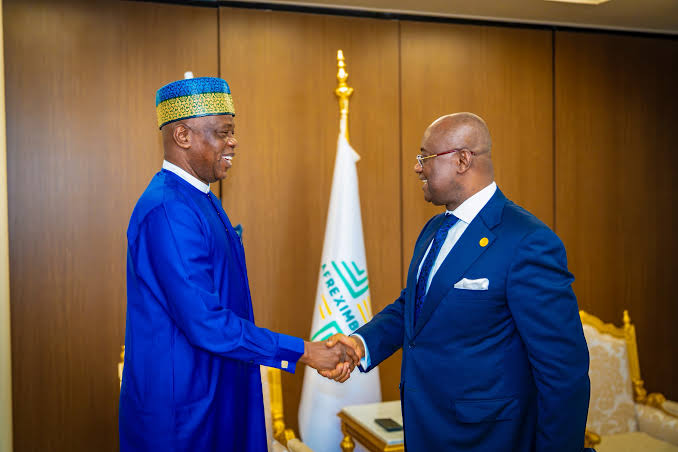
The Nigeria Customs Service (NCS) and the African Export-Import Bank (Afreximbank) have deepened talks on plans to modernise Nigeria’s borders with Benin and Cameroon to make the movement of goods across African countries faster and easier.

The proposed programme is aimed at reducing delays at border posts, improving the exchange of trade information and strengthening regional trade under the African Continental Free Trade Area (AfCFTA).
The discussions involved the Customs administrations of Nigeria, Benin and Cameroon and were held at Afreximbank’s headquarters in Cairo, Egypt, on October 12, 2026.
The meeting, led by the Comptroller General of Customs, Adewale Adeniyi, followed a study visit to the Beitbridge Border Post in Zimbabwe and technical assessments of the Mfum–Ekok and Sèmè–Kraké border corridors linking Nigeria with Cameroon and Benin, respectively. The participants examined ways to combine modern technology with better infrastructure and coordinated procedures to improve border operations.
The proposed improvements include digital systems for sharing Customs information, cargo scanners, weighing facilities, access roads, reliable electricity, better internet connectivity and improved traffic management.
The discussions also covered the development of common procedures for handling goods, training for Customs personnel and arrangements to guarantee the movement of goods across national borders.
A key part of the plan is the Customs Declaration Exchange System (CDES), which is designed to allow the three countries to exchange trade information securely.
The system will connect Nigeria’s B’Odogwu platform with Benin’s Customs Webb and Cameroon’s CAMCIS, allowing information provided to Customs in an exporting country to be used in preparing import documents in the receiving country.
This is expected to reduce repeated paperwork, improve the flow of information and help businesses and transport operators plan cross-border shipments more reliably.
However, Customs authorities in the receiving country will retain the power to verify the information, apply their national rules, assess risks and approve the release of goods.
Although the system has undergone development and technical testing, further adjustments, security checks and pilot trials are required before it can be deployed.
The assessments of the two border corridors identified several challenges that must be addressed to achieve the programme’s objectives.
At the Mfum–Ekok border between Nigeria and Cameroon, the team identified unreliable electricity and internet services, inadequate information technology equipment, cybersecurity concerns and delays in commissioning cargo scanners. The need for stronger coordination between the two countries was also highlighted.
At the Sèmè–Kraké border between Nigeria and Benin, the challenges included traffic congestion, unreliable power supply, incomplete joint operating procedures, poor exchange of live data and non-functional cargo-scanning and weighing facilities.
Differences in operating hours and uncertainty over responsibility for maintaining shared infrastructure were also identified as issues requiring attention.
The experience at the Beitbridge Border Post showed the importance of treating a modern border as a coordinated system rather than simply providing new buildings and equipment. Effective operations also require advance processing of cargo information, electronic payments, traffic control, cargo monitoring, reliable utilities and clear management responsibilities.
To move the programme forward, Afreximbank proposed a two-stage approach, beginning with independent engineering assessments and estimates of the investment required at the two border posts.
The next stage would involve preparing separate investment proposals for the Nigeria–Benin and Nigeria–Cameroon corridors. These would include financial assessments, legal reviews, advisory services and plans for implementing and financing the projects.
Afreximbank also indicated that its Project Preparation Facility could support the preparatory work, while technical partners expressed willingness in principle to consider funding the initial studies themselves.
However, the meeting did not produce a final project cost, confirmed loan commitment, financing agreement or implementation contract.
Participants instead agreed on the need for direct inspections of the border facilities, the appointment of technical representatives and a timetable setting out actions to be taken within one, three and six months.
The Nigeria Customs Service said it would continue working with its counterparts in Benin and Cameroon, Afreximbank and other partners to complete the assessments and develop practical plans for modernising the two corridors.
The initiative is expected to support the AfCFTA, which seeks to increase trade among African countries by making it easier for businesses to move goods across borders and access markets across the continent.