Follow Us on Google
The Peering Advocacy and Advancement Centre in Africa (PAACA) has called on the federal government to postpone plans to introduce a 15 per cent import tariff on petrol and diesel, warning that the policy could sharply increase pump prices and worsen economic hardship.
PAACA said the tariff should not be implemented until domestic refining capacity meets at least 80 per cent of national demand.
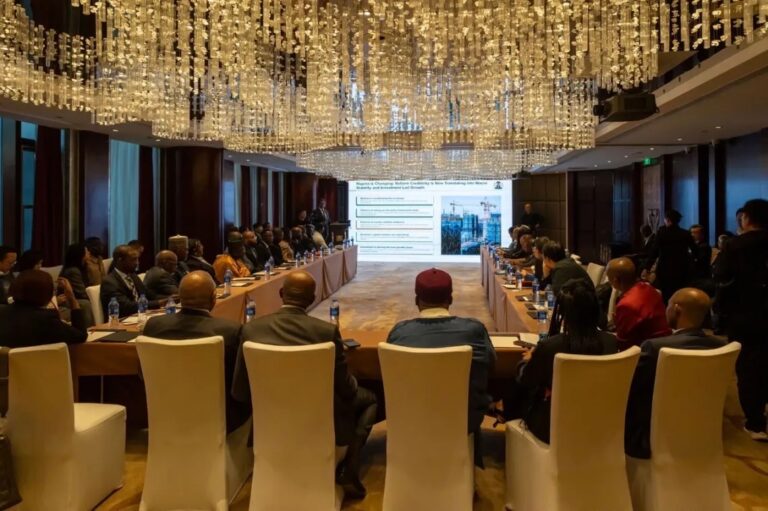
Speaking at a press conference in Abuja, PAACA Executive Director Ezenwa Nwagwu argued that domestic refining is not yet sufficient to meet national fuel demand, and restricting imports prematurely would lead to scarcity and higher prices.
“Imported petrol currently lands at about N802 per litre, while locally refined products cost N929.72 per litre,” Nwagwu said. “Adding a 15 per cent tariff will only push pump prices up by between N140 and N165 per litre across the country.”
He noted that the Dangote Refinery, which the policy appears to favour, currently supplies only about 40 per cent of national demand and still imports components for its own blending. “Restricting imports now is premature. Depending on one major supplier could give that company undue control over pricing and distribution, sidelining independent depot owners and marketers who have invested heavily in infrastructure,” he added.
“Our call today is straightforward,” Nwagwu said. “The Federal Government must suspend or reject the proposed tariff, expose and correct its economic, social, and ethical flaws, and educate the public on the dangers of monopolies in vital sectors like fuel, cement, and food. Above all, it must promote transparency and fair competition to protect consumers, workers, and small businesses across the country.” He stressed that limiting imports will not stabilise supply: “The facts are clear. The Dangote Refinery currently meets only about 40 per cent of national fuel demand.
Imported petrol today lands at roughly N802 per litre, while the locally refined product from Dangote costs N929.72 per litre. Adding a 15 per cent tariff will only make things worse, driving up the cost of transportation, food, and essential goods.”
Nwagwu also called for greater transparency in refinery supply agreements, urging the Nigerian Midstream and Downstream Petroleum Regulatory Authority (NMDPRA) to publish monthly refinery output, import volumes, and landing costs.
PAACA recommended the creation of a downstream competition framework under the Petroleum Industry Act and an energy market monitoring unit under the Federal Competition and Consumer Protection Commission to prevent cartel formation.
“True energy security requires multiple suppliers, not the protection of a single player,” Nwagwu concluded. “Government policies must prioritise citizens’ welfare above the interests of individual companies.”
Other News
PAACA said the tariff should not be implemented until domestic refining capacity meets at least 80 per cent of national demand.
Speaking at a press conference in Abuja, PAACA Executive Director Ezenwa Nwagwu argued that domestic refining is not yet sufficient to meet national fuel demand, and restricting imports prematurely would lead to scarcity and higher prices.
“Imported petrol currently lands at about N802 per litre, while locally refined products cost N929.72 per litre,” Nwagwu said. “Adding a 15 per cent tariff will only push pump prices up by between N140 and N165 per litre across the country.”
He noted that the Dangote Refinery, which the policy appears to favour, currently supplies only about 40 per cent of national demand and still imports components for its own blending. “Restricting imports now is premature. Depending on one major supplier could give that company undue control over pricing and distribution, sidelining independent depot owners and marketers who have invested heavily in infrastructure,” he added.
“Our call today is straightforward,” Nwagwu said. “The Federal Government must suspend or reject the proposed tariff, expose and correct its economic, social, and ethical flaws, and educate the public on the dangers of monopolies in vital sectors like fuel, cement, and food. Above all, it must promote transparency and fair competition to protect consumers, workers, and small businesses across the country.” He stressed that limiting imports will not stabilise supply: “The facts are clear. The Dangote Refinery currently meets only about 40 per cent of national fuel demand.
Imported petrol today lands at roughly N802 per litre, while the locally refined product from Dangote costs N929.72 per litre. Adding a 15 per cent tariff will only make things worse, driving up the cost of transportation, food, and essential goods.”
Nwagwu also called for greater transparency in refinery supply agreements, urging the Nigerian Midstream and Downstream Petroleum Regulatory Authority (NMDPRA) to publish monthly refinery output, import volumes, and landing costs.
PAACA recommended the creation of a downstream competition framework under the Petroleum Industry Act and an energy market monitoring unit under the Federal Competition and Consumer Protection Commission to prevent cartel formation.
“True energy security requires multiple suppliers, not the protection of a single player,” Nwagwu concluded. “Government policies must prioritise citizens’ welfare above the interests of individual companies.”