Follow Us on Google
By Friday Egege
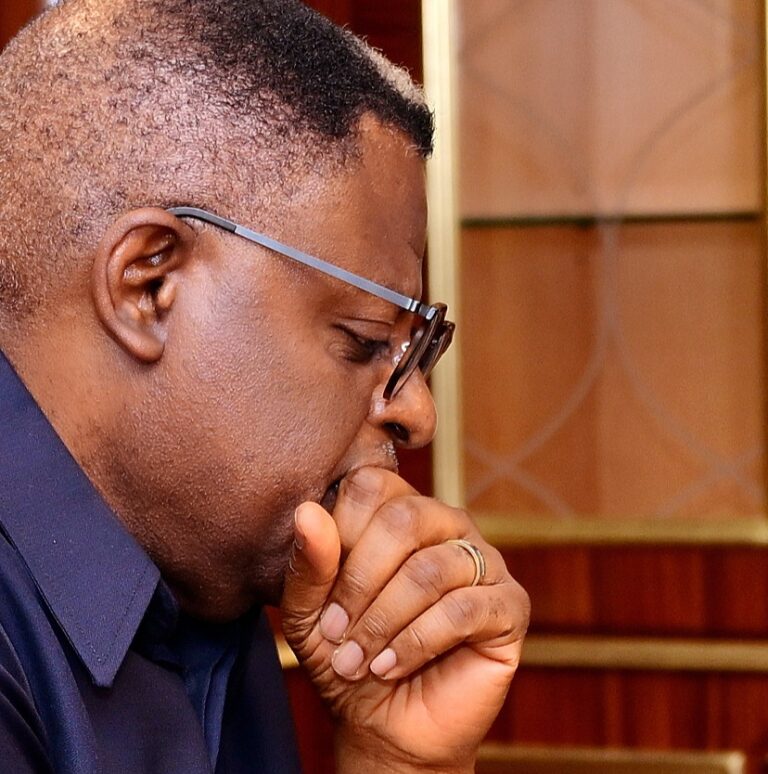
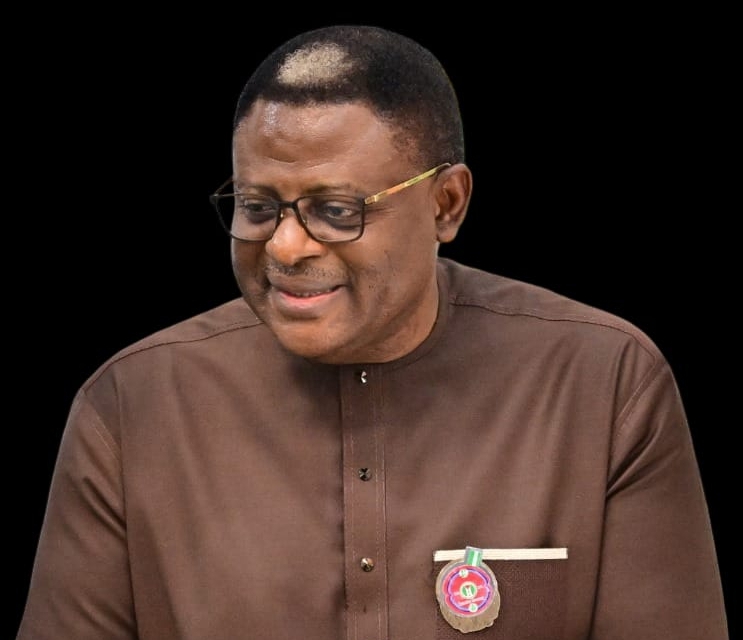
Hon Johnson Andiambey Ebokpo, Commissioner for Agriculture and Irrigation, Cross River State, speaks on Governor Bassey Otu’s agric transformation, World Bank irrigation funding, 324 tractors, 3.5m oil palm seedlings, 6 new cocoa estates and the state’s push to become Nigeria’s coffee hub.
Can you give an overview of the Rice Initiative?
At the first instance, the initiative was to mitigate the rising cost of food and produce the necessary feedstock for the Ogoja Rice Mill. Beyond that, the ministry wanted to promote all-year-round farming. We initiated what we call the Cross River State Wild Irrigation Infrastructure Development Programme. We did the engineering study and design, the topographical survey and the feasibility studies of all our irrigable lands, especially the flood plains where rice is produced.
The essence was not just the all-year farming but to mitigate the losses the farmers suffer before and during harvest due to flooding. The project will harvest water during the rains, prevent flooding and provide water during the dry season for irrigation, especially for rice. That study is concluded.
Because of that study, Cross River qualified for funding from the World Bank under what is called the Sustainable Power and Irrigation for Nigeria (SPIN) programme. Under the first phase, we will construct about 18 kilometres of primary infrastructure around the Bansara-Ogoja axis, the 500 million cubic metres reservoir and the canals to reclaim about 3,000 hectares of the contiguous flood plain. That gives us the 3,000 hectares to produce rice all year round. The canals will also support the long-captive aquaculture – the fisheries.
The rice programme is on-going and driven at the smallholder level. But our bigger agenda is to build a cereal-driven economy. We want to be one of the major seed-producing economies.
You mentioned cereals beyond rice?
Yes. Apart from rice, we are currently producing the cowpea (beans) and the soybeans through a commercial vehicle called Project GROW. Project GROW is a market-led entity that facilitates funding to agric businesses for the commercial production and off-take of grains such as soybeans and maize. For the cowpea, we run the Nutrition Improvement and Livelihood Enhancement Programme through the smallholders and the Cowpea Farmers Association of Nigeria, the Cross River chapter. The aim is to boost household dietary diversity and improve incomes.
We do it in three models. First, the intercropping. We encourage the intercropping of beans with every major commodity – the yam, the cassava, the maize, the oil palm at the early stage, the cocoa, the coffee. That is what we are doing. Second, the direct production at the smallholder level where you can grow on half, one, two or five hectares. Third, the breeding. We work with the Cowpea Farmers Association. We have about 12 breeding stations where we produce the certified seeds licensed by the Nigerian Agricultural Seed Council. We have the 12 community seed producers who are members of the association producing the certified seeds for the next season planting. We are supported by the Institute for Agricultural Research (IAR), Zaria, which is the original breeder, and the seed system.
To stimulate the industry, we have the buy-back programme. The government will acquire 75 per cent of the cowpea produced by the farmers and 25 per cent is for the farmers to eat and consume at home. The reason is to populate our food bank to help the vulnerable, the pregnant women, the nursing mothers and the school children to have access to affordable beans. We have the redemption centres and we work with the State Social Investment Programme where the beans goes to the very vulnerable. This is how we shield them from the market stress given the rising price of food. We are not joking with the cowpea because it is the base for wholesome nutrition. Apart from that, everybody can be a cowpea farmer to provide income and increase purchasing power.
What about soybeans?
Same focus. As at today we did the proof of concepts with Project GROW working with the aggregators. What Project GROW does is facilitate financing for the agric businesses through the Cross River State Agric Development Fund which serves as collateral to allow the banks finance our big aggregators who in turn support the farmers to produce and deliver under the commercial contracts. There is a formal agreement between the Flour Mills and the Cross River State Government through Project GROW. In the first instance, Project GROW supplied about 114 tonnes of soybeans. In this second phase, we are poised to provide close to 1,000 tonnes. So Cross River is emerging as a soybean producing state.
At the smallholder level, the government gives the soybean seeds from the IAR, supported by the National Cereals Research Institute (NCRI), Badeggi. The seeds are given to the smallholders through the associations. The Nigeria Soybean Association is currently developing the 10 hectares seed multiplication breeding farm in Ikom as the pilot breeding location. The State chapter executives are working, the Ministry is facilitating, the Seed Council will certify and the NCRI is on site. They have started the land preparation and the mechanical planting. The implementation partner is the National Soybean Association of Nigeria, supported by the Research Institutes. The National Agricultural Development Fund is supporting the scaling. The State Government funds the land clearing. Project GROW has the buy-back for whatever the smallholders produce, so we have a ready market system. It is open to other smaller contracts, including the feed mills.
Before now, some Cross Riverians bought equipment for their poultry and livestock farms but the cost of transporting soybeans from Benue or the North eroded profits because the majority are smallholders. The availability of soybeans as feedstock enables you to scale from the smallholder to the conventional livestock farmer. Today many dead mills are being resuscitated because the seed stock is available. The government is not only guaranteeing food security but the feed security for livestock so that our protein needs are met and we have a balanced dietary diversity, not just starch.
You also have a mechanisation programme?
Yes. Sometime in 2025, His Excellency, the governor flagged off the distribution of the 108 new medium tractors to the cooperatives to become service providers to the smallholders. We took cognisance of Cross River’s difficult terrain. We didn’t know the diesel would sell at N2,000 per litre. We projected the majority of the farms are smallholder and we needed the empirical, pragmatic transition. We didn’t think we needed to give the small farmers the big tractors because the utilisation would be sub-optimal. So we gave the cooperatives, trained them and provided the spare parts so the cooperatives become service providers. These are the 30-horsepower tractors that come with five implements – the harrow, the plough, the ridger, the seed planter and the one-tonne trailer bucket. In the second phase, because the majority of the rice farmers need the rotary tiller instead of the harrow due to the flooding and the swamp, we brought in the rotary tillers to quickly optimise the farm harvest and the yield in the early planting season starting March. Even if the flood comes in the second season, the farmers would have made so much from the first season. The total is 324 tractors. The governor has approved the next batch of 108 to be distributed to the cooperatives and the associations to drive the mechanisation. That is why from the harvest figures this season and last season, you can see we improved the volume of food in circulation and helped stabilise the prices of food. It is a work in progress.
Let’s talk about your commercial agriculture programme?
Project GROW is our flagship for the agro crops – the maize, the cassava, the soybeans, the aquaculture. Then the tree crop economy. We introduced the coffee as a commodity of note, the emerging commodity that will open the economy for prosperity because we don’t want to be a mono-cocoa dependent economy. While producing a lot of cocoa we are also introducing coffee. The state government went into nursery development and is currently distributing the seedlings to the smallholders in the highlands of Obudu, Boki, Obanliku and Akamkpa – the Arabica seedlings for the highlands, the Robusta for the lowlands. The seedlings have got to the various LGAs. For the inclusion of women and youths, His Excellency discounted the seedlings from N1,000 to N300 to allow full participation. But we believe people must have the skill so they will take the initiative very seriously. The cocoa farmers, the vegetable farmers, everybody is going into coffee production.
For the oil palm, we bought the 3.5 million seedlings, the highest in Nigeria, from the Nigerian Institute for Oil Palm Research (NIFOR). When we did the situational analysis, we discovered the majority of the oil palm trees held by the smallholders are very old. The oil palm is a crop of wealth but the farmers are suffering. Even if you are not adding value, selling the fresh fruit bunch should pay the children’s school fees. That analysis necessitated the procurement of the 3.5 million sprouted nuts. The seedlings are expensive. The state got the sprouted nuts, trained the farmers on raising the seedlings and gave them to the farmers at N100. This allows the smallholders to populate their farms and replace the old trees with the newer high-yielding Tenera that yields more. That covers about 23,000 hectares in the smallholder hands.
In the cocoa development, we are establishing the six cocoa estates by the Public Private Partnership (PPP) and the process is on-going. Before the end of October, all the preferred bidders through the PPP would have signed the concession agreements. These are the major cocoa producing and processing companies who will work with the communities to increase production and set up the factories here for value addition and better foreign exchange. Most importantly within the tree crop economy, we are building the system of trust. When you buy the commodity from Cross River, you know that it is produced sustainably and deforestation-free. It is not produced in the forest reserve. We preserve our biodiversity because we hold about 58 per cent of Nigeria’s biodiversity. It is sustainably produced in an environmentally friendly way. Apart from that, the beans is of good quality and we can certify that it is free of the pesticide residues and the cancer-causing agents. Any crop for human consumption from Cross River is of good quality and standard. We instituted the bill for the establishment of the new agency saddled with that. We set up the first-in-Nigeria traceability system to trace the farmers and the chain of custody from the farm to the export where we ensure that it is produced sustainably and certified. We also amended the old Produce Law to enforce the effective standard and certify that any of the oil palm, the cocoa, the coffee, and the cashew hitting the market is quality. These are some of the things we are doing and we will keep improving.
What has the government done to improve the initiative to farmers?
We empowered them with the farm inputs, the fertilizers, the mechanisation services. We clear the lands under the free initiative. The 13 breeding stations are populated by the women farmers. For each hectare you have six farmers cultivating and the state will buy back the cowpea they produce to stimulate the sector. We provided the pesticides, the farm implements and the lot of inputs to support them at the smallholder level.
Any partnership to enhance coffee?
We partner the Cocoa Research Institute of Nigeria (CRIN). We have a partner who is one of the largest coffee producers. We partner the Uganda Government because Uganda is the largest producer of Robusta coffee in Africa, if not the world. We partner the Uganda Coffee Development Authority. We are piloting the coffee revolution in Nigeria. A lot of this will be anchored on research and development. Those are the capabilities we are building. We are also developing institutions to help the regulation and the development of the sector within what the Constitution allows us as a state.
Having gone this far, what’s the next step for the agric sector in Cross River?
The next step is to scale up and the agric industrialisation. We want to be the state that has enough food. We want to feed its people and Nigerians. I forgot to tell you about the Yam Multiplication Programme. We target 67 metric tonnes of the water yam and the white yam. We have the multiplication programme with the Yam Farmers Association of Nigeria. We want to strengthen the value chain association and want the private sector to drive the agric programmes while the government facilitates at the policy level using the legal instruments to support the farmers.
We want to feed Nigerians. We want to be Nigeria’s Coffee Hub, Africa’s Cocoa Hub. One of the highest producers of grain – the rice, the cowpea, the soybeans. One of the largest Irish potato and yam producers. We want to have a system in place. That is why as at today we awarded the contract for the construction of the three research institutions outstations: the Institute of Agricultural Research, the National Root Crop Research Institute, Umudike outstation in Obubra LGA, and the National Oil Palm Research Institute outstation in Odukpani. That shows we are not driving agriculture from the emotional standpoint but empirically because this is the way the economies have developed. The oil palm economy in Malaysia developed from research and development. We want to continue to develop the genetic traits given our peculiar factors. We want the standards which is very critical to us. We want to continue to help Nigeria to secure its agricultural future and food security.
What is the relationship between the government and the farmers association as election approaches?
The National President of the All Farmers Association of Nigeria (AFAN) was in Cross River about two months ago. There was full endorsement by all the farmers. We have never had it so good in the history of Cross River State. The only person that invested well in agriculture was the former Premier of the Old Eastern Region, late Sir Michael Okpara. We have never seen this kind of direct intervention, the legislative intervention and the legal intervention framework. This is the first time there is clarity and we are going beyond sentiments and going for actual productivity and subsidising the farmers and they gave the total endorsement of the re-election of the governor in 2027. All the farmers under the umbrella of the Farmers Association of Nigeria gave the total endorsement.
What are the chances of the governor being re-elected?
It is a carry-go situation. No shaking for the governor re-election because we don’t have any opposition with the level of achievements, not only in agriculture, but in the health system, the roads and education. It has never been this massive. Cross River has never had it so good. The level of infrastructural intervention and development has never happened like this before.