Follow Us on Google
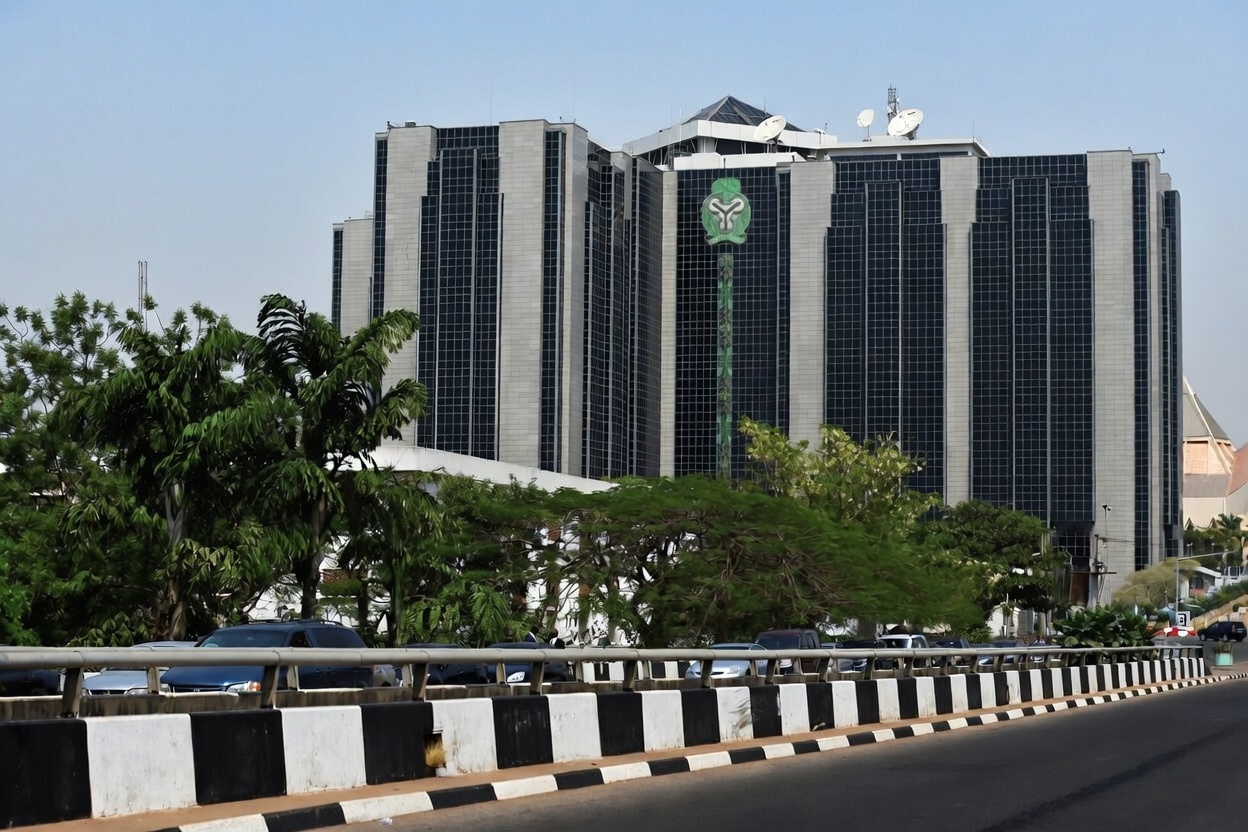
• CBN vows broader access, experts push long-term funding
From Chinwendu Obienyi and Chukwuma Umeorah
Concerns are mounting over persistent credit gaps despite recent recapitalisation efforts aimed at strengthening financial stability.
Analysts say the reforms have yet to translate into improved access to loans for businesses and households, raising questions about oversight and implementation.
Experts are urging authorities to prioritise long-term financing for productive sectors such as manufacturing and agriculture to drive sustainable growth.
However, the Central Bank of Nigeria (CBN) insists the recapitalisation programme will ultimately expand credit access nationwide, deepen financial inclusion, and position banks to better support economic development in the country.
With N4.65 trillion raised in the industry and the majority of banks meeting the new thresholds, the recapitalisation exercise signals not just stronger balance sheets, but a deliberate attempt to reset the foundations of banking in Nigeria for a more complex, globally integrated economic future.
Yet, financial experts who spoke with Daily Sun argue that the key question is no longer whether banks are adequately capitalised, but whether they can effectively deploy that capital into the real economy.
Chief Executive Officer, Centre for the Promotion of Private Enterprise (CPPE), Muda Yusuf, pointed out that private sector credit remains just 17 per cent of GDP, well below regional averages.
“Even more concerning, SMEs, despite contributing over 50 per cent of GDP, receive only about 1 per cent of total bank credit. This suggests that while banks now have the capacity to lend more, structural bottlenecks, risk aversion, weak credit infrastructure, and economic uncertainty, continue to limit credit expansion.
Hence, the CBN can see to it that they incentivise long-term financing for productive sectors, promote a more balanced sectoral allocation of credit, expand access to consumer credit so as to stimulate demand and address the effects of crowding out public sector borrowing”, Yusuf explained.
Also speaking, the Head, Research at FSL Securities, Victor Chiazor, noted that the capital-raising process drove improvements in governance, disclosure, and risk management.
Chiazor added that banks seeking investor funds have had to meet higher standards of transparency and accountability, leading to better corporate governance practices.
“Governance has improved on paper and in structure, but execution remains the key risk. There are still challenges such as the uneven adoption of advanced risk technologies, persistent fraud risks and gaps in regulatory enforcement”, he said.
Chief Executive Officer of Wyoming Capital, Tajudeen Olayinka, in a telephone interview with Daily Sun said that while the recapitalisation has increased the size and strength of banks, lending decisions will continue to be guided primarily by risk considerations and the availability of viable opportunities in the economy.
“Banking business is a portfolio of opportunities. It is only natural that these banks will only go to sectors where the risks are minimal and where they are confident that their funds are safe. They are not going to put money into businesses that could become a threat to their system.”
According to him, the expectation that banks will significantly ramp up lending simply because they now have more capital may not fully align with operational realities, especially in a challenging macroeconomic environment. “That money belongs to shareholders and depositors. Banks have a responsibility to protect it. So they must be careful about where they deploy it,” he said.
Olayinka noted that while banks will continue to lend, such lending is likely to be selective and skewed toward sectors with strong cash flow visibility and lower default risk.“They will still lend, but mostly to businesses that have the capacity to repay. If you are lending to a company with strong and stable cash flows, that is a safer bet,” he said.
He pointed to sectors such as cement and infrastructure-related businesses as likely beneficiaries of increased credit flows, given rising demand and relatively predictable returns.
Other News
“Those sectors are becoming more attractive because demand is there. They use cement not just for buildings but also for roads, so that creates more opportunities,” he added.
At the same time, he expressed reservations about the ability of more vulnerable segments of the economy, particularly agriculture and small businesses, to attract significant lending under current conditions. “That segment remains risky. Many of the borrowers do not have the kind of collateral that can secure the loans. Banks are mindful not just of income loss but also the possibility of losing the principal,” he said.
He further noted that prevailing macroeconomic conditions, including high interest rates and elevated cost pressures, could reinforce cautious lending behaviour among banks. “There will still be a preference for safer assets. That is the reality of the environment we are operating in,” he said.
The Group Managing Director of Cowry Asset Management, Johnson Chukwu, said while recapitalisation has strengthened banks’ ability to lend, actual credit expansion will depend largely on the strength of the economy and the availability of viable lending opportunities.
He stressed that stronger capital alone is not sufficient to drive lending without corresponding improvements in economic activity. “If you have an expanding economy, businesses are prospering and making good returns, then they will have the capacity to come to the banks to borrow,” Chukwu said, adding that the depth of credit growth is closely tied to the availability of “good credit deal pipelines.”
Chief Executive Officer of Arthur Stevens Asset Management, Olatunde Amolegbe, said despite these concerns, the recapitalisation exercise has created room for increased lending and should support gradual expansion in credit.
“My expectation is that the additional capital should enable banks to expand their credit portfolios and lend more to the real sector than we have seen before,” he said.
He added that banks are unlikely to hold on to the newly raised funds for long, given the need to generate returns. “I do not expect that banks will sit on the money they have raised. They will have to deploy it, and that should support increased lending,” he said.
Amolegbe projected that early signs of this expansion could begin to emerge within the second quarter of the year, following regulatory verification processes. “We should start to see some impact as we move through the second quarter,” he said.
However, he acknowledged that broader economic conditions will ultimately determine the pace and scale of credit expansion. “If the macroeconomic environment remains stable, then we should see improved lending. But if conditions tighten, that could affect how aggressively banks are willing to extend credit,” he added.
Responding to these concerns, the apex bank reaffirmed its commitment to maintaining a stable, transparent, and resilient financial system that inspires confidence among depositors, investors, and the broader public, and to advancing the sustainability of the nation’s financial architecture.
The bank stated that the programme recorded strong participation from both domestic and international investors, with 72.55 per cent of capital sourced locally and 27.45 per cent from international markets, reflecting sustained confidence in the Nigerian banking sector.
It also assured that the exercise will broaden access to credit nationwide. “By building banks “fit for purpose” in a trillion-dollar economy, the sector can sustainably finance SMEs, export-oriented firms, and major infrastructure projects. The recapitalisation is expected to anchor financial inclusion and broaden access to credit nationwide”.
Beyond individual lending decisions, data points to deeper structural challenges in Nigeria’s credit ecosystem. Private sector credit remains low relative to the size of the economy, estimated at about 17 per cent of gross domestic product, compared to a sub-Saharan African average of roughly 25 per cent and significantly higher levels in more developed African markets.
The gap is even more pronounced in key segments such as small and medium-sized enterprises, which account for a large share of economic activity but receive only a fraction of total bank credit. It is estimated that SME lending represents about one per cent of total credit, highlighting the scale of unmet financing needs.
This imbalance suggests that while recapitalisation may strengthen banks, it does not automatically resolve the underlying constraints limiting credit expansion, including weak credit infrastructure, high operating risks and macroeconomic volatility.
There are also concerns that banks may continue to favour investments in government securities and other low-risk instruments, particularly in a high-yield environment, rather than extend long-term credit to the private sector.
Such a trend, analysts warn, could limit the broader economic impact of recapitalisation, even as it improves the resilience and profitability of the banking sector.
Policy experts have, therefore, called for complementary measures to ensure that the gains from recapitalisation translate into real sector impact. In a separate report, the Centre for the Promotion of Private Enterprise (CPPE) urged authorities to prioritise reforms that would deepen credit penetration, de-risk lending to small businesses and strengthen monetary policy transmission.
The group noted that the success of the exercise should not be measured solely by stronger bank balance sheets, but by the extent to which the financial system supports investment, enterprise growth and job creation.