Follow Us on Google

Submits reports to tribunal
______________________________________________________________________
From Isaac Anumihe, Abuja
The Council for the Regulation of Engineering in Nigeria (COREN) has concluded investigations into two building collapse incidents with a view to sanctioning the two engineers found culpable.
While the first collapse involved a reinforced concrete cantilever entrance canopy at the Gombe State House of Assembly Complex, the other is connected to a three-storey building under construction in Gaduwa District, Abuja.
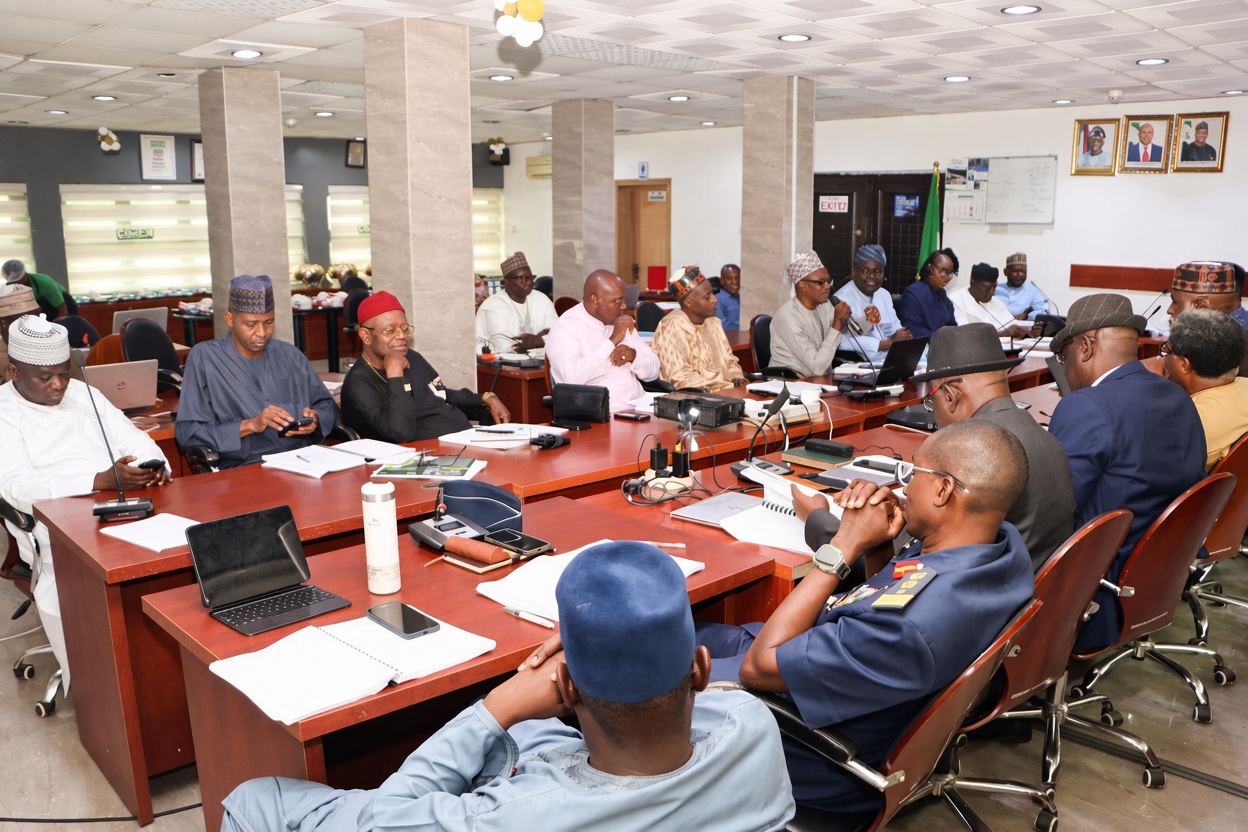
At its 191st Ordinary Council Meeting on 15 October 2026 in Abuja, the council approved the reports of two investigation panels on the building collapses in Gombe and Abuja.
According to a statement, the investigation reports have since been submitted to the COREN Engineering Tribunal in accordance with the law. The tribunal is expected to summon the affected practitioners in due course for further proceedings.
The statement said the first incident occurred on 10 July 2026, at about 3:25 p.m., on the construction site of the Gombe State House of Assembly Complex.
Following an investigation into the design, supervision and construction of the project, COREN’s Investigative Panel established a prima facie case against Engineer Rahman Adegboyega Shittu (R.38234) of Ramad Consultant Limited.
The second incident occurred on 16 May 2026, involving a three-storey building under construction at Plot No. 481, Cadastral Zone B13, Gaduwa District, Abuja. Following a petition and referral from the Department of Development Control, Federal Capital Territory Administration (FCTA), the Investigative Panel established a prima facie case against Engineer Mustapha Maikaba (R.68.844), consultant engineer on the project.
Other News
COREN said that the establishment of a prima facie case indicates sufficient grounds for further regulatory proceedings but does not constitute a final determination of guilt or liability. The affected practitioners will have the opportunity to respond in accordance with applicable laws and procedures.
In another major decision, the council approved the final draft of the Harmonised National Construction Safety Guidelines for the Nigerian Construction Industry for gazetting and distribution to relevant stakeholders for implementation and enforcement.
To strengthen engineering regulation, the council endorsed collaboration with federal and state ministries of works and other relevant agencies to ensure that engineering contracts are awarded only to COREN-registered firms and to improve co-operation in inspections and investigations.
It also endorsed collaboration with the Sector Skills Council for Engineering (SSC4E) and relevant agencies to vet and regulate artisans entering Nigeria to undertake engineering-related work.
The statement noted that the council further constituted a committee to develop a sustainable funding framework for Engineering Regulations Monitoring and Enforcement (ERM&E) and State Technical Committee (STC) activities, covering annual budgetary provisions, operational logistics, field allowances and emergency regulatory interventions, subject to financial controls.
Under the new registration approvals, the council reviewed and approved the registration of 3,726 engineering practitioners across various professional categories.
“The approved registration comprises: 2,510 engineers, 532 engineering technologists, nine engineering technicians and 675 engineering craftsmen. In addition, the council approved the registration of 153 engineering firms operating across various areas of engineering practice, comprising 37 consulting firms and 116 engineering firms,” COREN said.
COREN reiterated its commitment to impartial investigations, professional accountability and effective enforcement of engineering standards. The council urged engineers, developers, contractors and relevant government agencies to ensure that engineering projects are properly designed, supervised and executed in line with approved safety standards.
The statement noted that the council will continue to strengthen engineering regulation and protect lives, property and public confidence in the engineering and construction industry.