Follow Us on Google
By Adewale Sanyaolu
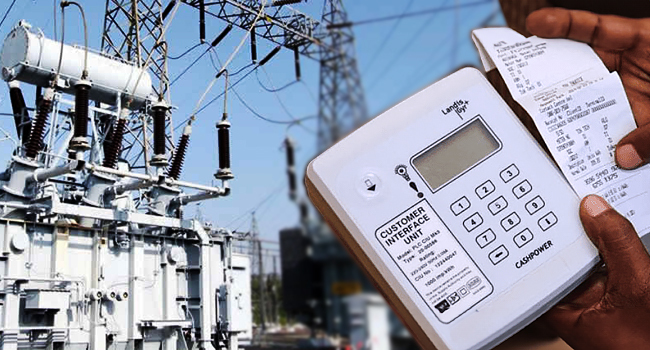
Lagos’ fragile power supply suffered its first major blow of 2026 at the weekend as Eko Electricity Distribution Company (EKEDC) downgraded customers on seven feeders from Band A, which guarantees a minimum of 20 hours of electricity daily, to Band E, leaving homes and businesses with just four hours of power each day.
In 2020, the Nigerian Electricity Regulatory Commission (NERC), introduced the Service-Based Tariff (SBT), a scheme aimed at improving service delivery to end-user customers and ensure that electricity tariffs paid by customers are a reflection of the services delivered by the Distribution Companies (Discos) based on the number of hours of electricity supply per day.
The scheme is also designed to support investments towards the improvement of power infrastructure and consequently improvement in quality of supply.
Under the SBT, consumers are classified as follows: Band A: Minimum of 20 Hours, Band B: Minimum of 16 Hours, Band C: Minimum of 12 Hours, Band D: Minimum of 8 Hours and Band E: Minimum of 4 Hours
The utility firm, in a post on its verified X page, formerly Twitter over the weekend, listed the downgraded feeders to include: Badore in Ajah from Band A to C, Palace Road located in Island from Band A to E, Beecham in Agbara from Band A to C, Chevy View (OADC) in Lekki from Band A to C.
Others are: New Yaba (Akoka) in Ijora District from Band A to C, Old Niger in Ajele District, from Band A to C, NAFDAC(Isolo) under Mushin District was downgraded from Band A to C and Army Resettlement also in Mushin District was downgraded from Band A to E.
Some of the consumers who expressed their frustration and anger on X queried the rationale behind categorising consumers under Bands A and B when they cannot have electricity supply for the minimum number of hours promised.
An X user, @ariyo_b wrote “From Band A to E. You all are jokes”, Another user @zack, wrote “You see the way these Bands are not working and there is no agitation, it will be the same with the new tax law.”
@DavOlumide wrote “Please, downgrade Papa Ajao, Mushin,” @Citizen of a captured one wrote “How can you downgrade from Band A to E. What’s the rationale behind the downgrade.”
Despite posting a strong 88.74 per cent revenue collection rate in the third quarter of 2025, Eko Disco is still struggling with poor service delivery across parts of its network, leaving consumers in Epe, Ijeshatedo in Surulere, sections of Lekki and Ibeju-Lekki, as well as Agbara, trapped in years of erratic supply with little hope of improvement in sight.
According to the 2025 third quarter report released last week by NERC, Electricity Distribution Companies (DisCos) collected a total of N1.13 trillion from customers during the second and third quarters of 2025, reflecting a 4.63 percentage-point improvement in revenue collection efficiency.
Despite the gains, the sector continues to grapple with a combined revenue shortfall of N314.35 billion.
The data, covering 11 DisCos, highlights both progress and persistent challenges in revenue recovery, which remain central to addressing liquidity constraints in the Nigerian power sector.
According to NERC, in Q3 of 2025, all DisCos collected N570.25 billion out of N706.61 billion billed, translating to 80.70 per cent collection efficiency. This marks an increase from 76.07 per cent in Q2, when N564.71 billion was collected out of N742.34 billion billed.
At an aggregate level, the improvement reflects a 4.63pp increase in collection efficiency between Q2 and Q3, driven by a combination of operational adjustments and targeted recovery efforts.
From April to June 2025, DisCos recovered N564.67 billion, comprising N197.08 billion in April, N188.70 billion in May, and N178.89 billion in June. Collections for the third quarter rose to N570.28 billion, with N190.52 billion in July, N187.47 billion in August, and N192.29 billion in September, highlighting a stabilisation trend, particularly in September, the strongest month in the six-month period.
DisCo performance varied significantly across the country. Ikeja DisCo recorded the highest collection efficiency of 100 per cent in Q3, while Eko had 88.74 per cent, Benin had 86.44 per cent, and Abuja had 81.60 per cent, which also exceeded 80 per cent. At the lower end, Kaduna DisCo recorded the lowest efficiency at 45.67 per cent.
Quarter-on-quarter, seven DisCos improved efficiency with Ikeja (+17.58pp), Port Harcourt (+8.83pp), Yola (+8.72pp), Abuja (+5.24pp), Jos (+4.90pp), Eko (+0.94pp), and Benin (+0.89pp). Conversely, four DisCos recorded declines, with Kaduna (-2.70pp) and Ibadan (-1.34pp) showing the most significant drops.
DisCos like Ikeja and Eko have benefited from legacy recoveries and concentrated revenue drives, while northern and some mid-sized DisCos lag due to infrastructure gaps, energy theft, and billing inefficiencies.
Despite the improved efficiency and rising collections, the combined revenue shortfall for Q2 and Q3 stood at N314.35 billion with N177.68 billion in Q2 and N136.34 billion in Q3.
The uncollected revenue highlights the ongoing liquidity challenges in the sector, as DisCos continue to operate below optimal cash flow levels, constraining their ability to invest in network expansion and maintenance.