Follow Us on Google

• State assemblies to get 3 each • Proposal to run for 16 years before review
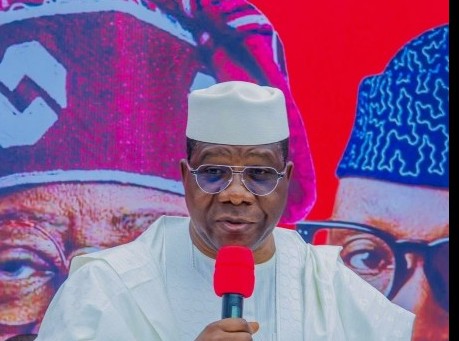
Senate Leader, Opeyemi Bamidele, has said the National Assembly is considering a constitutional amendment to create 74 additional seats exclusively for women in the Senate and House of Representatives, alongside three in each state House of Assembly.
Under the proposal, each of the 36 states and the Federal Capital Territory (FCT) would have one additional female representative in each chamber of the National Assembly, while the state assemblies would collectively gain 108 seats reserved for women.
Bamidele, vice chairman of the Senate Committee on the Review of the 1999 Constitution, disclosed this at the 2026 Law Week organised by the Ekiti State chapter of the International Federation of Women Lawyers (FIDA).
He said the arrangement would operate for 16 years, covering four electoral cycles, before a comprehensive review to assess its effectiveness in improving women’s political representation.
The Senate Leader explained that the initiative would address women’s persistent underrepresentation in elective offices without displacing existing legislators or altering the current distribution of constituencies.
“A Bill for an Act to alter the provisions of the Constitution of the Federal Republic of Nigeria, 1999 to provide for special seats for women in the National and State Houses of Assembly and for related matters is receiving our attention at the National Assembly.
“The proposal, as it stands, is meticulous in its design. It seeks to add 37 seats in the Senate and 37 seats in the House of Representatives. This suggests that if finally approved, each state of the federation including FCT will have one additional seat in each of the Houses of the National Assembly.
“This arrangement is proposed to run for a period of 16 years, four electoral cycles, before a comprehensive review. This is a sunset clause designed to ensure sustainability and to allow for the organic development of a more inclusive political culture.”
Other News
If approved, the proposal would increase Senate membership from 109 to 146 and that of the House of Representatives from 360 to 397, bringing the combined membership of the National Assembly to 543. Together with the proposed 108 seats in the state assemblies, it would create 182 additional legislative positions reserved for women.
Bamidele said the National Assembly was engaging state legislatures to secure support for the amendment, noting that their approval was required before the changes could take effect.
He described the initiative as a national reform rather than a partisan arrangement, arguing that women’s limited participation in political decision-making remained a major challenge to representative democracy.
“A democracy that systematically excludes over half of its population from the decision-making tables that determine their futures is, at best, a flawed democracy and, at worst, a veiled oligarchy,” he said.
He said sustained advocacy by prominent Nigerians, including First Lady, Senator Oluremi Tinubu, had strengthened the determination of the 10th National Assembly to improve women’s representation.
Beyond political representation, Bamidele said the legislature was considering measures to strengthen protection for women, children and persons with disabilities through improved access to healthcare, education and social protection programmes.
The event, chaired by Ayobami Olowoyo-Richards, had as its theme, “Justice in a Changing World: Responding to New Challenges Affecting Women and Children.”