Follow Us on Google
• Why Mbah is Nigeria’s number 1 governor
By Desmond Mgboh
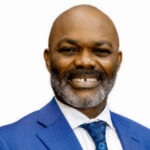
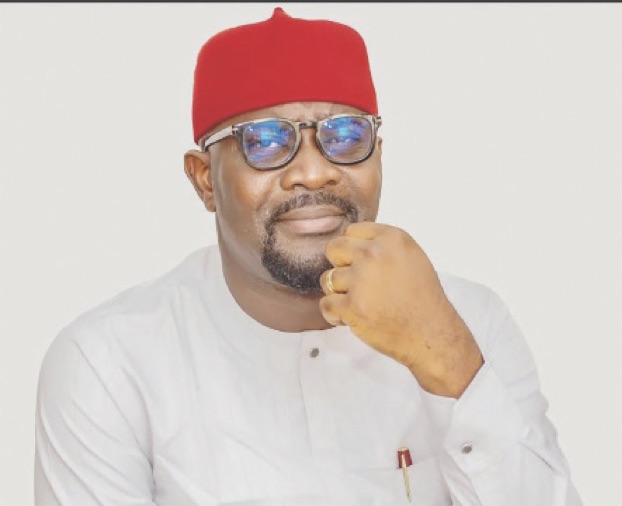
Senator Osita Ngwu, who represents Enugu West Senatorial District, is the Minority Whip in the 10th Senate. He’s a first- timer in the Upper Chamber, In this interview, he spoke about his unique experiences as a first time Senator and as a Minority Whip. He also commented on the pressure of constituency projects on legislators as well as offered his thoughts on the 10th Senate being accused of rubber stamping the executive. He highlighted his vision for democracy, for his constituency and also rated the performance of the Enugu State Governor, Dr. Peter Mbah. He was candid, honest and frank
This is your first time in the Senate. How has the experience been? How would you say you have contributed to good governance in Nigeria?
This is two years plus for me in the National Assembly. As a first timer, I know it was never going to be easy. Parliamentary business is something you have to sit down and learn. To the glory of God, I came in, and with the help of my colleagues; especially the President of the Senate who found favour in me, who has helped me grow parliament-wise, I was appointed as the Chairman Solid Minerals Development Committee. It was initially Solid Minerals and Steel Development, but when the current government separated the Ministry into Steel and Solid Minerals, I was retained as the Chairman of Solid Minerals Committee. I had that for about three months before I was elevated to be a Principal Officer as a first timer- which is unprecedented.
We have been dealing with legislative functions to the best of our capabilities. There are three major things we do.
One is law -making, which is the responsibility of every lawmaker. Two is over-sighting the government at committee levels. I belong to several committees that I have actively participated. And the third one is representing the people. This is where you have to speak for your people. You make sure that the dividends of democracy that is at the centre, comes down to the people and also you make sure that the capacity of your people is upgraded. So we have done that to the best of our abilities. We have contributed in many bills and motions that have impacted the common man. We will continue to improve as we go on in the years ahead.
You were made the Minority Whip of the Senate. How easy was it for you as a first timer?
It is not easy, being a first timer and not just being a first timer, I have never been in government before now. This is my first public office, and God has been the driver. Minority Whip didn’t come easy. Members of the minority voted me and I thank them for that. I also thank the entire leadership of the Senate. I appreciate them, the Senate President, Deputy Senate President, the Leader of the Senate and also my own leader in the Minority, Senator Abba Moro, who has always supported me since I became the Minority Whip. It wasn’t easy to become the Minority Whip, because there are several people who could do the work, but favour found me and I didn’t and will not take it for granted.
The issue of constituency projects has generated a lot of discussions in Nigeria. To what extent have these projects been able to impact on the people? Some critics say a lot of things about it- that there is not much of accountability when it comes to constituency projects?
One thing about constituency projects is that some people- not all people- are misguided. They don’t understand this constituency projects well. If I am the one who takes decisions, I will even suggest that constituency projects should even be scrapped and removed entirely. This is because it puts a lot of pressure on legislators who now leave their primary responsibility of being a member of parliament to be thinking of how to construct roads, provide water, electricity and all that. To me, constituency projects put enormous responsibility on legislators. It’s not supposed to be. If I had my way on the issue, constituency projects should be left for the executive. Let them do the work. Let me guide us a little bit about these constituency projects. We have Zonal Intervention Projects- which is shared amongst the legislators. You are allowed to input a certain project to a certain value for your people. I think the value of a constituency project, for us in the Senate, is about 200 and something million Naira- which you are not seeing the money. All you need to do is to select communities in your zone that you want to impact. Maybe through the provision of water, electricity or whatever it is. Then, the agency where the money is domiciled advertises, contractor wins and the job is done. There is also the capital components of the project that are also given to the legislators, which is not a big money. For instance, like in Enugu West Senatorial District where we have 81 political wards, and about 300 communities, everybody wants something and the value of the projects that is being put in the budget as your constituency projects cannot even satisfy four wards. So, you’re now under pressure to do something for every political ward. Meanwhile, the election circle doesn’t take time to turn round. So when it comes, people like me who have a level that I have placed myself in terms of performance will not want to go to any political ward and keep promising without showing what I have done with the mandate they gave to me in the last four years.
From what we see and hear, you have initiated and successfully executed a number of impactful projects in your constituency. What is the secret and how did you do it in so short a time?
We lobby. I take this job seriously. Any day that I cease to take it serious, I’ll resign and will not run again. One thing also is to identify what the community needs. It is not about what I want to give. It has been an enormous task. So when I see people criticising some of us, I wish they understand that it is not easy. I am not a magician, I lobby. I take it seriously. I have impacted more than 70 percent of my political wards. And the beauty of our constitutional democracy is that after four years, you will have to seek re-election. So before I’m able to seek re-election, I must have touched most parts of the political wards in my constituency.
A lot of commentators have argued that the senate is too friendly with the executive. May we have your candid perspective about this issue of rubber stamping the decisions of the executive?
The 10th Senate led by His Excellency, Senator Godswill Obot Akpabio is completely misunderstood. Let me tell you, when the present APC government came to power, the economy was on a flat note. President Tinubu took very tough decisions, like removal of fuel subsidy because he knew where he was going. What the parliament needed to do was to support this government to get to the point where Nigerians will start having benefits. Everyone wants us to start fighting the executive, but government is not about fighting. Governance is about the people; the interest of the people. How can you get the people to enjoy the benefits of democracy? That is the big question! So if the 10th Senate should start fighting the government today, we will not be called Rubber Stamp! But who is going to suffer? The people of course! So we are taking bullets for the people. The Senate led by Senator Akpabio is very intentional, thinking about the people, supporting the executive not rubber stamping the executive decisions. For instance, if we didn’t pass NELFUND, can you imagine thousands of students who would not have been able to pay their school fees and other things because they do not have the money? That bill is an executive bill, but we supported it. If we didn’t pass it, we will not be called Rubber Stamp. But because we passed it, we are called Rubber Stamp. But who is gaining from it? The people. We have many pro- people bills like Regional Development Commission Bills, which we have passed and none is anti people. So if we are being called Rubber Stamp and the people are happy, let us be Rubber Stamp. Let my people be happy and let me be called Rubber Stamp, no problem! The name “Rubber Stamp” doesn’t even shake us anymore as long as Nigerians are happy.
Let’s come home to your constituency, Enugu West Senatorial District. What is your relationship with your people? How will you honestly assess your impact level in your constituency?
My relationship with my constituents is cordial and respectful. I am only privileged to be in this position. My constituents have thousands of people who are capable of being in the position that I am today, but I am just favoured and privileged. Thank God we have Great People in Enugu West who are coming together to support the Senatorial District. So mine is to contribute to make Enugu West great. For instance, just recently the Agbaja Leaders organised a summit, which I was part of; on how to better the lot of the people. We will continue to key into their programmes and make sure that the people are progressing. Being in the Senate, I have done many things to better Enugu West. Most importantly, I am effectively representing the people.
We have provided schools, hospitals, roads transformers, markets, empowerments through academies both for JAMB and other exams, kit the school child programmes, boreholes etc.
As at today, contractor has been mobilized to Amokwe to do a road, from Udi Police station, traversing several communities. We have tarred roads in Umulumgbe, Iwollo, Abor, Umuabi etc. In due time, we will be celebrated, because, I have projects almost everywhere in the District.
The truth is that almost everywhere you go in Enugu West, our presence is felt. In Oji River, we have about five road projects there. We have market rehabilitation, hospital rehabilitation, water facilities and all kinds of projects. When you go to Awgu, we have several projects; including roads, markets, water, etc. In Aninri, in fact, engineers are at Oduma, where they’re building a school. There is a secondary school we want to completely rebuild. We have also contributed in youths development; by sponsoring the annual Enugu West football competition and many other youth empowerment schemes.
We are trying to support the governor’s agenda. The governor’s agenda guides what we do. I am working closely with the governor.
In fact, sometimes, I sit closely with the governor to know what he wants to do so that we won’t collide. So if the governor is doing this, we do that, so that we collaborate with the wonderful job the governor is doing.
How would you rate the governor in the past two and half years of being in office?
We have 36 governors. But quote me our governor is number one. There’s no parameter that you will want to use to measure governance that Dr. Peter Mbah will not emerge or will not be ranked number one. If you use education, Governor Mbah is number one in Nigeria. The same goes for his competence and result – oriented vision in the management of the economy of the state. Look at the Internally Generated Revenue, Enugu is doing real well and he is credibly accounting for every single kobo that is generated. He is putting it all back for the good of the people. Go and check the number of projects in Enugu State. You will be amazed. There is no state in Nigeria that is doing the number of projects that Governor Peter Mbah is doing. If you bring any parameter to measure the states, Peter Mbah will be first, first and first. In fact, I give him number one governor. Others can come behind.
You mentioned the Agbaja Summit. The theme for this year’s Summit was Education. How did it come to you or how do you relate to the theme?
Remember, I am somebody who has given a lot to education. As a 19-year-old boy going to ESUT then, studying Mechanical Engineering, I will close from school and go to a lesson centre that I funded by myself at 19 to teach young boys and girls Mathematics, Physics and Chemistry. I am happy that as at today, a lot of my students are in different ministries, parastatals and agencies doing well. Even in Ministry of Works, I see them as engineers doing well. These are the people I tutored as a young 19 year- old boy. I am proud of it. Now, I have an academy that prepares our children for JAMB examination; where we give them Computer Based Test (CBT), to prepare them on what they are likely to see on the exam day. Before now, they will just come to sit for the examination and don’t even know how to operate a computer. So, I have a budget of almost N200 million yearly dedicated to education. This is tied to the theme of the Summit, which is related to my own personal agenda. So I was proudly in support of the Agbaja Agenda at the summit and will surely continue to support education in the years to come.
What is your general vision for the people of Enugu West, Enugu State, and for Nigerians in general?
My vision is to make sure that our people have good life, that our people are secured. Security is the primary purpose of government, and I’m participating actively in all aspects of ensuring the security of our people. We have a security summit across the country where we interact with stakeholders across every state to know their peculiar challenges. Insecurity is there, but what causes insecurity in Jos may not be the reason for insecurity in Adamawa State. We want to hear from the people. We will give back our time, our resources to make sure that at least security is improved, that the life of the people, in terms of health, education and housing, etc are improved. One way of achieving all of this is by building our democracy through electoral reforms that will guarantee credible elections.
We want to see a situation where the common man does not have to bother about what to eat. It’s not something that can be done in one day, but the truth is that I have the interest of the people at heart.