Follow Us on Google
-
AGF, NBA lament declining public image of judiciary
By Godwin Tsa, Abuja
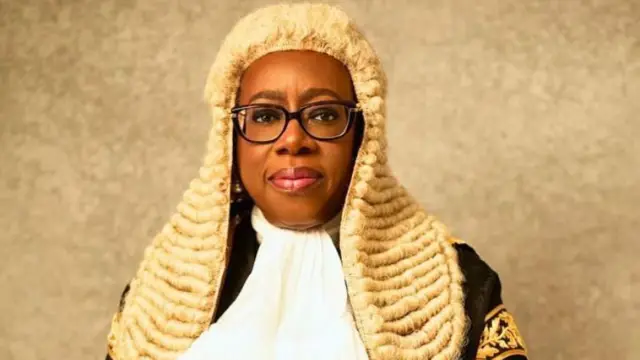
The Chief Justice of Nigeria (CJN), Justice Kudirat Kekere-Ekun, has called on the legislature to enact laws that would strengthen judicial independence, anti-corruption mechanisms, and streamline the court process.
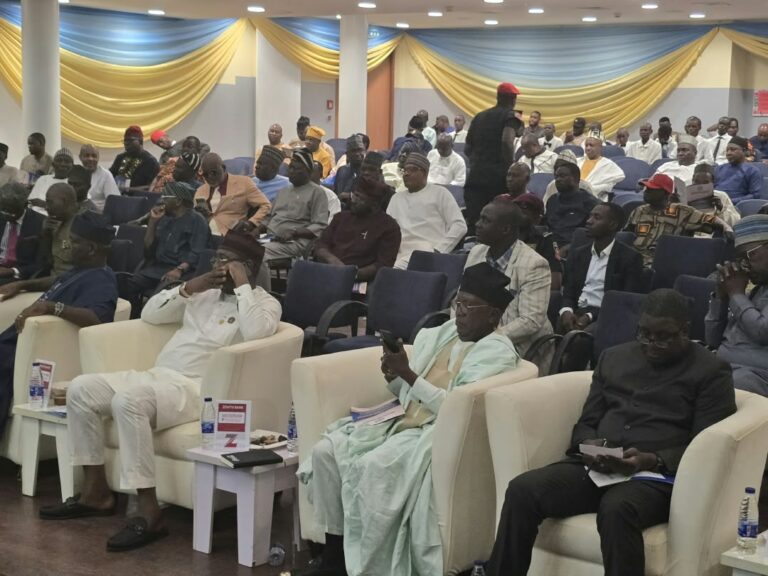
She spoke at the commencement of the 2025/2026 legal year of the Supreme Court, where the Attorney General of the Federation and Minister of Justice (AGF), Lateef Fagbemi (SAN) and the President of the Nigerian Bar Association (NBA), Mazi Afam Osigwe (SAN), decried the negative public perception of the nation’s judiciary.
The event also witnessed the inauguration of 57 legal practitioners to the rank of Senior Advocates of Nigeria (SAN).
Justice Kekere-Ekun, who affirmed the Supreme Court’s unwavering commitment to reform, transparency, and judicial excellence, tasked the executive arm of government, especially in the states, to provide adequate funding for the judiciary, improve judicial infrastructure and support the implementation of technological advancement.
She expressed worry that the judiciary, especially at the sub-national level, is often underfunded, which she noted impacts its ability to function effectively, noting however, that the challenges facing the judiciary require a collaborative effort involving all three arms of government as well as the active participation of the citizens.
Justice Kekere-Ekun also highlighted sweeping reforms implemented to sanitise the judiciary, reduce delays, and restore public confidence.
Key among these, she said, were the restructuring of the Supreme Court’s litigation department, the digitisation of court records, and the creation of specialised units such as the case continuation unit and the central information unit.
The CJN revealed that strict internal controls, file tracking systems, and digitised court processes have significantly reduced incidences of missing files and third-party interference in court scheduling.
At the National Judicial Council, NJC, Justice Kekere-Ekun said every pending petition against judicial officers had been thoroughly reviewed and disciplinary actions were taken where necessary, while the innocents were exonerated, adding that the NJC barred a “notorious serial petitioner” from submitting further petitions after multiple frivolous claims.
In his speech at the occasion, the Attorney General of the Federation, AGF, and Minister of Justice, Prince Lateef Fagbemi, SAN tackled head-on the judiciary’s declining public image, noting that allegations of corruption, inconsistent rulings, and delays were eroding public trust.
Other News
“It is quite concerning to see the adverse ratings and negative perception indexes of our judiciary. The judiciary should discharge its accountability by being principled, independent and impartial,” he said and noted that justice must be done and seen to be done in an atmosphere that serves both parties.
Fagbemi, however, commended the judiciary for its constitutional interventions and highlighted notable judgments delivered in the past legal year, including key decisions on anti-corruption agencies and the limits of federal legislative powers.
The AGF, who praised the CJN for her swift efforts to reform the judiciary since her confirmation in September 2024, cited the Supreme Court’s pivotal rulings in the cases of AG Kogi State v. AG Federation and AG Lagos State v. AG Federation, which respectively affirmed the constitutional powers of Nigeria’s anti-corruption agencies and declared lotteries as a state not federal—legislative matter.
“These decisions resonated across the Federation while strengthening our constitutional democracy,” Fagbemi said and urged the new silks to be “architects of reform” and “defenders of judicial clarity,” emphasising that their conduct must reflect the noblest ideals of the legal profession.
In his speech, President of the Nigerian Bar Association (NBA), Mazi Afam Osigwe (SAN) called on the judiciary to strengthen public trust through transparency, efficiency, and fairness, while charging lawyers and judges to uphold the highest ethical standards.
Describing the event as a moment of reflection and renewal, the NBA President said the judiciary must remain the bedrock of democracy, noting that its decisions directly affect the lives of ordinary Nigerians.
He commended the Chief Justice of Nigeria, Justice Kudirat Kekere-Ekun, GCON, for ongoing reforms, including the digitisation of lawyer enrolment, creation of a Central Information Unit for real-time case tracking, and the publication of judicial appointment memoranda to boost transparency.
Despite these strides, Osigwe lamented persistent negative public perception, citing the Sultan of Sokoto, Muhammadu Sa’ad Abubakar, who warned that “justice is increasingly becoming a purchasable commodity.” He urged the courts to embrace electronic filing, virtual hearings, and swifter case resolution, especially for rural and marginalised communities.
While acknowledging the Supreme Court’s timely rulings in key electoral disputes, Osigwe cautioned that delays in deciding matters of national importance such as proclamations of emergency could erode confidence in democratic institutions.
Citing judicial appointments, he criticised the preference for registrars and government officials over private practitioners, advocating merit-based, transparent recruitment. He proposed written tests, public disclosure of results, and selection criteria anchored on integrity, knowledge, and competence.
Osigwe also condemned the misuse of bail as a tool for political persecution, pointing to cases like that of Bright Ngene in Enugu State, where prolonged delays have undermined faith in justice delivery. He further called for reforms in the treatment of minors in conflict with the law, insisting that children must never be tried alongside adults or held in adult detention.