Follow Us on Google
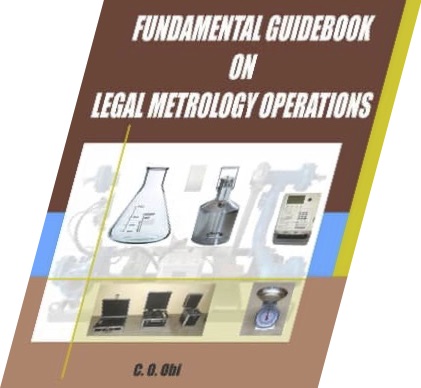
Title: Fundamental Guidebook on Legal Metrology Operations
author: Chioma Obianuju Obi
publisher:JKL & Associates Ltd.
pagination: 195
Year of publication: 2022
reviwer: Uthman Qasim
Within the maze of legal nuances that control our day-to-day activities, there is a field that is sometimes disregarded yet is unquestionably important: Legal Metrology. Experienced legal metrologist, Chioma Obianuju Obi, leads us through this complex terrain in her extensive work, “Fundamental Guidebook on Legal Metrology Operations.” From the very first pages of her debut book, Chioma’s knowledge and experience are evident, providing both incomers and seasoned experts with a lighthouse of guidance over the murky waters of legal metrology. Her perspectives are not merely theoretical digressions but rather a useful roadmap derived from years of practical experience. The book demystifies the technical jargon that frequently serves as a barrier to understanding by carefully exposing the levels of legal metrology processes. Obi gives readers a comprehensive grasp of the subject by carefully exploring the “why” and “how” even while putting in cognizance the “what.”
Precisely organised, the manual moves from basic ideas to sophisticated applications with ease, making it understandable to a wide range of users. The author recognizes the dynamic nature of rules and standards and does not hold back while discussing the changing field of legal metrology. Her insight guarantees the guidebook’s continued relevance and durability. The way that she infuses pragmatism into the theoretical framework is what distinguishes this work. The gap between theory and practice is closed by using case studies and real-world settings. This ensures that the guidebook is more than just an academic exercise and improves the reader’s understanding.
“Descriptive Notes on Legal Metrology, Objectives, and Evolution,” the first chapter, provides background information for readers who are not familiar with the topic. With deft navigation, Chioma provides insights into the historical development of legal metrology as well as its genesis and motivating factors. The goals of legal metrology are outlined in detail so that readers can comprehend the functions it fulfills in society. The chapter provides a strong framework, setting the stage for a deeper dive into the intricate world of the subject matter.
The second chapter, ‘”Basic Concepts of Legal Metrology”, explores the underlying ideas of the discipline. The author painstakingly deconstructs difficult ideas such as metrological traceability, calibration, measurement errors and other basic concepts so that people with differing degrees of subject knowledge can understand them. For readers wishing to understand the fundamentals of legal metrology, this chapter provides an extensive overview covering everything from the complexities of measurement standards to the significance of accuracy and precision. Chioma’s proficiency is seen in her ability to condense difficult concepts into easily understood knowledge nuggets.
Consequently, in chapter three, “Legal Metrology Laws,” the author walks readers through the complex network of legal frameworks that regulate metrology. For legal professionals, legislators, and anybody else looking for a thorough grasp of the legal environment surrounding measurements and standards. She provides a cautious analysis of the laws and regulations governing legal metrology, offering real-world examples and case studies to illustrate the practical implications of these legal frameworks. The clarity and depth of coverage make this chapter an essential reference for anyone navigating the legal intricacies of metrology.
The practical approach of the fourth chapter, “Implementation of Legal Metrology,” leads readers through the use of legal metrology in actual situations. The author provides readers with a glimpse into the daily struggles and successes of putting legal metrology measures into practice by sharing ideas from her vast experience as a Senior Legal Metrology Officer. This chapter is an invaluable tool for both experts and amateurs, covering everything from setting up metrology labs to enforcing measuring standards.
In the next chapter, “Impacts of Legal Metrology on the Economy,” which emphasises the wider effects of legal metrology on economic systems. Chioma investigates the roles that precise measurements and standards play in consumer protection, fair trade, and overall economic stability. In order to demonstrate the critical role legal metrology plays in promoting confidence and reliability within markets, the author makes connections between legal metrology and some important socioeconomic sectors such as agriculture, health, environment and national quality infrastructure. This chapter is a compelling example of how legal metrology has an impact that extends beyond its specific technical details.
The sixth chapter of the book presents a broad overview of the state of metrology organisations. We are shown a comprehensive examination of the responsibilities and activities of national, regional, and worldwide metrology organisations by drawing on her wealth of experience. She does a remarkable job of outlining how they are related to one another and how teamwork is necessary to create a worldwide metrology system that is standardised. In addition to explaining the composition and duties of these organizations, the author emphasises their critical contributions to measuring consistency and accuracy, global trade, and consumer protection.
One of the book’s best features is Chioma’s examination of legal metrology in the petroleum industry which is well captured in the seventh chapter. She moves deftly through the complex regulatory environments that oversee measures in the oil and gas sector. The author takes care of everything, from measurement devices to strict standard compliance. Her understanding of the difficulties unique to the petroleum industry, such as the fluid nature of oil and gas products, gives legal metrology’s theoretical foundations a more grounded application. Professionals working in the petroleum industry and those responsible for implementing metrological laws in this field will find this chapter to be an essential resource.
The book’s assessment of legal metrology in non-oil sectors broadens its focus even more in the eighth chapter. There is careful look into the various issues and legal structures around measures in sectors like telecommunication, power, transportation and water. The author makes sure that the guidebook is still usable and relevant across a range of businesses by addressing the particular needs of non-oil industries. We see a compelling read for both inexperienced professionals and seasoned ones since real-world examples and case studies with relevant pictures are incorporated to provide depth to the theoretical foundations.
Chapter nine addresses areas of reporting, documentation, and certifications in legal metrology which is also noteworthy. The chapter demystifies the frequently complex procedures needed to produce correct reports, keep thorough records, and get certifications. The necessity of accountability and dependability in measurements is emphasized by her emphasis on the significance of transparent and auditable metrological practices. For professionals looking to improve their documentation and reporting procedures in accordance with legal metrology standards, this chapter acts as a helpful guide.
The last chapter provides the convergence of legal metrology and technology as a central theme. It is impossible to overestimate how much technology is influencing metrological practices as it develops. Chioma skillfully examines how legal metrology operations might use state-of-the-art technologies including automated calibration procedures and digital measurement tools. Through her consideration of the opportunities and problems brought about by technology improvements, she makes sure that the guidebook stays current and forward-looking
In conclusion, Chioma’s approachable and captivating writing style, a wide range of readers may easily understand difficult legal and technical subjects. Her explanations are made more understandable by the use of real-world examples, basic definitions, case studies, and pictures. Since the guidebook is divided into several chapters, readers can easily navigate and concentrate on particular topics of interest or reference. As a reader, you are on a journey guided by a seasoned navigator who not only understands the legal nuances but also imparts that knowledge with a clarity that transforms complexity into understanding. Whether you are a legal metrological professional seeking to deepen your expertise or just keen to understand how accurate measurements affect your personal life and businesses, Chioma Obianuju Obi’s “Fundamental Guidebook on Legal Metrology Operations” promises to be an indispensable companion on this enlightening expedition.
*Uthman Qasim is based in Abuja. Email: [email protected]