Follow Us on Google
By Maduka Nweke
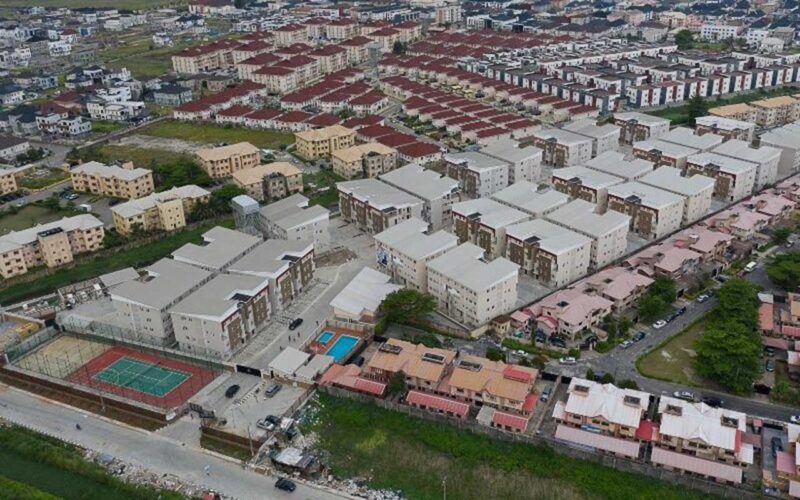
The Federal Ministry of Housing and Urban Development is responding to Nigeria’s widening housing deficit with a N91.7 billion capital allocation in its 2026 budget. This signals a stronger push for partnerships, coordinated delivery, and the expansion of the Renewed Hope Cities and Estates programme.
Under the proposed N105.9 billion total budget for the Ministry, the bulk of spending is directed at capital projects designed to accelerate housing delivery across the country. Officials say the emphasis is no longer just on building units, but on creating sustainable housing ecosystems that combine infrastructure, financing options, and state-level collaboration.
At the centre of the strategy is the Renewed Hope Housing Programme, which received N8.05 billion to support ongoing and new developments. A further N3.7 billion was allocated to the National Housing Programme, while N2.1 billion was set aside for prototype housing projects in Suleja, Niger State, and Ikorodu, Lagos State, alongside other targeted interventions.
The Ministry said it is adopting a “One Government” approach to harmonise the activities of Federal Housing Institutions such as the Federal Mortgage Bank of Nigeria (FMBN) and Family Homes Funds, with the aim of eliminating duplication, improving coordination, and deepening collaboration with state governments.
Beyond bricks and mortar, the 2026 housing strategy is also framed as an economic stimulus. Construction activities linked to the programme are expected to generate jobs, boost local supply chains, and provide affordable housing options through mortgages, rent-to-own schemes, and outright purchases. Budgetary provisions also cover non-residential needs, including court of appeal buildings and official residences for judicial officers.
Other News
Speaking during an assessment visit to the National Housing Project (NHP) Estate in Laminga, Jos East Local Government Area of Plateau State, the Minister of State for Housing and Urban Development, Yusuf Abdullahi Ata, said the 2026 budget reflects the Federal Government’s determination to close the housing gap through collaboration with the private sector.
He noted that public-private partnerships remain central to the Ministry’s plans, especially as it seeks to correct what he described as a longstanding mismatch between housing needs and available budgetary resources. According to him, leveraging private capital and expertise is critical to scaling delivery and improving affordability.
Addressing a request by the Jos East Local Government to bulk-purchase housing units within the Laminga estate, Ata assured that the Ministry was open to flexible pricing. “The Ministry will offer the houses to the local government on current face value, taking into consideration some observed dilapidation.
We will review the initial pricing and address it accordingly,” he said.
The minister reaffirmed the Federal Government’s commitment to expanding access to decent and affordable housing, stressing that the administration of President Bola Ahmed Tinubu remains focused on delivering practical housing solutions through the Renewed Hope Housing Programme.
Earlier, the Federal Controller of Housing in Plateau State, Bldr. Emmanuel Attah, informed the minister of the local government’s interest in acquiring some of the housing units and its request for a downward review of prices. He explained that the council intends to carry out repairs and cover maintenance costs for sections of the estate affected by dilapidation.
The NHP Housing Estate in Laminga is expected to provide much-needed housing stock for Plateau State, stimulate the local economy, and improve living standards. Officials say the minister’s visit underscores the government’s broader objective of tackling Nigeria’s housing deficit while promoting inclusive socio-economic development nationwide.