Follow Us on Google
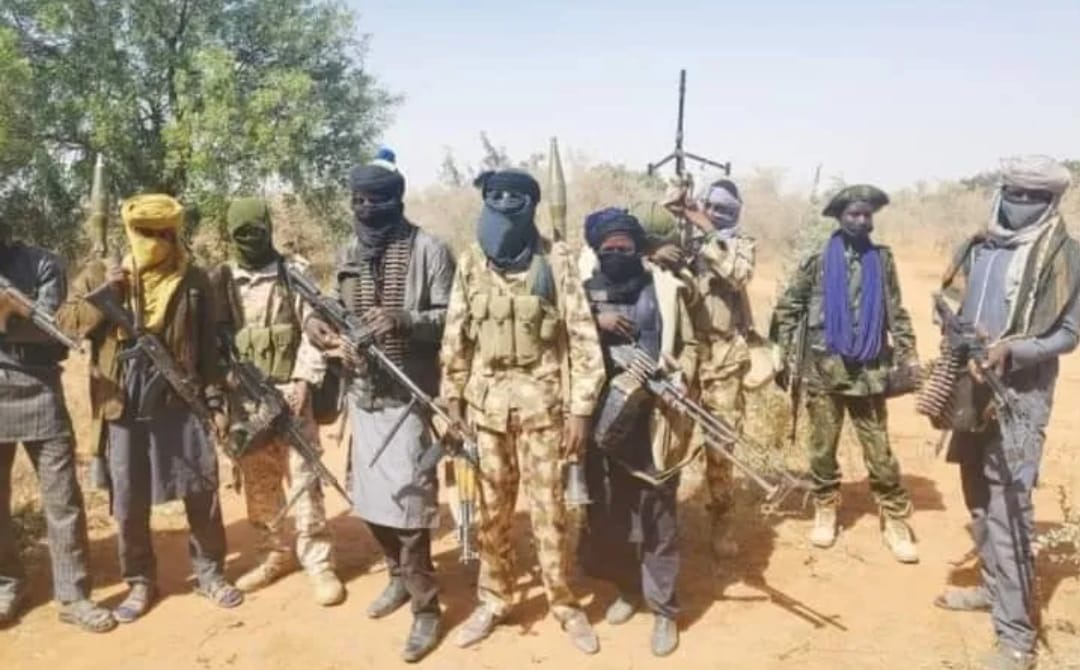
Terrorist and bandit attacks in Nigeria have risen ahead of every presidential election held since 2015, an intelligence and data firm, CellHub, has said.
The firm called for a public investigation into the pattern before the January 2027 poll.
The firm, which released a consolidated election security dataset in Abuja, stated that the escalation had recurred across four consecutive cycles, encompassing two changes of governing party and three distinct dominant security threats.
It described it as a structural feature of the country’s electoral calendar rather than a coincidence of time requested that CellHub asked the National Assembly, the Office of the National Security Adviser and the Independent National Electoral Commision, INEC, to open a public inquiry into the reoccurrence, warning that it now represented the single most predictable security risk facing the 2027 election.
According to the dataset, Boko Haram was at its territorial peak ahead of the March 2015 election, holding roughly 20,000 square kilometres, with 22,544 conflict deaths recorded in 2014 and more than 3,000 fatalities in January 2015 alone. That election was postponed by six weeks on security grounds.
Before the February 2019 poll, the firm said, the Islamic State West Africa Province overran military positions in Borno State while civilian deaths in Zamfara State climbed from 52 in 2017 to 288 in 2018, and then to 262 in the first 100 days of 2019. Fatalities in the North West doubled year on year, and the election was postponed by one week.
In the cycle preceding the February 2023 election, the report recorded kidnapping at commercial scale, with 3,620 people abducted in the year to June 2023 and ransom demands put at N5.09bn. It also documented between 50 and 134 attacks on facilities belonging to the electoral commission, and terror alerts issued for Abuja four months before the vote.
For the current cycle, CellHub said terrorism fatalities rose by 46 per cent and incidents by 43 per cent in 2025, which it described as the largest absolute increase recorded for any country that year. It put violent deaths at 12,954 in 2024, 12,162 in 2025, and 5,272 in the first five months of 2026, adding that mass school abductions had returned at a scale not recorded since 2014.
“Four out of four. Random variation does not produce that result,” the report stated.
The firm noted that Nigeria’s record on the financing of armed groups around elections was neither silent nor disputed, citing documentation by Human Rights Watch on how political financiers armed and funded gangs around elections, entrenching criminal economies that outlived each vote.
It further cited published research linking the intensity of election period violence in a state to that state’s discretionary revenue, and said the militancy that later became the Movement for the Emancipation of the Niger Delta traced partly to groups armed for the 2003 elections and abandoned afterwards.
CellHub, however, stopped short of alleging that the same behaviour extends to the terrorism and banditry curve, saying the question had never been established because no public body had ever investigated it.
“Four consecutive cycles of correlation is sufficient grounds to compel that investigation, and the failure to conduct one is now itself a national security decision,” the firm said.
On the financing trail, the report listed disclosures already in the public domain, including the identification of 96 terrorism financiers with 424 associates, 123 companies, and 33 bureau de change operators by the Nigerian Financial Intelligence Unit between 2020 and 2021, and the Federal Government’s announcement of 45 arrests in February 2022.
It also referenced the designation of six Nigerians as Boko Haram financiers by authorities in the United Arab Emirates in September 2021, and the listing of 48 individuals and 12 entities by the Nigeria Sanctions Committee in April 2026, covering networks tied to Boko Haram, ISWAP, Ansaru, and the Indigenous People of Biafra.
“Nigeria does not have an intelligence problem,” the report said, noting that publicly documented convictions of terrorism financiers remained a fraction of the number officially named. “Every list is published. Almost none of it reaches a courtroom.”
End