Follow Us on Google


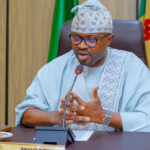
The Centre for Convention on Democratic Integrity (CCDI) has commended Taraba State Governor, Agbu Kefas, for his administration’s investment in education and called on the World Bank and United Nations agencies to provide technical and financial support to consolidate the state’s educational reforms.
The organisation said the administration’s free and compulsory primary and secondary education policy, payment of public examination fees, reduction of tuition fees in tertiary institutions and expansion of scholarship opportunities had significantly improved access to education, laying a foundation for sustainable development and greater competitiveness among young people.
In a statement yesterday, CCDI’s Permanent Representative to the United Nations Economic and Social Council (ECOSOC), Olufemi Aduwo, said the governor’s commitment to education demonstrated an understanding of its importance to economic growth, poverty reduction and human capital development.
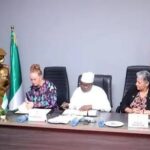
Aduwo, who was recently elected Vice-President of the World Bank Civil Society Policy Forum (CSPF), disclosed that a CCDI assessment team, which visited Taraba in September to evaluate progress towards the Sustainable Development Goals (SDGs), observed the implementation of the state’s free education programme and other interventions designed to reduce the financial burden on parents.
He identified the payment of West African Examinations Council (WAEC), National Examinations Council (NECO) and National Business and Technical Examinations Board (NABTEB) examination fees, reduction of tuition fees at Taraba State University and nursing schools, and establishment of model schools where pupils receive uniforms, textbooks and footwear as notable achievements worthy of emulation by other states.
According to him, the sponsorship of indigenes for postgraduate studies abroad, increased support for medical students and bursaries for law students further demonstrated the administration’s determination to expand educational opportunities across different levels.
Aduwo described the interventions as a significant milestone in the state’s development since its creation in 1991, but stressed that the government must complement improved access with better teaching standards, adequate infrastructure and measurable learning outcomes.
He drew parallels between Kefas’ education policies and the free universal primary education programme introduced in the defunct Western Region in 1955 by the late Chief Obafemi Awolowo, noting that the initiative expanded educational opportunities, promoted social mobility and contributed to the emergence of generations of professionals who played important roles in national development.
The CCDI representative also cited South Korea and Singapore as examples of countries whose sustained investment in education, technical training and research helped transform their economies, arguing that Taraba could achieve similar progress through consistent policies and strategic partnerships.
Other News
He consequently appealed to the World Bank, United Nations Children’s Fund (UNICEF) and United Nations Educational, Scientific and Cultural Organisation (UNESCO) to deepen their engagement with Taraba in line with Sustainable Development Goal 4, which seeks to ensure inclusive and equitable quality education and promote lifelong learning opportunities.
Aduwo said international development institutions had successfully supported education reforms in several countries and could replicate similar interventions in Taraba, particularly in teacher development, digital learning, vocational training, girls’ education and institutional capacity building.
He cited the World Bank’s $500 million Strengthening Teaching-Learning and Results for States (STARS) programme in India, which supports education reforms across six states, with emphasis on teacher development, school management and improved learning outcomes.
He also referred to the Bank’s $100 million Sindh Early Learning Enhancement through Classroom Transformation (SELECT) project in Pakistan, designed to improve foundational literacy, teaching practices and school retention.
According to him, UNICEF’s partnerships with education authorities in Ghana to strengthen girls’ education and teacher capacity, as well as its support for alternative learning programmes in Tanzania, where more than 30,000 out-of-school adolescents have benefited from literacy, numeracy, vocational and entrepreneurship training, demonstrated the benefits of sustained international collaboration.
Aduwo urged the World Bank to explore appropriate financing, technical assistance and institutional support for Taraba’s education sector, while calling on UNICEF and UNESCO to collaborate with the state government on teacher training, digital education, vocational skills and inclusive learning.
He maintained that the state had the potential to become one of Northern Nigeria’s leading centres of educational excellence, agricultural innovation and technological advancement if the administration sustained its current policies and attracted the necessary international partnerships.
The CCDI representative, however, emphasised that achieving the objective would require policy continuity, accountability, adequate funding and consistent monitoring of educational outcomes to ensure that investments translated into improved learning standards and long-term economic opportunities for residents.